









Strategically Grow Your Business
Every successful business reaches a pivotal moment when maintaining the status quo is no longer enough. Whether you’re opening new locations, expanding your workforce, entering new markets, or pursuing a merger, a well-crafted business growth plan is essential for turning ambitious goals into achievable milestones.
A business growth plan provides the roadmap your organization needs to scale sustainably while managing the complexities of expansion. Without one, you can risk overstretching resources, misaligning teams, or missing important operational requirements that can derail growth.
Our guide walks you through everything you need to create a strategic business growth plan that sets your organization up for success.
What Is a Business Growth Plan?
A business growth plan is a strategic document that outlines how your organization will expand over a specific period. It identifies growth opportunities, sets measurable objectives, defines the resources and strategies needed to achieve those goals, and establishes metrics to track progress.
Unlike operational plans that focus on day-to-day activities, a growth plan specifically addresses how you’ll scale your business—expanding into new markets, increasing your customer base, launching new products, or growing your workforce.
Is a business growth plan the same as a business plan?
No. A traditional business plan covers all aspects of your operations and is often created when launching a company. A business growth plan assumes your business is already established and focuses specifically on expansion strategies. While related, growth plans are more targeted and action-oriented, concentrating on the tactical steps required to achieve specific growth objectives.
Importance of Having a Business Growth Strategy Plan
Strategic growth planning forces you to think critically about expansion goals and whether they’re realistic given your resources and market conditions. It helps identify potential obstacles before they become crises and develops contingency plans to address them.
A documented growth plan aligns your entire organization around common objectives. When everyone understands the growth strategy and their role in executing it, you’re far more likely to achieve your goals, especially during rapid change when miscommunication can derail progress.
Having a growth plan is also vital for securing resources. Whether you’re seeking investment, applying for loans, or requesting budget allocations, your stakeholders will want clear, well-reasoned plans demonstrating you’ve considered all the financial implications and potential returns.
Benefits of Creating a Business Growth Plan
Investing time in creating a comprehensive business growth plan delivers significant advantages that extend throughout your organization. Here are some key benefits:
Provides Clear Direction and Focus
A business growth plan eliminates ambiguity about where your company is headed. It establishes specific, measurable objectives that help everyone prioritize efforts on activities that directly contribute to growth rather than getting distracted by less important tasks.
Enables Better Resource Allocation
Growth requires significant investments in people, technology, infrastructure, and capital. A strategic growth plan helps you forecast these needs accurately so you can allocate resources efficiently, preventing the scrambling and inefficiency that accompany reactive, unplanned growth.
Identifies and Mitigates Risks
Creating a growth plan forces you to identify potential risks—market volatility, competitive threats, operational challenges, financial strain—and develop strategies to mitigate them. You’ll consider “what if” scenarios and build contingencies, making your organization more resilient when unexpected challenges arise.
Improves Stakeholder Confidence
A well-documented growth plan demonstrates to investors, lenders, and board members that you’re approaching expansion strategically. It shows you’ve done your homework, understand the market opportunity, and have a realistic path to achieving your goals.
What Should You Include in a Business Growth Plan?
While every business growth plan is unique to the organization creating it, the most effective plans share several core components:
- Executive Summary: High-level overview of your growth objectives, strategies, and expected outcomes
- Growth Objectives: Specific, measurable goals with clear timelines
- Market Analysis: Research on target markets, customer segments, and competitive landscape
- Financial Projections: Detailed forecasts including revenue expectations, expenses, cash flow, and funding requirements
- Operational Plan: Staffing needs, technology infrastructure, facilities requirements, and process improvements
- Marketing and Sales Strategy: Your approach to reaching new customers and driving revenue growth
- Risk Assessment: Potential obstacles and mitigation strategies
- Implementation Timeline: Roadmap with specific milestones, deadlines, and responsible parties
- Key Performance Indicators: Metrics you’ll track to measure progress
- Communications Plan: Define how and to whom you’ll communicate your strategy
How to Write a Growth Plan
Creating a business growth plan requires thoughtful analysis, strategic thinking, and careful documentation. Follow these steps to develop a plan to guide your expansion.
Step 1: Assess Your Current Position
Conduct a thorough analysis of your current business state, including financial position, operational capacity, market share, competitive advantages, and organizational capabilities. This honest assessment provides a baseline to measure future progress.
Step 2: Define Your Growth Objectives
Establish specific, measurable goals using the SMART framework (Specific, Measurable, Achievable, Relevant, Time-bound). Rather than vague aspirations like “grow the business,” set concrete targets like “expand workforce from 50 to 120 employees within 24 months.”
Step 3: Research Your Market and Competition
Research your target customer segments, analyze competitors, and examine market trends. This research validates that genuine opportunity exists for your growth initiatives and informs the specific strategies you’ll employ.
Step 4: Identify Your Growth Strategies
Determine the specific approaches you’ll use to achieve growth. Will you expand geographically? Grow your customer base through enhanced marketing? Develop new products? Pursue acquisitions? Be specific about tactics and how each strategy contributes to overall objectives.
Step 5: Plan Your Operational Requirements
Growth puts significant strain on operations, so you must plan how your business infrastructure will scale. Determine staffing needs—how many employees you’ll hire, in which roles, and on what timeline. Assess whether your current systems can handle increased volume or if they’ll need upgrades, especially in payroll, HR, and customer relationship management. This operational planning ensures you have the capacity to support growth.
Step 6: Develop Financial Projections
Create detailed financial forecasts that model costs and expected returns. Project revenue growth based on realistic assumptions, calculate all expansion expenses, and determine whether you have sufficient capital to fund growth internally or need external financing.
Step 7: Establish Metrics and Milestones
Define the specific KPIs you’ll track including revenue growth rate, customer acquisition cost, employee headcount, market share. Set specific milestones at regular intervals that allow you to assess whether you’re on track.
Step 8: Document and Communicate Your Plan
Compile all information into a clear, well-organized document. Write in straightforward language and include visual elements like charts and timelines. Share the plan broadly within your organization and ensure leadership teams thoroughly understand their roles.
Additional Tips for Business Growth Planning
Beyond the steps outlined above, these additional considerations can strengthen your business growth plan and increase your chances of successful execution.
Build Flexibility into Your Plan
While your plan should provide clear direction, build review checkpoints where you’ll reassess assumptions and adjust. Include alternative scenarios so you’re prepared to pivot if conditions change.
Prioritize Your People Strategy
Think carefully about how you’ll attract top talent, onboard them efficiently at scale, and retain them during change. Consider how growth affects existing teams and whether managers need additional training. A strong people strategy is essential for sustainable growth.
Plan for Change Management
Growth creates organizational change that can be disruptive if not managed properly with a change management plan. As you scale, roles may shift, reporting structures might adjust, and processes will evolve. Communicate proactively with your team about what changes are coming and why they’re necessary. Provide support and training to help employees adapt. Address concerns openly and create channels for feedback.
How Paycor Helps Support Business Growth
When businesses experience rapid growth, human capital management becomes increasingly complex. Paycor provides the technology and services that help organizations scale their workforce operations efficiently while maintaining compliance.
Network for Hope, a nonprofit dedicated to restoring hope to marginalized communities, exemplifies how the right HCM partner enables successful growth. By partnering with Paycor, they gained integrated tools for recruiting, onboarding, payroll, benefits administration, and talent management on a single platform, allowing them to expand smoothly without administrative complexity.
Read the full Network for Hope case study to learn how strategic HCM solutions support organizational growth.
Beyond technology, Paycor offers professional services designed for businesses navigating growth transitions—managed services for payroll and HR administration, consulting for change management and HR optimization, and premium support for implementation challenges.
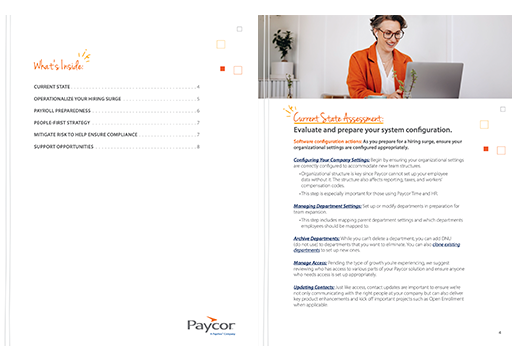
Download The Strategic Business Growth Plan Guide
Ready to start developing your business growth strategy? Download our free strategic business growth plan guide to streamline the process.
This comprehensive resource includes:
- A business growth plan with guided sections for all key components
- Links to resources for managing high-volume hiring, recruiting, onboarding, and more
- Guidance on when to use professional services and managed solutions to support growth
Partner With Paycor for Your Growth Journey
As your business scales, Paycor provides the HCM technology and professional services you need to manage workforce complexity with confidence.