









HR’s Strategic Recruiting Framework
What Is a Recruitment Plan Template?
A recruitment plan template is a structured document that guides HR through every stage of the hiring process, from identifying the need to extending an offer. Each section prompts HR and hiring managers to define their goals, outline their recruiting strategy, set timelines, and track results, so nothing falls through the cracks.
A good template empowers HR to navigate every step of the recruiting process. It should include details about the role itself, sourcing strategy, interview process, evaluation criteria, and timeline. A strong framework is the difference between reactive hiring and proactive, effective recruiting.
Importance of Using a Recruitment Plan Template
Recruiting without a plan is one of the fastest ways to waste time and money. The average open position takes around 27 days to fill (Shortlister). Without a clear framework guiding the process, that timeline can get much longer. Meanwhile, open roles put pressure on your existing team, lowering productivity and impacting company culture.
A recruitment plan template connects your talent acquisition process to your larger HR and business strategy. When HR clearly defines the role’s purpose, the team’s needs, and the company’s growth goals before posting a job, every decision along the way comes into sharp focus. The sourcing strategy is more targeted, the job description is more accurate, and the interview process is more consistent.
Templates also make it easier to hand off work between team members, bring in a new HR hire, or scale recruiting efforts during a growth period. You’re not starting from scratch every time. You’re building on a system that supports your long-term priorities.
Benefits of Using a Recruitment Plan Template
A structured recruitment plan has several benefits for both HR leaders and organizations at large.
Faster Time to Fill
Time-to-hire is on the rise. In 2024, 60% of companies reported an increase in this metric (Select Software Reviews). Companies with shorter hiring timelines can effectively lower recruiting costs, build stronger teams, and stand out from the competition. A clear recruitment plan eliminates much of the back-and-forth that slows searches down.
More Consistent Candidate Evaluations
When every hiring team uses the same recruiting tools and frameworks, HR delivers a fair, structured candidate experience. Evaluation criteria are set in advance, not improvised in the moment. That consistency protects your process from bias, improves your decision-making, and leads to stronger hires.
A Better Candidate Experience
Just 26% of North American job seekers say they’ve had a great experience as job seekers (JobScore). A recruiting template helps HR address some of the obstacles candidates face. It can help you streamline communication, keep interviews on track, and drive engagement ine very step of the process. When job candidates feel heard, respected, and valued, they’re more likely to accept an offer.
Clearer Alignment Between HR and Hiring Managers
Hiring managers and HR leaders often come to the table with different expectations. A recruitment plan template creates a shared document that captures both perspectives upfront, so everyone agrees on the ideal candidate profile, the interview process, and the timeline before the search begins.
Better Data for Future Hires
When you use a consistent template, you start building comparable data across every search. Metrics like time to fill, source effectiveness, and offer acceptance rate become actionable when you can track them against a repeatable process.
How to Use the Free Recruitment Plan Template
Our free template walks HR through six steps, from defining the role to hiring the best candidate.
Step 1: Define the Role and Business Need
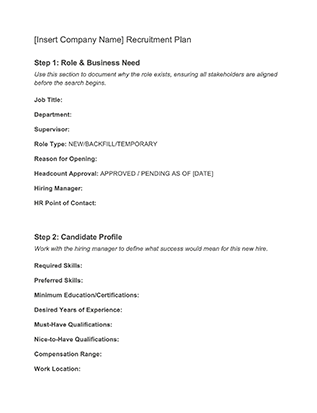
Start by documenting why this role exists. What problem is the company trying to solve? Is this a backfill, a new position, or a temporary role created to support a specific initiative? Capture the job title, department, reporting structure, and key responsibilities. This section also prompts HR to get headcount approval before starting the search, which saves everyone time later.
Step 2: Build Your Candidate Profile
Work with the hiring manager to understand what the ideal candidate looks like. Define any required skills, preferred experience, and must-have qualifications. Be specific. Vague job requirements lead to high-volume, low-quality applicant pools. A well-defined profile narrows your sourcing and helps HR evaluate candidates more quickly.
Step 3: Outline Your Sourcing Strategy
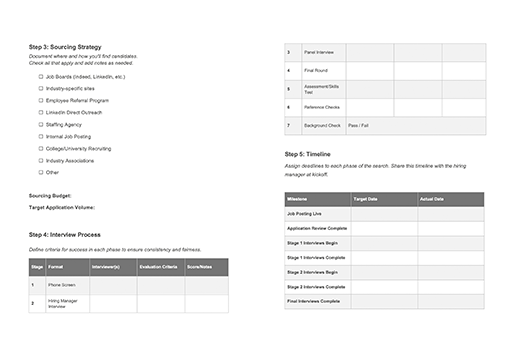
Where will you find candidates? Depending on the role, you might use a combination of job boards, employee referrals, LinkedIn, targeted outreach, staffing agencies, or other channels. Document your plan so the team knows where to invest their time and budget.
Step 4: Map Out the Interview Process
Define the stages of your interview process before you schedule a single call. How many rounds of interviews will you hold? Who interviews the candidates at each stage? What evaluation criteria will you use? When every interviewer uses the same approach, you ensure all candidates have a fair chance to get the offer.
Step 5: Set a Timeline and Key Milestones
Assign target dates to each phase of the search: job posting, application review, first-round interviews, final interviews, and making the job offer. Clearly defined timelines keep your internal team on track. When a hiring manager knows the target offer date, they’ll stay more engaged and responsive throughout the process.
Step 6: Track Results and Close the Role
Use the template to document your final decision, offer details, and any notes from the process. This data will play a role in your next search. Over time, you’ll start to see patterns in where your best candidates come from, which sourcing channels deliver the highest-quality applicants, and where candidates tend to drop out of the process. Those patterns empower HR to update the recruiting process for even better results.
Download Your Free Recruitment Planning Template Today!
Stop building your hiring plan from scratch every time a role opens. Paycor’s free recruitment plan template gives HR a ready-to-use framework that covers every phase of the process.