







Choosing a human capital management (HCM) software can fundamentally change how your organization attracts, develops, and retains its people. The best HCM solutions don’t just digitize HR paperwork—they transform people operations from a reactive, administrative function into a proactive driver of business results.
Unlike a basic HRIS, which primarily stores employee data and automates payroll, HCM software covers the full workforce lifecycle: recruiting and onboarding, performance management, learning and development, succession planning, compensation benchmarking, and advanced workforce analytics. The right platform ties all of these capabilities together in one cohesive system, giving HR leaders and executives the visibility they need to make confident decisions about their most important asset—their people.
In this guide, we’ll review 8 of the best HCM software companies available today so you can identify which platform is the best fit for you.
Importance of Selecting the Best HCM Software
When organizations implement a well-matched HCM platform, the impact reaches far beyond HR. The best human capital management software helps your team:
- Attract and hire top talent faster through integrated recruiting tools, automated screening, and streamlined onboarding workflows.
- Develop employees more intentionally with connected performance management, goal-setting, and learning management systems that keep teams growing.
- Retain your best people by identifying flight risks early through workforce analytics and acting on engagement data before turnover becomes a problem.
- Manage compliance across payroll, benefits, and labor regulations with automated updates and audit-ready reporting.
- Make data-driven workforce decisions using real-time dashboards that translate people data into actionable intelligence on costs, productivity, and talent gaps.
- Scale confidently as your organization grows—adding employees, locations, or workforce complexity—without outgrowing your technology.
Because HCM software touches every stage of the employee experience—from the first job posting to an employee’s last day—choosing the wrong platform creates costly inefficiencies, compliance risks, and employee frustration that ripples throughout your culture.
Considerations for Choosing the Best HCM Software Company
Before comparing vendors, clarify what your organization actually needs. The best HCM software for your business depends on how well it aligns with your specific goals, workforce complexity, and existing infrastructure.
Business Needs and Pain Points
Start by documenting your most pressing HR challenges. Are managers struggling to track performance and development goals? Is recruiting taking too long? Are you losing visibility into workforce costs as the company grows? Is compliance across multiple states or countries creating risk?
Identifying your top three to five operational pain points helps you evaluate which HCM capabilities matter most and avoid paying for features you won’t actually use.
Talent Management Depth
This is where HCM software earns its distinction from basic HRIS. Evaluate how well each platform handles recruiting, onboarding, performance management, succession planning, and learning and development—and whether these modules work together seamlessly or feel bolted on.
Workforce Analytics and Reporting
The best HCM platforms transform raw workforce data into strategic insights. Look for customizable dashboards, predictive analytics for turnover and labor costs, and compensation benchmarking capabilities that help you make informed decisions rather than reactive ones.
Pro Tip: Look for platforms that deliver real-time data visualizations that HR leaders and executives can actually use—not just raw data exports that require a data analyst to interpret.
Integration with Existing Systems
Confirm that any HCM platform you consider integrates natively with your accounting software, benefits carriers, applicant tracking tools, and other business systems. Strong API capabilities and a pre-built integration marketplace reduce the risk of data silos and duplicate manual entry.
Scalability and Flexibility
Choose a platform designed to grow with your organization. The best HCM software adapts as you add headcount, open new locations, expand globally, or shift to a hybrid workforce model—without forcing a costly migration every few years.
Implementation and Ongoing Support
Vendor partnership matters as much as the software itself. Evaluate the quality of implementation support, training resources, and day-to-day customer service. A great product with poor support can derail even the best-intentioned HCM rollout.
List of the Top 8 HCM Software Companies and Tools
Based on functionality, scalability, talent management depth, user experience, and market presence, these are eight of the most widely recognized HCM platforms and companies in 2026:
8 Best Human Capital Management Software Companies and Tools
While this is not a comprehensive list, each company below offers distinct strengths depending on your organization’s size, industry, and talent management priorities.
Paycor
Paycor delivers a unified HCM software purpose-built for organizations that want enterprise-grade talent management capabilities without the complexity or cost of an enterprise-only system. According to G2, users describe it as bringing all HR and payroll management “into a single place to allow for a streamlined process” that lets teams “focus on operating the business.”
Industry Focus: Paycor serves small and mid-sized organizations—primarily those with 10 to 1,000 employees—across healthcare, manufacturing, restaurants, retail, and nonprofits. The platform excels for organizations that need integrated talent management, robust compliance tools, and actionable workforce analytics in one connected system.
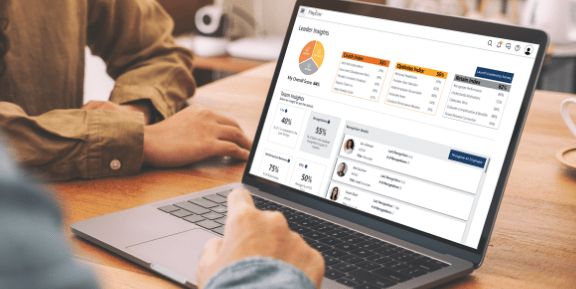
What the Software Does: From automated payroll and tax filing to AI-powered recruiting, performance management, compensation planning, and learning management, Paycor consolidates the entire employee lifecycle into one intuitive system. Capterra users note it offers features for “scheduling, new hires, terminations, LOAs, wage increases, promotions, timecards & reports,” all within a single platform. The company’s COR Leadership Insights tools help managers identify coaching opportunities and reduce turnover risk before it becomes a business problem.
Key Features: Automated payroll and tax filing, AI-powered applicant tracking integrated with 20,000+ job boards, onboarding workflows, performance management with continuous feedback and 360 reviews, compensation planning with merit modeling, learning management (Paycor Paths), benefits administration with decision-support tools, workforce analytics, time and attendance with scheduling, mobile access, OnDemand Pay, and 140+ integrations.
Pros
- G2 reviewers highlight the platform’s ability to bring “all HR and payroll management into a single place” with a user-friendly interface that reduces the time spent switching between systems
- Built-in workforce analytics and COR Leadership Insights help managers proactively identify turnover risks, control labor costs, and develop their teams
- Capterra users describe payroll processing as “intuitive,” noting the platform’s tight integration across payroll, benefits, and HR functions significantly reduces manual work
- Dedicated implementation support and customer success resources help organizations get up and running effectively
Cons
- TrustRadius reviewers note that customer support quality can be inconsistent, with some users reporting long response times and variability in agent expertise
- Reporting and analytics, while improving, can feel less customizable than some larger enterprise platforms
- Best suited for organizations with fewer than 1,000 employees; may not meet the needs of large enterprise or multinational organizations
Paychex Flex
Paychex Flex is a comprehensive cloud-based HCM solution from Paychex—one of the largest providers of HR and payroll services in the United States, serving more than 680,000 clients. The platform combines payroll, HR management, benefits administration, time tracking, and recruiting in a single sign-on environment, with the added option of PEO and HR outsourcing services that pure-software competitors cannot match.
Industry Focus: Paychex Flex serves businesses of virtually all sizes, from startups with a handful of employees to large organizations with complex multi-location workforces. The platform is particularly valued by small and mid-sized businesses that want the flexibility to scale from basic payroll into full HCM capabilities over time, or that prefer the option of outsourcing HR functions entirely through Paychex’s PEO services.
What the Software Does: Paychex Flex handles full-service automated payroll with multi-state tax filing, benefits administration, time and attendance, AI-assisted recruiting, and employee self-service—all from a highly rated mobile application. TrustRadius reviewers note that Paychex has provided “an incredibly easy system to pay employees” and that competitors have been unable to offer “a comparable service at the same price point.” Capterra users appreciate how “user friendly” the platform is, particularly its document storage and onboarding capabilities.
Key Features: Automated payroll and tax compliance, benefits administration (health, retirement, FSA, workers’ comp), time and attendance with biometric options, AI-assisted recruiting, 160+ standard and customizable reports with compensation benchmarking, employee handbook builder, employee self-service portal, highly rated mobile app (4.8/5 on both major app stores), PEO and HR outsourcing options, and 160+ integrations.
Pros
- TrustRadius reviewers consistently highlight the platform’s competitive value, with users noting that competitors were unable to match the combination of features and pricing
- The mobile app earns strong marks across user review platforms, making self-service accessible for distributed or field-based workforces
- Paychex’s PEO and HR outsourcing options provide a level of flexibility that pure-software HCM vendors cannot offer, especially valuable for small businesses managing HR without a dedicated team
- G2 users credit Paychex with helping them stay compliant as payroll and HR laws evolve, reducing regulatory risk
Cons
- Customer support is the platform’s most cited weakness, with Capterra and TrustRadius reviewers describing slow response times and inconsistent service quality
- Some Capterra users caution that hidden fees and non-transparent pricing can make the actual cost higher than initially expected
- Navigation can require more clicks than users prefer, and some modules have been reported to integrate less seamlessly than the core payroll experience
ADP Workforce Now
ADP Workforce Now is an all-in-one cloud-based HCM platform from ADP—a company with more than 65 years of payroll experience and over 200,000 clients worldwide. Named a Leader in the Forrester Wave for Human Capital Management Solutions, the platform brings together payroll, HR, benefits, time and attendance, talent management, and compliance in one environment built on the industry’s largest workforce dataset.
Industry Focus: ADP Workforce Now serves mid-market businesses across virtually every industry, with particular strength for organizations with complex payroll requirements, multi-state operations, or significant compliance complexity. The platform’s deep tax and compliance expertise makes it especially attractive for companies that operate across jurisdictions or handle nuanced workforce scenarios like union agreements or shift differentials.
What the Software Does: ADP Workforce Now provides comprehensive payroll processing with AI-powered anomaly detection, benefits administration with ACA and COBRA compliance, time and attendance with geofenced mobile punching, and a full talent management suite that includes recruiting, onboarding, performance management, succession planning, and a learning library of more than 70,000 courses. According to G2, users value how the system handles compliance tracking and tax management with “proactive alerts” that help organizations stay ahead of regulatory changes. Capterra reviewers highlight it as “a reliable all-in-one solution for payroll, HR, and time tracking.”
Key Features: Automated payroll with AI anomaly detection, SmartCompliance tax audits, benefits administration, time and attendance, talent management suite, learning management with 70,000+ courses, compensation benchmarking from a 42-million-employee dataset, ADP Marketplace with 700+ pre-built integrations, workforce analytics and reporting.
Pros
- Industry-leading payroll accuracy and compliance expertise backed by a 42-million-employee benchmarking dataset that supports smarter compensation decisions
- The ADP Marketplace offers 700+ pre-built integrations, making it easier to connect Workforce Now to existing accounting, benefits, and business systems
- G2 users appreciate proactive compliance alerts and streamlined state registration tools that reduce regulatory risk for multi-state operations
- Capterra users describe it as a reliable platform that simplifies complex payroll scenarios while providing accessible self-service for employees
Cons
- TrustRadius reviewers consistently flag customer support as a significant weakness, with some citing long wait times and inconsistent expertise from support staff
- Some modules—particularly performance management—are described by TrustRadius users as “very clunky” compared to the core payroll experience
- The platform can feel less modern than newer competitors, and reporting can be rigid for organizations with specialized analytics needs
Workday
Workday is the gold standard in enterprise HCM—a cloud-native platform built on a single data model that unifies HR, payroll, talent management, workforce planning, benefits, and financial management. With more than $5 billion in annual revenue and a presence in 190+ countries, Workday is consistently recognized as a leader in analyst rankings for large enterprise HCM and is widely credited with setting the standard for unified people analytics.
Industry Focus: Workday primarily serves large enterprises and multinational corporations requiring sophisticated workforce management capabilities at scale. The platform is especially well-suited for organizations with complex organizational structures, global operations, and a need to connect HR and financial data in ways that inform executive decision-making. Workday is expanding into the mid-market with streamlined implementations, but it remains best suited for organizations with 1,000+ employees.
What the Software Does: Workday delivers enterprise-grade HCM across core HR, payroll, talent management, workforce planning, and advanced people analytics—all operating on a single data model that eliminates the data inconsistencies common in modular systems. G2 users appreciate its “user-friendly design, advanced features, and scalability,” while Capterra reviewers note that its workflows are “really good, particularly for recruitment and performance management.” Workday’s Illuminate generative AI and bi-annual automatic feature updates keep it at the forefront of HCM innovation.
Key Features: Global core HR across 190+ countries, Workday Skills Cloud (AI-powered skill mapping), full talent suite from recruiting through succession, Prism Analytics with people analytics dashboards, Peakon Employee Voice for continuous engagement surveys, Workday Illuminate generative AI, Workday Extend for custom app development, bi-annual automatic updates, and compensation management.
Pros
- TrustRadius reviewers who have used multiple HCM systems describe Workday as “by far the best” for its ability to integrate nearly every aspect of HR into one platform with a high-quality user experience
- Workday’s single data model eliminates data silos across HR, finance, and operations—making it uniquely capable of powering the kind of cross-functional workforce analytics large enterprises need
- Capterra users highlight the intuitive interface for common functions like time-off management and self-service, describing navigation as fast and simple for employees
- Continuous bi-annual updates and the Illuminate generative AI keep organizations at the leading edge of HCM technology without requiring manual upgrades
Cons
- G2 users caution that Workday “is extremely complex and requires a LOT of knowledge from all users,” and that significant change management is required to realize its full benefits
- Capterra reviewers note that implementation is “not an overnight switch” and that reporting functionality can be complicated and cumbersome for users without technical backgrounds
- Workday is among the most expensive HCM platforms on the market, with significant licensing and implementation investments that make it impractical for organizations with fewer than 1,000 employees
UKG Pro
UKG Pro (formerly UltiPro) is an enterprise-grade HCM platform from Ultimate Kronos Group—formed through the merger of Ultimate Software and Kronos, two companies with deep roots in HR and workforce management. What sets UKG Pro apart is its foundational philosophy: rather than starting with payroll and bolting on talent features, UKG built HR and talent management into the core of its platform from the beginning. TrustRadius reviewers describe it as having “a fantastic support team” and “valuable community resources.”
Industry Focus: UKG Pro serves mid-enterprise organizations—primarily those with 350 to 10,000 employees—across healthcare, financial services, manufacturing, retail, and hospitality. The platform is particularly valued by organizations with complex workforce management needs, including shift-based or hourly workforces, as well as those looking for a long-term strategic HCM partner.
What the Software Does: UKG Pro provides a comprehensive talent-first HCM suite covering payroll, full talent management, employee engagement surveys with sentiment analysis, workforce management with scheduling and time tracking, and growing global payroll capabilities. Capterra users who have evaluated multiple enterprise platforms describe it as “best in class,” noting that UKG has maintained “the innovative spirit and superior customer service” that made Ultimate Software its long-term partner. The UKG Community—a peer learning and support network—is frequently cited as a differentiating resource.
Key Features: Automated payroll and tax compliance, comprehensive talent management suite (recruiting, onboarding, performance, succession, engagement), AI-backed people analytics via Cognos BI, employee engagement surveys with sentiment analysis, workforce management (scheduling, time and attendance), growing global payroll in 20+ countries, UKG Community peer network, and open API integrations.
Pros
- Capterra users who have worked with multiple enterprise HCM platforms consistently rate UKG Pro as best in class, praising its talent management depth and customer partnership approach
- The UKG Community is a frequently highlighted differentiator—providing peer-to-peer learning, user-driven product feedback, and a support ecosystem that goes beyond traditional vendor relationships
- TrustRadius reviewers highlight UKG’s HR-first heritage, noting that the platform’s talent management capabilities feel native rather than added-on
- UKG Pro serves as a single source of truth for employee data, which Capterra users credit with helping their organizations scale and reduce reliance on manual processes
Cons
- Some Capterra reviewers describe the platform as overly complicated with limited user adoption, particularly when employees and managers are expected to be self-sufficient
- TrustRadius reviewers note that customer support response times have lengthened in recent years, with some users describing current performance as a significant downgrade from prior standards
- Cognos BI reporting, while powerful, is not easy for non-technical HR professionals to use without training or dedicated analytics resources
Dayforce
Dayforce—formerly Ceridian Dayforce—is a comprehensive enterprise HCM platform distinguished by a technical architecture that no other major vendor matches: a single-database design where all modules share one real-time data model. The company fully rebranded from Ceridian to Dayforce in 2024. Its continuous calculation engine means payroll updates automatically as data changes throughout the day, rather than running as a periodic batch process. TrustRadius users praise Dayforce for automating compliance “around payroll, tax withholding, overtime” and for automatic regulatory updates that reduce manual intervention.
Industry Focus: Dayforce primarily serves mid-enterprise organizations with 350 to 10,000 employees and is particularly strong in industries with shift-based and hourly workforces: healthcare, retail, manufacturing, and hospitality. Its native global payroll capabilities in 160+ countries make it a compelling option for multinational organizations managing complex cross-border workforce needs.
What the Software Does: Dayforce provides continuous payroll calculation, tightly integrated time and attendance, intelligent workforce scheduling with labor forecasting, full talent management, and Dayforce Wallet—an on-demand pay capability that allows employees to access earned wages before payday. Capterra users describe it as “an outstanding business decision” that delivers “immense efficiencies” and improvements to both employee and candidate experience. System administrators highlight onboarding, recruitment, and engagement as “best in class modules.”
Key Features: Continuous payroll calculation engine, deeply integrated time and attendance, intelligent workforce scheduling with labor forecasting, Dayforce Wallet (on-demand pay), full talent suite (recruiting through succession), AI-powered predictive analytics, native global payroll in 160+ countries, Power BI integration for advanced reporting.
Pros
- Dayforce’s single-database continuous calculation engine eliminates the disconnect between time, HR, and payroll data that plagues multi-module systems—dramatically reducing errors for organizations with complex pay rules
- Dayforce Wallet is a standout differentiator for employers with hourly or shift-based workforces, enabling on-demand pay access that improves retention and financial wellness for employees
- TrustRadius reviewers credit Dayforce with automating compliance for payroll, tax withholding, and overtime calculations—including automatic annual updates like 401(k) limit changes—reducing the compliance burden on HR teams
- Native global payroll in 160+ countries makes Dayforce a strong contender for multinational organizations seeking a unified cross-border HCM solution
Cons
- G2 reviewers flag implementation as a significant risk area, with some organizations experiencing ongoing problems years after go-live due to implementation quality issues
- Capterra reviewers note that Dayforce has a high cost and can be complicated for end-users, and that training materials are often out of date
- Custom reporting requires SQL knowledge, limiting self-service analytics for HR teams without dedicated technical resources
Rippling
Rippling is a rapidly growing workforce management platform that takes a genuinely different approach to HCM: rather than building HR software that can optionally integrate with IT tools, Rippling built a unified system where HR, IT, and finance are managed on a single platform from the start. Named G2’s #1 HR Software Product in both 2024 and 2025, the platform has earned a reputation for being the most intuitive HCM experience on the market. According to G2, users describe it as bringing “everything related to employee management into one simple, easy-to-use platform that actually feels intuitive.”
Industry Focus: Rippling serves small and mid-market organizations—typically 2 to 2,000 employees—with particular popularity among tech-forward companies, distributed and remote-first organizations, and fast-growing businesses that need HR, IT, and finance to move together as the company scales. Global payroll capabilities in 185+ countries also make it a strong choice for internationally distributed teams.
What the Software Does: Rippling automates the entire employee lifecycle—from recruiting and onboarding to offboarding—while simultaneously provisioning IT access, managing devices, and controlling app permissions. When a new hire joins, Rippling automatically runs payroll, enrolls them in benefits, creates email accounts, provisions devices, assigns software access, and triggers onboarding workflows. Capterra users highlight how this unified approach “significantly reduces operational overhead by automating repetitive HR and IT tasks and keeping employee data consistent across systems.”
Key Features: Core HRIS with custom fields and workflow automation, US and global payroll in 185+ countries, benefits administration, time and attendance with scheduling, applicant tracking, automated onboarding and offboarding (including IT device and app provisioning), performance management, learning management, IT device management, identity and access management, spend management (corporate cards, expense management), headcount planning, and compliance automation.
Pros
- Rippling’s unique HR + IT + Finance unification automates the complete employee setup process in a way no other HCM vendor can match—eliminating the IT handoff that typically creates friction and delay during onboarding
- G2 users consistently praise the clean, intuitive interface, with the platform earning the top HR software ranking for its combination of ease of use and feature depth
- TrustRadius reviewers highlight Rippling’s global team management capabilities, noting that the platform makes it easy to manage payroll, compliance, and employee data across multiple countries from a single system
- Modular pricing starting at $8 PEPM for the base HRIS makes Rippling accessible to growing organizations that want to start with core capabilities and expand over time
Cons
- Capterra reviewers note that pricing is not transparent and can be confusing since everything is modular—the full cost isn’t clear until you work through the sales process and begin adding features
- Some TrustRadius users flag that contracts lock in a minimum user count, which creates a risk for organizations that experience headcount reductions after signing
- Customer support for complex issues can be slow, and G2 users note the platform can feel overwhelming when navigating less frequently used settings or advanced configuration options
BambooHR
BambooHR is a cloud-based HR and HCM platform purpose-built for small and mid-sized businesses, trusted by more than 34,000 organizations across 150+ countries. Where enterprise HCM platforms win on depth and global scale, BambooHR wins on something equally important: usability. The platform consistently earns the highest marks in the industry for user-friendliness, making it the go-to choice for organizations that want professional-grade HR capabilities without the complexity, cost, or learning curve of larger systems. G2 users call it a “GAME CHANGER” for smaller businesses, praising its ease of use and “amazing customer service.”
Industry Focus: BambooHR serves small and mid-sized businesses—typically those with 25 to 500 employees—across all industries, with particular strength in technology, healthcare, nonprofits, and professional services. The platform is ideal for organizations that don’t have dedicated IT support or large HR teams, and for leaders who need a capable, easy-to-implement HCM solution that employees and managers will actually adopt.
What the Software Does: BambooHR provides a connected suite of HR capabilities including a centralized employee database, applicant tracking with free job board posting, automated onboarding and offboarding, full-service US payroll, performance management with 360 reviews and goal tracking, time tracking and PTO management, benefits administration, employee engagement surveys (eNPS), and compensation management with Mercer salary benchmarking data. TrustRadius reviewers with years of platform experience describe it as “the best HR software we have ever utilized,” praising both its functionality and its responsive customer support.
Key Features: Employee database with self-service, applicant tracking with free job board posting, automated onboarding and offboarding, full-service US payroll, time and attendance with PTO accrual, benefits administration, performance management with 360 reviews and goal tracking, employee engagement surveys, compensation management with Mercer benchmarking, AI-powered “Ask BambooHR” assistant, mobile app, and 150+ integrations.
Pros
- BambooHR consistently earns top marks for user experience across G2, Capterra, and TrustRadius—the intuitive interface significantly reduces training time and drives higher adoption among employees and managers
- TrustRadius reviewers with multi-year experience describe it as indispensable, highlighting its responsive customer support and the breadth of capability it delivers for small and mid-sized organizations
- The built-in ATS with free posting to 9+ job boards helps smaller organizations compete for talent without paying for a separate recruiting platform
- A 7-day free trial, transparent pricing, and fast implementation (typically 6 to 12 weeks) reduce the risk of switching and allow organizations to evaluate the platform before committing
Cons
- Capterra reviewers who have scaled past 500 employees report that BambooHR’s capabilities can become limiting, with some organizations eventually needing to migrate to more robust platforms as their complexity grows
- Payroll is US-only with limited support for complex pay rules, making it a less viable option for organizations with hourly-heavy workforces, union agreements, or international payroll needs
- Customization options for workflows and advanced configuration are more limited than enterprise-grade platforms—a trade-off for the simplicity that makes BambooHR easy to use
Comparison of The Best HCM Software Companies
The following comparison highlights how the eight platforms covered in this guide differ across key dimensions. Use it as a starting point—not a final decision—since the right platform depends on your organization’s specific size, industry, and priorities.
| Platform | Best For | Employees | Key Strength | Notable Differentiator |
| Paycor | SMB / Mid-market | 10–1,000 | Talent + payroll unified | Strong mid-market ATS + COR Leadership Insights |
| Paychex Flex | SMB to Large | 10–1,000+ | Scale + outsourcing | PEO and HR outsourcing options; highly rated mobile app |
| ADP Workforce Now | Mid-market | 50–1,000 | Compliance expertise | 42M-employee benchmarking dataset; 700+ integrations |
| Workday | Enterprise | 1,000+ | Unified data model | Single architecture connects HR, finance, and planning |
| UKG Pro | Mid-Enterprise | 350–10,000 | HR-first talent suite | UKG Community peer network; talent-first platform DNA |
| Dayforce | Mid-Enterprise | 350–10,000 | Payroll architecture | Continuous calculation engine + Dayforce Wallet |
| Rippling | SMB / Mid-market | 2–2,000+ | HR + IT + Finance | Only platform to unify HR, IT, and finance operations |
| BambooHR | Small Business | 1–500 | Ease of use | Highest-rated UI in the market; fastest deployment |
How to Choose the Best HCM Software Company Step By Step
Becuase finding an HCM software is one of the most consequential technology decisions an HR leader can make, you should follow these steps to make a confident decision:
Step 1: Assess Your Current State and Define Your Goals
Before looking at any vendor, get honest about where you are today. What are your top three HR pain points? Which processes consume the most time? Where are the compliance risks? What does your workforce look like in three to five years? Document these answers before you open a single sales deck—they’ll keep you grounded throughout the evaluation.
Step 2: Identify the Features Your Business Actually Needs
Not every organization needs every HCM feature. A growing small business may need strong recruiting and onboarding more than succession planning. A healthcare organization with shift workers may prioritize scheduling and time tracking above all else. Map your must-have features against your current pain points, and be honest about which capabilities are nice to have versus business-critical.
Pro Tip: Build a features checklist that separates “required today” from “required within 24 months.” This prevents over-buying for day one and under-buying for the future.
Step 3: Evaluate Talent Management Depth
This is the characteristic that separates true HCM platforms from basic HRIS or payroll tools. Ask each vendor to demonstrate how their platform handles the full talent lifecycle—recruiting through succession—and whether those modules share data natively or feel like separate products bolted together. How does the performance module inform compensation planning? Does the learning system connect to skills gaps identified in performance reviews? These integrations determine whether you’re getting HCM or just a collection of HR point solutions.
Step 4: Consider Scalability and Total Cost of Ownership
The best HCM software for where you are today may not be the best platform for where you’re going. Evaluate not just the year-one subscription cost but the total cost of ownership over three to five years—including implementation fees, add-on modules, annual price increases, and the internal resources required to administer the platform. A lower-cost platform that requires a full-time administrator can cost more than a higher-priced platform that operates with minimal oversight.
Step 5: Request Demos and Involve Key Stakeholders
Shortlist three to four vendors, request live demos with your actual use cases (not scripted overviews), and include HR managers, payroll administrators, and frontline employees in the evaluation. The people who will use the platform every day are the best judges of whether it will actually work. After demos, ask for references from organizations of similar size and industry, and ask those references specifically about the implementation experience and ongoing support quality.
The Best HCM Software Features To Have
Not all HCM platforms are created equal. These are the capabilities that define best-in-class human capital management software and separate strategic HCM from basic HR administration.
Integrated Talent Management
The hallmark of true HCM software is a seamlessly connected talent management suite: recruiting, onboarding, performance management, learning and development, and succession planning all sharing data on one platform. When these modules communicate natively, a performance review can automatically inform a development plan, a skills assessment can surface learning recommendations, and a succession profile can update when an employee changes roles. Look for platforms where talent data flows naturally across the system—not ones that require manual exports between disconnected tools.
AI-Powered Workforce Insights
Leading HCM systems use machine learning and predictive analytics to surface workforce intelligence that HR leaders can act on. These capabilities can forecast turnover risk before an employee starts looking, identify skill gaps before they become productivity problems, benchmark compensation against real market data, and recommend next steps in a development plan based on career goals and performance history. AI is rapidly becoming a standard feature in enterprise HCM—evaluate the depth and reliability of each platform’s AI capabilities, not just whether they exist.
Automated Compliance Management
Compliance requirements change constantly—federal, state, and local labor laws, tax regulations, benefits mandates, and reporting deadlines all create ongoing risk for employers. The best HCM software includes built-in compliance tracking with automatic regulatory updates, audit-ready reporting, electronic document management, and configurable policy workflows that keep organizations ahead of risk rather than reacting to it.
Employee Self-Service and Mobile Access
Effective self-service empowers employees to manage their own information—viewing pay stubs, updating withholding, managing benefits elections, requesting time off, completing onboarding tasks, and accessing company documents—without routing every request through HR. Native mobile apps are essential for organizations with field-based, shift-based, or remote employees who may not have regular access to a desktop.
Performance and Development Tools
Integrated performance management tools move organizations beyond annual reviews toward ongoing development conversations that actually improve engagement and retention. Look for platforms that support continuous feedback, goal-setting tied to business objectives, 360-degree reviews, and development plans that connect to learning opportunities. When performance management is integrated with compensation planning, organizations can reward high performers more effectively and make pay equity a data-driven practice.
Robust Reporting and Analytics
Data is only valuable when it’s accessible and actionable. The best HCM software provides customizable dashboards, scheduled report delivery, and drill-down capabilities that let HR and business leaders analyze turnover by department, track overtime trends, monitor hiring pipeline health, and forecast labor costs—without needing a data analyst to run every report.
Scalable Integrations
No HCM platform operates in isolation. Pre-built integrations with accounting systems, benefits carriers, applicant tracking platforms, and other business tools keep data consistent across your technology stack. Look for platforms with an established integration marketplace and robust API capabilities, so your HCM investment can grow alongside your technology ecosystem rather than creating a new silo.
So, What is the Best HCM Software Company?
The answer depends on your organization’s size, industry, workforce complexity, and growth trajectory. Large enterprises managing thousands of employees across multiple countries will have different requirements than a healthcare organization with 200 employees navigating shift scheduling and compliance. The best HCM platform is the one that addresses your specific pain points today while giving you a clear path to scale as your needs evolve.
That said, one platform consistently delivers strong results for a wide range of organizations: Paycor. Whether you’re managing a growing team that has outgrown spreadsheets or a mid-market organization that needs enterprise-grade HCM without enterprise-level complexity, Paycor offers a unified platform that brings payroll, talent management, compliance, and analytics together in a way that genuinely transforms how HR teams operate.
Why Paycor Is One of the Best HCM Software Companies
Paycor stands out because it was designed for the organizations that make up the backbone of the American workforce—small and mid-sized businesses that need real HCM capabilities, not watered-down versions of enterprise tools. Paycor’s platform is built to address the considerations that matter most when choosing an HCM solution:
- A unified system that manages recruiting, onboarding, payroll, time tracking, benefits, performance management, compensation planning, learning, and compliance—all in one place, without forcing your team to jump between disconnected tools.
- AI-powered workforce analytics, including COR Leadership Insights, that help managers identify coaching opportunities, flag retention risks, and make more informed decisions about their teams before problems escalate.
- An intuitive, modern interface that employees and managers actually adopt—reducing the training burden and increasing the ROI of your HCM investment.
- Deep integration capabilities with 140+ pre-built connections to accounting systems, benefits carriers, and business tools that keep your data synchronized across your technology stack.
- Modular flexibility that lets you start with the capabilities you need today and add advanced features—like learning management, advanced analytics, or compensation planning—as your organization grows.
- Dedicated implementation specialists and customer success resources that support your team through go-live and beyond.
Paycor delivers enterprise-grade HCM capabilities in a platform that’s sized and priced for organizations that don’t have Fortune 500 budgets—making it one of the most compelling HCM investments for businesses ready to modernize how they manage their people.
Interested in Paycor’s human capital management solutions? Learn more about our HCM software and explore our intelligent HCM tools.
Use Paycor’s Best HCM Software Tools and Solutions for Your Business
Ready to see how Paycor’s human capital management software can simplify recruiting, automate compliance, develop your team, and deliver the workforce insights your business needs to grow? Take a guided tour of our HCM platform and discover what modern human capital management looks like.
Additional FAQs
What is the difference between HCM software and HRIS?
HRIS (Human Resource Information System) focuses primarily on storing and managing employee data and automating core administrative functions like payroll, benefits, and time tracking. HCM (Human Capital Management) software encompasses all of that and adds strategic capabilities: talent acquisition, performance management, learning and development, succession planning, compensation benchmarking, workforce planning, and advanced people analytics. If HRIS manages your workforce data, HCM helps you develop and optimize your workforce as a strategic asset.
Does the best HCM software depend on company size?
Absolutely. Company size is one of the most important factors in selecting an HCM platform.
Small businesses (under 50 employees) typically prioritize ease of use, fast implementation, and affordable pricing—platforms like BambooHR and Rippling are strong fits.
Mid-sized organizations (50–1,000 employees) need more sophisticated functionality including integrated talent management, advanced reporting, multi-location support, and integration capabilities—Paycor, Paychex Flex, ADP Workforce Now, and Paylocity are well-suited here.
Large enterprises (1,000+ employees) require global scalability, complex compliance management, deep analytics, and enterprise-grade talent management—Workday, UKG Pro, Dayforce, and SAP SuccessFactors lead this segment.
How do I determine which HCM software is best for my organization?
To identify the right HCM platform for your business:
1. Start with an honest assessment of your current HR challenges and your workforce goals for the next three to five years.
2. Document your biggest pain points—whether that’s compliance risk, recruiting inefficiency, lack of visibility into turnover, or an inability to develop your managers—and use those to drive your feature prioritization.
3. Evaluate potential platforms against your specific criteria: Does the system include the talent management capabilities you need? Can it scale with your growth? Does it integrate with your existing systems? What does the implementation experience actually look like?
4. Request live demos with your real use cases from three to four vendors, involve key stakeholders in the evaluation, and ask for references from organizations of similar size and industry before making a final decision.
The information in this article is based on research of the third-party review websites cited. Information is accurate as of February 27, 2026, and is subject to change.
- Paycor G2 User Review Data from
- Paycor Capterra user review from February 27, 2026
- Paycor TrustRadius user review from
- Paychex G2 user review from February 27, 2026
- Paychex Capterra user review from February 27, 2026
- Paychex TrustRadius user review from February 27, 2026
- ADP Workforce Now G2 user review from February 27, 2026
- ADP Workforce Now Capterra user review from February 27, 2026
- ADP Workforce Now TrustRadius user review from February 27, 2026
- Workday G2 user review from February 27, 2026
- Workday Capterra user review from February 27, 2026
- Workday TrustRadius user review from February 27, 2026
- UKG Pro G2 user review from February 27, 2026
- UKG Pro Capterra user review from February 27, 2026
- UKG Pro TrustRadius user review from February 27, 2026
- Dayforce G2 user review from February 27, 2026
- Dayforce Capterra user review from February 27, 2026
- Dayforce TrustRadius user review from February 27, 2026
- Rippling G2 user review from February 27, 2026
- Rippling Capterra user review from February 27, 2026
- Rippling TrustRadius user review from February 27, 2026
- BambooHR G2 user review from February 27, 2026
- BambooHR Capterra user review from February 27, 2026
- BambooHR TrustRadius user review from February 27, 2026