







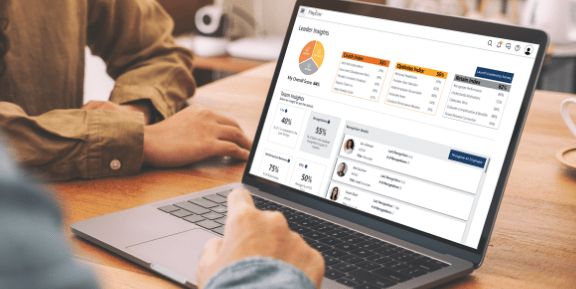

Managing healthcare staff schedules presents unique challenges that standard scheduling tools can’t address. Between compliance requirements, credential tracking, and 24/7 coverage, healthcare organizations need specialized employee scheduling software that is built for their industry.
And that’s where healthcare employee scheduling software saves the day.
What is Healthcare Employee Scheduling Software?
Healthcare employee scheduling software is a specialized platform designed to manage the unique staffing requirements of medical facilities. These systems help healthcare employers handle shift rotations, credential requirements, on-call scheduling, and regulatory compliance to determine effective schedules for healthcare staff.
Note: Most modern systems integrate with time and attendance tracking, payroll, electronic health records (EHR), and HR management software to eliminate duplicate data entry and provide real-time visibility into labor costs.
Benefits of Using Employee Scheduling Software
Many benefits come with using a healthcare scheduling software for employees. Some of these benefits include:
Scheduling Automation
The best healthcare scheduling software will dramatically reduce the time you spend creating and adjusting schedules. The software automatically fills shifts based on staff availability, staff qualifications, labor laws, union rules, and budget constraints—all at the same time.
As a result, you and your management team can spend more time focusing on patient care and professional development.
Automatic Compliance
Built-in compliance management helps you enforce rules around rest periods, consecutive shifts, and overtime limits.
Credential tracking ensures only qualified staff are assigned to specialized tasks, and detailed audit trails provide documentation for compliance reviews and labor disputes.
Employee Self-Service Access
By using healthcare employee scheduling software, you can give your staff more control over their schedules through mobile access, including the ability to request time off, swap shifts, and pick up extra hours. This flexibility improves work-life balance and reduces conflicts.
Labor Cost Visibility
Healthcare scheduling systems alert managers when schedules exceed targets or when staff approach overtime thresholds. By matching staffing levels to patient demand, you can reduce unnecessary labor expenses while maintaining high-quality care.
Healthcare Employee Scheduling Software Considerations
Finding the best healthcare scheduling software for healthcare facilities requires careful consideration. Here are a few factors you should think about when researching your options:
Integrations
Your scheduling software must connect with your EHR system, payroll provider, HR management software, and time tracking tools. Look for platforms that support APIs or connectors that can sync your data real-time and simplify the process.
Mobile Access
Healthcare staff need schedule access from anywhere at any time. The best software has a mobile app that helps make this happen, letting employees view schedules, request time off, swap shifts, and receive notifications. From the same app, managers can approve requests and fill open shifts on the go.
Shift Monitoring
Look for dashboard views that show current shift coverage, upcoming gaps, and staff availability alongside alerts. The real-time monitoring lets managers maintain staffing levels and respond quickly to changes when they need to.
Employee Reporting & Analytics
Your healthcare scheduling system should also offer custom reports on labor costs, credential expiration, and staffing patterns. Although this is sometimes forgotten about during the research process, many find helpful later when they are wanting to analyze historical data to create future schedules.
Security Protocols
Healthcare data security is non-negotiable. And the best healthcare scheduling software will help you maintain HIPAA compliance with role-based access controls, audit trails, and SSO. If the software does not provide these capabilities, it’s a sign to move on.
5 Best Employee Healthcare Software Systems & Apps
There are many solutions you can consider in the staff and employee healthcare scheduling software market, which could make it difficult to find the right one. Fortunately, we’ve made it simple for you. Here are the best employee and staff scheduling solutions for the healthcare industry:
Paycor
Paycor stands out as comprehensive healthcare scheduling software that combines intelligent automation with healthcare-specific features. According to Capterra, users praise its “excellent features for workforce management, including clock-in and clock-out tracking, access control, and leave management.”
Industry Focus: Paycor serves healthcare facilities including hospitals, medical practices, long-term care facilities, and ambulatory centers with 500+ employees. The platform addresses complex healthcare workflows including credential tracking, certification management, and 24/7 shift coverage requirements.
What the Software Does: Paycor provides healthcare-focused scheduling including AI-powered schedule optimization, credential and certification tracking, real-time labor cost visibility, automated compliance with labor laws, shift management, and seamless integration with time tracking and payroll systems.
G2 users note it’s “an excellent application for managing payroll, HR, and workforce needs in one place” with “scheduling, time tracking, and performance management.”
Key Features: AI-powered schedule optimization, healthcare credential tracking, real-time labor cost monitoring, mobile app for staff, automated compliance enforcement, shift swap and time-off management, comprehensive reporting, integration with payroll and time tracking.
Pros
- Capterra users say it “streamlined the payroll and HR systems for us” with “scheduling, new hires, terminations, LOAs, wage increases, promotions, timecards & reports”
- Unified HCM platform eliminates data silos between scheduling, payroll, and HR
- Healthcare-specific credential and certification tracking
- AI-powered scheduling optimizes staffing based on patient demand
- G2 reviewers appreciate the “mobile app is especially convenient, allowing employees to quickly check their hours, request time off, and view pay history”
Cons
- Best suited for healthcare organizations with 500+ employees
- Maximum value requires leveraging multiple Paycor HCM modules
Paychex
Paychex offers robust workforce management capabilities with strong payroll integration designed for healthcare organizations. The platform provides tools for scheduling, time tracking, and labor cost management with healthcare-specific compliance features.
Industry Focus: Paychex offers robust workforce management capabilities with strong payroll integration designed for healthcare organizations. According to Capterra, users note it “streamlined the payroll and HR systems for us” with “scheduling, new hires, terminations, LOAs, wage increases, promotions, timecards & reports.”
What the Software Does: Paychex Flex provides scheduling with shift templates, automated schedule generation, mobile access for employees, credential tracking, and direct integration with payroll processing. The system tracks employee certifications and sends renewal alerts to maintain regulatory compliance.
Key Features: Automated scheduling, shift templates, mobile employee access, credential tracking with alerts, payroll integration, time and attendance tracking, compliance management, reporting and analytics.
Pros
- Capterra reviewers note “the workflow is logical & easy to use” with “scheduling, new hires, terminations, LOAs, wage increases, promotions, timecards & reports”
- Comprehensive HR and benefits administration capabilities
- G2 users appreciate the “customization report that he can produce for analytical HR” and “dedicated service to member who is willing to help”
- Automated credential tracking with expiration alerts
Cons
- May require additional modules for full healthcare scheduling capabilities
- Implementation complexity for comprehensive setup
- Higher cost structure for complete workforce management suite
Deputy
Deputy provides workforce management and scheduling designed for diverse industries including healthcare. According to Capterra users, “Deputy is the best scheduling software I have used” and praise how “it’s easy to get the hang of, navigate, and succeed in.”
Industry Focus: Deputy serves healthcare facilities along with retail, hospitality, and other shift-based businesses. The platform works well for small to mid-sized healthcare practices, clinics, and medical offices requiring flexible scheduling.
What the Software Does: Deputy provides scheduling with AI-powered auto-scheduling, time tracking, compliance tools, and real-time shift updates. Capterra reviewers note “Deputy saved me a ton of time with keeping track of scheduling needs, time off requests, and logging employee timecards.”
Key Features: AI-powered auto-scheduling, mobile apps for managers and employees, time tracking and attendance, POS and payroll integrations, demand-based scheduling, compliance tools, shift confirmations, real-time updates.
Pros
- Capterra users praise it as “user friendly” that “allows for accurate time tracking”
- Demand-based scheduling adapts to patient volume fluctuations
- Affordable pricing for small healthcare practices
- Simple, intuitive interface with minimal training required
Cons
- Capterra reviewers note “sometimes the app lagged or took a while to load”
- Limited healthcare-specific credential management features
- May lack advanced features needed for large hospital systems
When I Work
When I Work provides employee scheduling and team communication designed for shift-based workforces. According to G2 users, the platform is “user-friendly and efficient” for “managing schedules and communication” and “makes it easy for staff to view shifts, request time off, and swap shifts.”
Industry Focus: When I Work serves small to mid-sized healthcare practices, medical offices, clinics, and veterinary practices. The platform is particularly popular among organizations with 25–200 employees requiring straightforward scheduling solutions.
What the Software Does: When I Work provides shift scheduling, time tracking, team messaging, and mobile access for both managers and employees. Capterra reviewers note “ease of creating shifts, dropped shift reports, ease of using the app for clock in/out.”
Key Features: Shift scheduling with templates, mobile clock in/out, team messaging, shift swap management, time-off requests, availability tracking, schedule confirmations, payroll integrations, basic reporting.
Pros
- G2 users highlight how it “saves time” and “reduces confusion” with “clear layout and real-time updates”
- Strong employee engagement features and built-in team communication
- Affordable pricing starting at $1.50 per user monthly
- Simple interface requires minimal training
Cons
- G2 reviewers note “it can feel limited when schedules change frequently”
- Limited credential and certification management for healthcare compliance
- Basic reporting compared to enterprise healthcare scheduling platforms
ShiftWizard
ShiftWizard by HealthStream provides workforce management and scheduling developed specifically for healthcare organizations. According to Capterra users, it’s “a helpful tool in maintaining the schedule in our busy healthcare department” and “ShiftWizard has some great functions” with “overview of the department schedule which is very icon-driven.”
Industry Focus: ShiftWizard serves hospitals, health systems, long-term care facilities, and large healthcare organizations requiring enterprise-grade scheduling. The platform specializes in complex healthcare environments with float pools, multiple departments, and advanced staffing requirements.
What the Software Does: ShiftWizard provides comprehensive workforce management including scheduling, float pool management, productivity tracking, forecasting, and communication tools. G2 notes it was “developed specifically for healthcare organizations” with “modern design, centralized decision support, third-party integration capabilities.”
Key Features: Healthcare-specific scheduling, float pool and staffing management, credentialing functionality, predictive analytics for staffing requirements, self-scheduling module, shift swapping, mobile access, integration with EMR and time tracking systems, productivity dashboards.
Pros
- Capterra users note “user friendly and ease of access via app and desktop”
- Advanced float pool and staffing management for complex healthcare environments
- Built specifically for healthcare with KLAS Category Leader recognition
- First healthcare scheduling solution with Workday-certified integration
Cons
- Capterra reviewers report “login issues, limited app functions compared to desktop, and occasional glitches”
- Higher price point than general scheduling tools
- May be more complex than needed for small practice
How to Choose the Best Healthcare Staff Scheduling Software
Finding a healthcare scheduling software for your staff requires careful consideration. . Follow the below steps to find your best solution:
Assess Your Organization’s Specific Needs
Start by documenting your current scheduling challenges, workforce size, shift complexity, and regulatory requirements. Then, talk with members of your staff from different departments to understand their scheduling pain points. This will help you learn what your must-have features are.
Evaluate Integration Capabilities
Test integration capabilities during trial periods—especially when it comes to your EHR, payroll, and HR systems. Poor integration can lead to duplicate data entry, errors, and frustrated users.
Prioritize User Experience and Adoption
Keep your users in mind. It’s that simple. Most feature-rich software fails because teams won’t use it. Make sure the mobile app is easy to use and consider how difficult the learning curve might be.
Tip: Part of the overall user experience includes the implementation. Consider implementation support and training programs as you evaluate your options.
Consider Scalability and Growth
You want a software that can grow with your organization. So, ask yourself:
- Does the pricing get more expensive when you add users?
- Does it support multiple healthcare facilities?
- Does it support locations across states?
If the answer is “yes” to all three, you may have found your new software.
Compare the Costs
Never just choose the cheapest option. You need to make sure you balance the total cost of ownership, including subscription fees, implementation, training, and integration.
Best Employee Healthcare Scheduling System Features
The best healthcare scheduling software includes specific features that address the unique needs of medical facilities. Some of these features include:
Automatic Time Tracking
Integrated time and attendance software eliminates the disconnect between scheduled hours and actual worked time. Your staff clock in and out through the same system that manages their schedules, with the software automatically flagging discrepancies between scheduled and actual attendance.
Payroll Integration
Seamless payroll integration automatically transfers time data to your payroll provider, applying correct pay rates, shift differentials, overtime calculations, and deductions. This eliminates duplicate data entry, reduces payroll errors, and provides real-time visibility into labor costs to help managers stay within budget.
Mobile Applications
Mobile apps let staff view upcoming shifts, request time off, swap shifts, and pick up open shifts from their phones. Push notifications alert them to schedule changes and shift openings. Then, managers can approve requests and fill urgent shifts from anywhere.
Tip: Find an employee healthcare scheduling app that has the same features of the desktop version.
Time Analytics & Insights
Advanced analytics track key metrics including labor costs, overtime trends, schedule adherence, and shift fill rates. Historical data analysis helps you optimize future schedules while predictive analytics forecast demand and recommend optimal staffing levels.
Costs of Healthcare Staff Scheduling Software to Consider
Monthly subscription fees are the most common expense. But there are several other cost factors that impact total costs, such as:
Training Costs
Training costs include both the vendor’s services and internal time investment. Some vendors include training in implementation; others charge separately. Factor in ongoing training needs for new hires.
Integration Costs
Integration expenses vary based on your technology. Some platforms offer free pre-built connectors to popular payroll and HR systems, while others charge for setup or custom development.
Note: Some software companies may have additional costs for complex integrations with custom EHR systems.
Usage Limit Costs
Some platforms use pricing tiers based on user count, locations, or active schedules. Clarify whether pricing includes all employees—including part-time, per diem, and contract staff—and ask about overage charges. Per-location or per-department pricing can add up quickly for multi-site healthcare systems.
Subscription Costs
Healthcare scheduling software typically prices per user per month, with discounts for annual commitments. Compare whether vendors charge per employee or per administrator, understand what’s included in the base tier versus add-ons, and factor in annual price increases. Calculate total subscription cost over your expected usage period for accurate platform comparisons.
So, What’s the Best Healthcare Scheduling Software for Employees?
The best healthcare scheduling software depends on your organization’s unique needs, size, and priorities.
But small businesses with straightforward scheduling needs may thrive with simple more affordable solution, while large hospitals may need sophisticated healthcare scheduling software platforms that handle complex scenarios.
The best choice for your business will balance features against costs, prioritize integration, and match your organization’s size and complexity.
Why Choose Paycor Healthcare Employee and Staff Scheduling System
Paycor combines intelligent automation with features specifically designed for medical facilities.
Our employee scheduling software uses AI-powered schedule optimization, comprehensive credential tracking, real-time labor cost visibility, and seamless payroll integration to address the core challenges healthcare organizations face regularly.
The software can scale from small practices to large healthcare systems. And its simple design and easy-to-navigate user experience make it feel like it was created from the ground up for medical facilities.
Use Paycor’s Best Employee Scheduling Tools for Healthcare
Ready to transform your healthcare employee and staff scheduling? Take a Guided Tour of Paycor’s healthcare solutions to see how our employee scheduling software can improve your operations, reduce costs, and enhance staff satisfaction.
The information in this article is based on research of the third-party review websites cited. Information is accurate as of February 13, 2026, and is subject to change.
- Paycor Capterra user reviews from February 13, 2026
- Paycor G2 user reviews from February 13, 2026
- Paychex Capterra user reviews from February 13, 2026
- Paychex G2 user reviews from February 13, 2026
- Deputy Capterra user reviews from February 13, 2026
- When I Work G2 user reviews from February 13, 2026
- When I Work Capterra user reviews from February 13, 2026
- ShiftWizard Capterra user reviews from February 13, 2026
- Shiftwizard G2 user reviews from February 13, 2026