







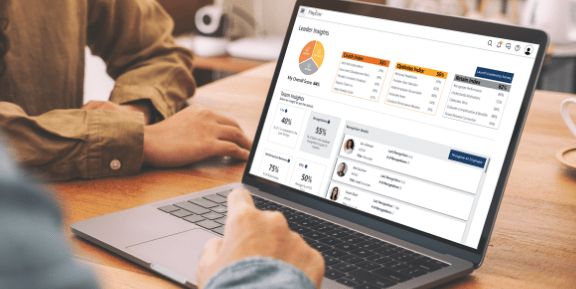

Annual reviews alone no longer meet the needs of today’s workplace.
If you’re grappling with inconsistent evaluations, low engagement, or unclear performance data, the right performance management software can create accountability, improve manager effectiveness, and link individual performance to business outcomes.
Read on to learn more about the best performance management software tools, features, and benefits—and how to choose the right one for your business.
What is Performance Management Software?
Performance management software is a digital platform that structures, automates, and enhances the employee evaluation process. These systems move organizations beyond spreadsheets and manual reviews by providing tools that help managers set goals, conduct performance reviews, track progress, deliver feedback, and analyze workforce performance.
Considerations for Choosing The Best Employee Performance Management Tools
When evaluating performance management software, prioritize these key factors:
Functionality
Does the core functionality support your performance management practices? Evaluate platforms based on review cycle flexibility (annual, quarterly, continuous), goal-setting frameworks (OKRs, SMART goals, cascading objectives), feedback mechanisms (360-degree, peer, upward), 1-on-1 meeting tools, development planning capabilities, and performance improvement plan (PIP) workflows. Advanced functionality includes calibration sessions, succession planning, and competency assessments.
User Experience
Intuitive interfaces drive adoption across all user groups—employees completing reviews, managers providing feedback, and HR administrators configuring cycles. Poor user experience results in incomplete reviews, rushed feedback, and low engagement. Look for clean navigation, contextual help, mobile access, and minimal clicks to complete common tasks. User experience directly impacts participation rates and data quality.
Scalability
Performance management software must scale with organizational growth and complexity. Evaluate capacity for user volume, support for multiple review cycles running simultaneously, ability to accommodate diverse organizational structures, and performance during peak usage periods. The platform should handle global operations with multi-language support and regional compliance requirements.
Integration
Seamless HRIS integration helps ensure employee data accuracy and eliminates manual updates. Prioritize platforms with native integrations or robust APIs connecting to your HRIS, payroll, learning management systems, and communication tools. Real-time synchronization maintains data consistency, while single sign-on (SSO) simplifies access. Integration quality directly affects administrative efficiency and data reliability.
Analytics
Comprehensive analytics transform performance data into actionable insights. Essential reports include completion rates by department, performance distribution, goal achievement metrics, competency gaps, high performer identification, and turnover correlation with performance ratings. Advanced analytics offer predictive insights about retention risks and succession readiness. Customizable dashboards provide real-time visibility for the C-suite and HR leaders.
Compliance
Performance management documentation supports legal compliance and risk management. The system should maintain complete audit trails, secure historical data, support documentation for employment decisions, and enable fair, consistent evaluation processes. Features like bias detection in feedback, standardized review criteria, and comprehensive record-keeping protect organizations during disputes. Data privacy controls must comply with GDPR, CCPA, and other regulations.
5 Best Performance Management Systems & Software
If you’re considering a new process for employee performance evaluation, here are a few of the are some of the top performance management solutions designed to help organizations develop ,data-driven approaches to employee development.
Paycor
Paycor provides performance management software integrated within its comprehensive HCM platform. The system supports continuous performance management, goal alignment, and talent development for mid-market and enterprise organizations.
Core Functionality: Paycor Performance Management enables customizable review cycles, goal tracking aligned with organizational objectives, continuous feedback and recognition, 1-on-1 meeting documentation, development planning, and performance analytics. Integration with Paycor’s HCM modules connects performance data to compensation, succession planning, and learning initiatives.
Key Features: Flexible review cycles, goal cascading, competency assessments, 360-degree feedback, performance improvement plans, check-in tracking, analytics dashboards, mobile access, and seamless integration with Paycor HCM.
Pros
- Unified HCM platform connects performance, compensation, and development seamlessly
- Flexible configuration adapts to different performance management philosophies
- Real-time analytics provide actionable workforce insights
- Dedicated implementation and customer success support
Cons
- Implementation process can be complex depending on organization requirements
- Best value realized when using multiple Paycor HCM modules
Lattice
Lattice is a people success platform combining performance management, engagement, and development tools. According to Capterra, Lattice “keeps reviews, surveys, and goal tracking connected in one flow” and “saves time on coordination.”
Core Functionality: Lattice emphasizes continuous feedback and structured development. G2 reviewers note “Lattice tools have made it much easier to maintain consistency in how we interact with our team members” and the platform “streamlines these processes and simplifies our workflow.”
Key Features: Performance reviews, OKRs and goals, 1-on-1 meetings, continuous feedback, engagement surveys, career development, compensation management, and AI-powered insights.
Pros
- Capterra users describe it as “a great tool to get feedback from colleagues and managers regarding your tasks, objectives and progress.”
- Clean, intuitive interface widely praised for usability
- G2 reviewers highlight ability to “establish a continuous feedback culture”
- Comprehensive suite covers performance, engagement, and development
Cons
- Capterra reviewers note it “requires too much training to get full usability and pricing becomes high when add-ons are required”
- Modular pricing structure can increase costs with multiple add-ons
- $4,000 minimum annual spend may exceed small business budgets
15Five
15Five focuses on continuous performance management through weekly check-ins and manager effectiveness. According to G2, 15Five “is a valuable tool to manage team performance” that “offers meaningful features and suggestions to streamline and improve employee experience.”
Core Functionality: 15Five emphasizes regular manager-employee communication through structured check-ins. Capterra reviewers praise “the reporting and analytics offered by 15Five” noting “the robust amount of data you can access and generate actionable insights from.”
Key Features: Weekly check-ins, objective tracking, 1-on-1 meeting tools, peer recognition, engagement surveys, manager effectiveness coaching, and performance analytics.
Pros
- G2 users note it “helped us establish foundation and set the standard for processes surrounding communication, documentation, goal setting”
- Strong focus on manager development and effectiveness
- Emphasis on continuous feedback rather than annual reviews
- Capterra reviewers describe it as “easy to use and navigate”
Cons
- Capterra users report “questions begin to become repetitive over time” causing “engagement numbers to go down drastically”
- Some reviewers cite mobile access limitations
- Advanced features require higher-tier plans
Paychex Flex
Paychex Flex offers performance management as part of its comprehensive HR and payroll platform. The system provides structured review processes integrated with the broader Paychex ecosystem.
Core Functionality: Paychex Flex Performance Management supports customizable review templates, goal tracking, employee self-assessments, manager evaluations, and performance analytics. By integrating Paychex Flex with Paychex HR and payroll systems, you can connect performance data to compensation decisions and workforce planning.
Key Features: Review cycle management, goal setting, competency assessments, development plans, performance tracking, reporting tools, and mobile access.
Pros
- Capterra reviewers like the “better designed user interface, better user experience, and more features”
- Simplified vendor management for HR operations
- Structured review framework reduces administrative burden
- Strong customer support and implementation services
Cons
- Best value for organizations already using Paychex services
- May offer less customization than specialized performance platforms
- Advanced analytics capabilities may be limited
- G2 reviewers cite high costs as a potential barrier to entry
BambooHR
BambooHR provides performance management functionality within its HRIS platform, which is designed for small to mid-sized businesses. The system offers straightforward performance tracking that integrate with core HR functions. Capterra users highlight its clean interface and centralized records.
Core Functionality: BambooHR Performance Management enables goal setting, performance reviews, self-assessments, manager feedback, and basic analytics. The platform emphasizes simplicity and ease of use, making performance management accessible for organizations new to structured evaluation processes.
Key Features: Goal tracking, review cycles, self-evaluations, manager assessments, performance history, employee access, and integration with BambooHR HRIS.
Pros
- User-friendly interface requires minimal training. One Capterra user says, “It’s very intuitive and you can tell that it’s designed by people who are passionate about people management.”
- Quick implementation suitable for small businesses
- Integrated with core HR functions in single platform
- Affordable pricing for small to mid-sized organizations
Cons
- Limited advanced features compared to specialized platforms. A G2 reviewer says, “reporting options can be basic and sometimes require workarounds”
- Less customization for complex performance frameworks
- May not scale effectively for large enterprises
How to Choose the Best Performance Management Tools
To find the best performance management software for your business, here’s what you need to do:
Step 1: Document Your Current State
Analyze your existingperformance management process to identify pain points, measure completion rates, and gather feedback from managers and employees. Understanding current challenges helps prioritize features that address specific problems.
Step 2: Define Your Philosophy
Clarify your performance management approach. To do this, ask yourself:
- Do we conduct annual reviews or provide feedback continuously year-round?
- Do we want to use a rating scale or provide narrative feedback to our employees?
- Are we going to using individual goals? Team goals? Or both?
The employee evaluation software that is best for your business will support your chosen philosophy.
Step 3: Evaluate Features
Even the best employee performance software will have features that separate themselves from each other. Analyze these features and compare the platforms based on capabilities that matter most to your organization. Focus on finding a software that address your specific challenges rather than pursuing a solution with a list of comprehensive features.
Step 4: Analyze Costs
Look beyond the purchase and subscription fees to understand the total cost of ownership. Consider both initial investment and long-term costs as your organization grows, including:
- implementation services
- configuration time and efforts
- training requirements and costs
- integration support
- ongoing training
Step 5: Test Usability
Request demos and trial access, and have employees, managers, and HR administrators evaluate the workflows from their perspectives. A poor user experience will result in low adoption regardless of feature sophistication.
Step 6: Verify Integration
Confirm the platform integrates with your existing systems, including your HRIS, payroll, and workforce management solutions. Integration quality directly affects administrative efficiency and data reliability. Request technical specifications and test integration capabilities during trials.
The Best Employee Evaluation & Performance Management Software Features
Many of the leading performance management platforms share these important features:
Customizable Review Cycles
The system you choose should support annual, semi-annual, quarterly, and continuous review models. They should also offer you the ability to configure different cycles for various departments, role levels, or employee type, depending on what your business has. Essential features include automated scheduling, reminder notifications, escalation workflows for overdue reviews, and progress tracking dashboards showing completion rates across the organization.
Goal Alignment & Tracking
Robust goal management is something all employee performance software should have, because it can connect individual objectives to organizational strategy.
Look for platforms that support multiple goal frameworks (OKRs, SMART goals, KPIs), goal cascading, progress tracking, and visibility settings that promote transparency while respecting confidentiality.
Continuous Feedback
Real-time feedback mechanisms supplement formal reviews with ongoing recognition and coaching. Important capabilities include peer-to-peer feedback, manager-to-employee feedback, upward feedback, recognition and praise features, and feedback history that informs formal evaluations. Mobile-friendly feedback tools increase participation by making it easy to provide input in the moment.
Development Planning
Career development tools transform performance management from evaluation to growth. Look for professional development plan templates, competency frameworks, succession planning, skills gap analysis, learning recommendations, and progress tracking toward career goals. Integration with learning management systems connects development plans to training opportunities.
Performance Analytics
Comprehensive analytics convert performance data into strategic insights. Reports should include performance distribution across the organization, goal achievement rates by department, high performer identification, underperformance trends, completion rates for reviews and check-ins, and correlation between performance and retention. Predictive analytics identify flight risks and succession gaps. Customizable dashboards provide role-appropriate visibility for executives, HR leaders, and managers.
1-on-1 Meeting Management
Structured 1-on-1 tools improve manager-employee communication quality. The system should provide agenda templates, action item tracking, meeting history, note-taking capabilities, and reminders for scheduled check-ins. Shared agendas allow both parties to contribute topics, while historical notes provide context for ongoing conversations. Integration with performance reviews connects regular check-ins to formal evaluations.
Benefits of using the Best Performance Management Solutions
Improved Performance
Organizations using performance management software often report seeing improvements in goal achievement rates and stronger alignment between individual work and business objectives. This is because clear expectations, regular feedback, and documented progress help employees understand priorities and adjust when necessary.
Enhanced Manager Effectiveness
Performance management tools equip managers with structured frameworks for employee conversations. Templates, reminders, and historical context reduce the burden of performance documentation while improving feedback quality. Managers gain visibility into team performance patterns, identify development opportunities, and make data-informed decisions about promotions, compensation, and succession planning.
Increased Employee Engagement
Regular feedback and visible progress toward goals increase employee engagement and satisfaction. When employees understand how their work connects to organizational success and receive recognition for achievements, they demonstrate higher motivation and commitment. Performance management software that includes engagement surveys and pulse checks provides early warning of retention risks.
Better Talent Decisions
Rather than relying on manager memory or gut feel, organizations use documented performance history, goal achievement rates, and competency assessments to identify high performers, address underperformance, plan succession, and allocate development resources effectively.
Streamlined Administration
Automated workflows eliminate manual coordination of review cycles. The system handles reminders, tracks completion, escalates overdue items, and generates reports automatically. HR teams can save hours per review cycle while helping to ensure consistent, timely evaluations across the organization. Integration with HRIS systems prevents duplicate data entry and maintains accurate employee records.
Why Choose Paycor’s HR Performance Evaluation Tools
Paycor’s performance management software addresses the key considerations outlined above while delivering strategic advantages:
- Comprehensive Functionality: Paycor supports diverse performance management approaches from annual reviews to continuous feedback, with flexible review cycles, goal frameworks, 360-degree feedback, and development planning on a single platform.
- Intuitive User Experience: Clean, modern interfaces help ensure high adoption rates with minimal training required. Mobile-responsive design enables performance management from any device.
- Proven Scalability: The platform handles multiple simultaneous review cycles, complex organizational structures, and global operations without performance degradation.
- Seamless Integration: Native integration with Paycor’s HCM suite eliminates data silos, maintains real-time accuracy, and informs talent decisions across the employee lifecycle.
- Actionable Analytics: Real-time dashboards track performance trends, completion rates, and goal achievement, while predictive analytics identify retention risks and succession gaps.
- Compliance Support: Complete audit trails, secure records, and standardized processes support employment decisions and ensure fair, consistent performance management across the organization.
Evaluate Employees with Paycor’s Performance Management Tools
Paycor’s talent management software helps you create structured evaluation frameworks, connect individual goals to organizational strategy, and provide actionable insights that drive business results. With seamless integration to Paycor’s HCM software, you can eliminate disconnected systems and create a unified talent management strategy.
Interested in using Paycor’s platform for your performance management process?
Take a Guided Tour to see why Paycor has some of the best performance management software tools to transform employee development and deliver measurable improvements in performance, engagement, and retention.
Performance Management Software FAQs
Still have questions about finding a top employee evaluation software? Read on for more information.
Who should use employee evaluation tools?
Performance management software benefits organizations of all sizes seeking structured, consistent employee evaluation processes. Companies experiencing rapid growth, managing dispersed teams, or struggling with inconsistent performance documentation can realize increased value. Organizations with 50+ employees typically justify the investment through improved manager effectiveness, better talent decisions, and reduced administrative burden.
Can performance management systems help with succession planning?
Yes, performance management systems provide essential data for effective succession planning. The platforms identify high performers through documented performance history, track competency development against role requirements, assess readiness for advancement, and maintain visibility into internal talent pipelines.
How do I measure ROI for performance management software?
Measure performance management software ROI through both quantitative and qualitative metrics. Quantitative measures include time saved on review administration, increased review completion rates, reduced turnover among high performers, faster internal promotion processes, and decreased time-to-productivity for new hires receiving structured feedback. Qualitative benefits include improved manager confidence in performance conversations, better alignment between individual and organizational goals, enhanced employee engagement scores, and stronger succession pipelines.
The information in this article is based on research of the third-party review websites cited below. Information is accurate as of January 10, 2026, and is subject to change.
Lattice Capterra user review data from January 10, 2026′
Lattice G2 user review from January 10, 2026
15Five G2 user review data from January 10, 2026
15Five Capterra user review data from January 10, 2026
Paychex Flex Capterra user review data January 10, 2026
Paychex Flex G2 user review data January 10, 2026
BambooHR Capterra user review data January 10, 2026
BambooHR G2 user review data January 10, 2026