








Want to drive employee retention, boost engagement, and improve company culture at the same time? Start with employee recognition.
Your best employees know their market value. When they’re underappreciated, they update their resumes. But the reverse is also true: when they feel valued, they’ll stay longer, work harder, and bring better energy to their teams.
There’s no one-size-fits-all way to reward your best workers. Every company should design a unique recognition program based on budget and, more importantly, the team’s actual needs. Some recognition strategies cost nothing. Others are an investment. But all of them make employees feel valued and motivated.
What Are Employee Recognition Ideas?
Employee recognition ideas are methods HR can use to acknowledge workers’ contributions. These strategies range from formal programs (employee of the month awards, gift cards, etc.) to informal gestures (like handwritten “thank-you” notes).
But generic praise won’t get you very far. The most effective recognition ideas are timely, specific, and personal, because employees want to be celebrated in ways that align with their values and preferences.
Benefits of Using Employee Recognition Ideas
Recognizing employees can have measurable benefits. These include:
Improved Engagement: Recognized employees are more engaged at work. They take ownership of projects and go beyond minimum requirements. Only 21% of U.S. employees feel engaged at work (Gallup), leaving massive room for improvement through recognition.
Higher Productivity: When people know their work matters, they’re driven to do their best. Recognition reinforces the behaviors you want to see repeated.
Stronger Culture: Regular recognition builds a positive workplace culture. Teams that celebrate wins together develop stronger relationships.
Better Retention: Replacing an employee is expensive and disruptive. A strong recognition program can lower those costs. In the long term, it’s worth the investment. Recognition is one of several proven employee retention strategies that keep your best people on board.
Best Employee Recognition Ideas for Employers
- Handwritten Thank-You Notes
- Flexible Work Arrangements
- Social Media Recognition
- Spot Bonuses
- Extra PTO Days
- Gift Cards
- Surprise Coffee or Snack Deliveries
- Professional Development Opportunities
- Company Swag
- Personalized Gifts
- Wellness Program Perks
- Charitable Donations in Employees’ Names
- Shared Experiences
- Team Meals
- Team Celebration Events
- Group Bonuses or Incentives
- Team Awards
- Employee Appreciation Day
- Annual Awards Ceremony
- Milestone Celebrations
- Recognition Walls or Boards
- Peer-to-Peer Recognition Tools
- Team Shout-Out Channels
- Public Shout-Outs in Team Meetings
Low-Cost & Daily Employee Recognition Ideas
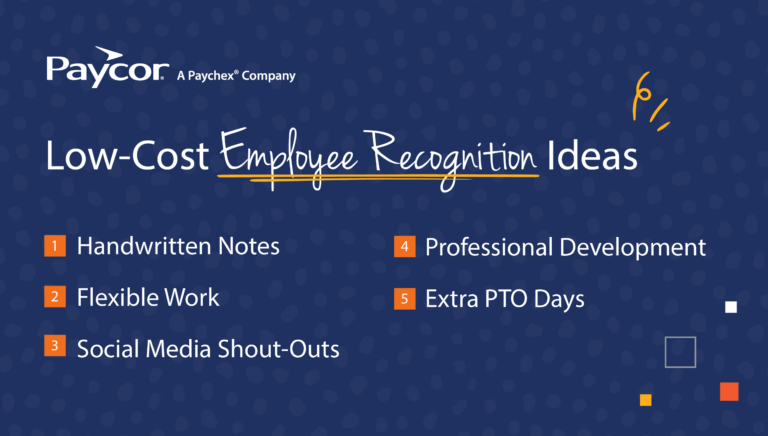
You don’t need a big budget to make employees feel valued. These low-cost ways to recognize employees deliver high impact without straining your finances.
1. Handwritten Thank-You Notes
A handwritten appreciation note takes five minutes to write and costs almost nothing, but it makes a lasting impression. Every note should be personalized, calling out exactly what the person did and why it mattered. “Thanks for staying late to finish the client proposal” beats “Great job!” every time.
2. Flexible Work Arrangements
Flexibility is one of the most valuable rewards you can offer. Let high performers adjust their schedules, work from home on certain days, or leave early on Fridays in the summer. This recognition shows you trust employees to manage their own time. It’s also beneficial for work-life balance, which improves well-being and employee retention.
3. Social Media Recognition
Celebrate employee wins on your company’s social media channels. Share their achievements, work anniversaries, or contributions to major projects. You can even tag them if they’re comfortable with it. This recognition extends beyond your company culture and builds your brand as a good employer. Just remember to ask permission first; not everyone wants to be the center of attention.
4. Spot Bonuses
Cash isn’t the only way to recognize a job well done, but it’s still important. If your budget permits, surprise employees with spot bonuses when they deliver exceptional results. These don’t need to be huge; even $50 makes an impact when it’s unexpected and tied to specific achievements. The immediacy matters more than the amount.
5. Extra PTO Days
Consider rewarding top performers with an extra day or two of PTO. This recognition addresses the ongoing issue of work/life balance, which has a major impact on retention rates. Employees will remember the gesture long after they return from their break.
6. Gift Cards
Gift cards offer flexibility, but unlike cash, they encourage employees to treat themselves to something fun. Let workers choose what matters to them, whether that’s dinner out or something for their family. Target the gift card to what you know about the person when possible. A book lover gets Barnes & Noble. A coffee enthusiast gets Starbucks. Generic Amazon cards work when you’re not sure, but personalization shows you pay attention.
7. Surprise Coffee or Snack Deliveries
Speaking of coffee, show up with coffee, donuts, or lunch for an employee who’s been working hard. The surprise element amplifies the impact. It doesn’t need to be expensive or elaborate, just thoughtful and timely. This works especially well when employees are putting in extra hours or managing stressful projects. And it quickly becomes one of your most effective staff recognition ideas.
Meaningful & High-Impact Employee Recognition Ideas
Recognition doesn’t have to be serious. Sometimes creative and unique recognition ideas work even better, improving the energy in your workplace while showing employees you value their hard work. Here are some examples:
8. Professional Development Opportunities
Invest in your employees’ growth and professional development. This could mean paying for online courses or conference tickets that align with their career goals.
This recognition shows you’re committed to their future, not just their current role. Employees who see a path forward at your company are less likely to look elsewhere. Plus, this strategy helps them build skills that benefit your business.
9. Company Swag
Give employees branded gear they’ll actually want to wear. High-quality hoodies, water bottles, or backpacks with your logo turn one-time recognition into a daily reminder that they’re part of something bigger. Skip the cheap pens and stress balls. Invest in items people use outside the office, and you’ll see your brand (and your appreciation) travel further.
10. Personalized Gifts
Generic gifts can easily feel transactional, while personalized gifts build relationships. Pay attention to what employees say about their hobbies and communities outside of work. When recognition reflects who someone actually is, it resonates more deeply than any standard corporate gift.
11. Wellness Program Perks
HR can support employees’ health and well-being as a creative way to recognize employees. For example, you can offer gym memberships, meditation app subscriptions, or ergonomic office equipment to top performers. Wellness perks communicate that you care about the whole person, not just their output. These benefits have ongoing value, reinforcing your appreciation every time employees use them.
12. Charitable Donations in Employees’ Names
Some employees prefer recognition that helps others. For these team members, offer to donate to causes they care about in their names. Let them choose the charity or select from a pre-approved list. This approach works particularly well for employees who feel uncomfortable with public praise or material rewards. You’re honoring their values and making a difference without putting them on the spot.
13. Shared Experiences
What activities would your specific employees enjoy doing as a group outside of work? HR can reward them with tickets to a sporting event, a team cooking class, an escape room, or a volunteer day, for example. Shared experiences build stronger relationships that carry over into the workplace. Let teams choose their activity whenever possible.
Team & Milestone Recognition & Appreciation Ideas & Activities
Team-based recognition celebrates collective achievements and strengthens collaboration. These approaches recognize groups for working together toward shared goals.
14. Team Meals
Bring your team together for lunch, dinner, or happy hour. These shared experiences build relationships while celebrating collective wins. Let the team vote on where to go or what to order in.
15. Team Celebration Events
Host celebrations when teams hit major milestones or complete big projects. This could be a catered lunch or dedicated time to reflect on what the team accomplished. Invite employees to help plan the celebration so it reflects what they actually want to do.
16. Group Bonuses or Incentives
Team bonuses reinforce that success comes from collaboration, not just individual performance. Structure these financial incentives around metrics the team can control together, like hitting revenue goals or improving customer satisfaction scores.
17. Team Awards
If your company hosts an annual awards ceremony, create a few categories to recognize team achievements. Consider options like Best Cross-Functional Collaboration, Most Innovative Solution, or Strongest Customer Impact. Team awards shift the focus from individual competition to collective success.
18. Milestone Celebrations
Celebrate work anniversaries, project completions, or company achievements with dedicated events. You could celebrate five-year anniversaries with a lunch or blow off steam after a major project launch with an office party. By consistently recognizing milestones, you show employees you appreciate both their productivity and their long-term commitment to the company.
19. Employee Appreciation Day
Dedicate one day each year (or quarter) to celebrating your entire workforce. Plan activities throughout the day: breakfast, games, awards, or early dismissal. The specifics matter less than the clear message that you value everyone’s work. Many companies tie this to Employee Appreciation Day (the first Friday in March), but you can choose any date that works for your calendar.
20. Annual Awards Ceremony
Host an event celebrating your team’s achievements. Whether it’s an elegant dinner or a casual afternoon gathering, create categories that matter to your culture: innovation, collaboration, customer service excellence, mentorship, and so on. Let peers nominate each other and make the announcements special. An annual ceremony builds anticipation throughout the year and gives everyone something to work toward.
Peer-to-Peer and Public Recognition Ideas
Peer appreciation often means more than praise from management. These programs empower employees to recognize each other directly.
21. Recognition Walls or Boards
Create a physical space to celebrate your team. Set up a board in a high-traffic area where employees can post notes thanking colleagues or celebrating wins. Keep it updated and visible. A stale board sends the wrong message. Digital versions work too, but there’s something powerful about walking past a wall covered in fun shout-outs every day.
22. Peer-to-Peer Recognition Tools
Provide tools for employees to recognize each other without manager approval. For example, dedicated recognition tools let employees give public shout-outs when they see great work. To build a culture of gratitude, managers can offer additional rewards or prizes for people who give and get the most peer recognitions.
23. Team Shout-Out Channels
Create a dedicated online space for recognition only. Employees can drop messages thanking colleagues for help, celebrating wins, or highlighting someone’s effort. The public nature amplifies impact; everyone sees who’s contributing and how. HR can keep it active by modeling the behavior and encouraging managers to participate.
24. Public Shout-Outs in Team Meetings
Recognition hits differently when it happens in front of peers. Set aside time once a week for employees to recognize each other’s contributions. This can be as simple as sending a weekly email or reserving 5 minutes of your department meeting. Encourage employees to make it specific: “Sarah caught an error in the budget before it went to the board” tells the story better than “Sarah did great work.”
How to Recognize Employees at Work
Building an effective recognition program takes more than good intentions. Follow these steps to create a system that works for your team and your budget.
Identify Employee Preferences
Not everyone wants public recognition. Some employees prefer private acknowledgment, and others value experiences over gifts.
Survey your workforce to understand which types of recognition resonate most. Ask direct questions:
- Would you rather have extra time off or a bonus?
- Do you prefer public praise or private appreciation?
The answers empower HR to design a program people actually want.
Set Clear Recognition Criteria
Is your recognition program fair, or do your managers play favorites? HR should establish clear criteria to level the playing field. Tie recognition to specific behaviors or outcomes that support company goals, like exceeding sales targets, demonstrating leadership, solving customer problems, and mentoring colleagues.
Train Managers on Recognition Best Practices
Managers deliver the most day-to-day recognition…but many of them lack training. When leaders understand the nuances of this process, it becomes more effective and meaningful.
Teach your team about timing (recognize achievements quickly), specificity (name exactly what the person did), and sincerity (mean what you say). Good recognition skills strengthen relationships and company culture.
Track Recognition Data
Monitor who’s getting recognized, how often, and by whom. The patterns can reveal important gaps. Are certain teams or departments being overlooked? Do some managers recognize frequently, while others never even say thank you? Data helps you spot inequities and intervene when needed.
Ask for Feedback and Adjust
Like any HR initiative, employee recognition should meet your team’s actual needs…which will naturally change over time. Solicit employee feedback through regular surveys and use the data to refine your strategy. This practice opens the lines of communication and demonstrates how much you care about workers’ well-being.
How Paycor Helps You Recognize Employees and Staff
Employee recognition gets more complicated as your workforce grows. Paycor’s talent management software streamlines the process, so workers get the support they need while HR leaders can focus on strategy.
Paycor is an HCM software with user-friendly employee recognition software. Workers and managers can use our tools to celebrate each other without switching between systems. The platform seamlessly connects recognition to performance reviews, career development, and succession planning. This unified system empowers HR to simplify talent management, nurture top performers, and drive long-term business results.
Streamline Your Ways of Recognizing Employees
The best employee recognition ideas are straightforward and fair to everyone on your team. Paycor’s HR software gives you the tools to track, measure, and improve how you recognize employees, without adding to your administrative burden.
Ready to build a recognition program that really works? Schedule a guided tour to get started
FAQS about Employee Recognition Ideas
Still have questions about employee recogntion? Read on.
How do you creatively recognize employees?
Creative employee recognition can include personalized gifts, public shout-outs in meetings, team celebrations, or surprise rewards like extra time off or lunch deliveries. The most effective ideas are timely, personal, and tailored to what the employee values most.
What are inexpensive employee recognition ideas?
Inexpensive employee recognition ideas include handwritten thank-you notes, public shout-outs during team meetings, social media recognition, or surprise coffee or snack deliveries. These small gestures can have a big impact when they are specific and sincere.
What is the difference between employee recognition and appreciation?
Employee recognition typically acknowledges specific achievements or performance, such as completing a project or hitting a goal. Employee appreciation is broader and focuses on valuing employees for who they are and their overall contributions to the organization.
What kinds of employee recognition matter most to workers?
Employees often value recognition that is timely, specific, and personalized, such as public praise, professional development opportunities, or extra time off. Recognition that aligns with individual preferences and highlights meaningful contributions tends to have the greatest impact.