







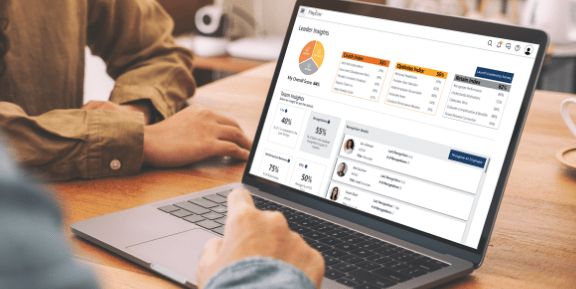

HR software does far more than track employee information, or at least it should. It’s the foundation of an efficient, compliant, and connected workplace. The right HR system saves time, reduces manual errors, and even gives leaders insights into their people data.
As organizations face increasing complexity in workforce management, regulatory compliance, and employee retention, the role of HR technology has never been more important.
Below, we break down the 15 HR software features every employer should know about, from must-have basics to advanced tools that drive real business change.
What Features Are in HR Software?
Every HR system is different, but most include a common set of features designed to automate core HR functions and streamline people management. The specific features you need will depend on your organization’s size, industry, and strategic priorities.
HR Software Features List
- Employee Database Management
- Payroll & Tax Automation
- Time & Attendance Tracking
- Benefits Administration
- Recruiting & Applicant Tracking (ATS)
- Employee Self-Service
- Employee Onboarding
- Talent Development
- Learning
- Scheduling & Workforce Management
- HR Analytics & Reporting
- Compliance Management
- Compensation Management
- Expense Management
- AI & Predictive Insights
Common HR Software Features
These features form the backbone of any Human Resource Information System (HRIS) or Human Capital Management (HCM) platform. They address the foundational administrative tasks that every HR department manages, regardless of company size or industry:
1. Employee Database Management
This HR software features helps you centralizes employee information — from contact details and job titles to performance history, certifications, and emergency contacts — for secure, easy access across departments.
Why it matters:
A unified employee database eliminates data silos, reduces duplicate data entry, and ensures everyone works from a single source of truth. This feature typically includes customizable fields, document storage, organizational charts, and robust search capabilities. Strong database management also enables better reporting and data accuracy across all HR functions.
Key capabilities to look for:
- Customizable data fields and employee profiles
- Document management and digital file storage
- Role-based access controls for data security
- Audit trails showing who accessed or modified records
- Integration with other HR modules and business systems
2. Payroll & Tax Automation
Automation helps eliminate manual payroll errors and helps ensure compliance with wage, hour, and tax laws. Modern payroll software automates calculations, tax filings, and direct deposits while keeping pace with changing regulations.
Why it matters:
Payroll mistakes can damage employee trust, trigger costly penalties, and consume significant HR time to correct. Payroll automation helps ensure accuracy, timeliness, and compliance while freeing HR staff to focus on strategic initiatives.
Key capabilities to look for:
- Automated tax calculations and filing for federal, state, and local jurisdictions
- Direct deposit and multiple payment methods (checks, pay cards, etc.)
- Wage garnishment management
- Year-end tax form generation (W-2s, 1099s)
- Multi-state and multi-jurisdiction payroll processing
- Integration with time and attendance systems
- Mobile access for managers and employees
3. Time & Attendance Tracking
Tracking employee’s hours is another important part of HR, which is why high-quality HR software has features that help you tracks employee hours, absences, and scheduling. This helps simplify workforce management and improve accuracy in payroll processing.
And today’s time tracking goes beyond basic clock-in/clock-out functionality to include mobile timekeeping, geofencing, and automated overtime calculations.
Why it matters:
Accurate time tracking prevents errors, reduces time theft, and helps ensure compliance with labor laws, while providing visibility into labor costs. Real-time data also helps managers make informed staffing decisions and identify patterns in absenteeism or overtime usage.
Key capabilities to look for:
- Multiple clock-in methods (biometric, mobile app, web-based, physical time clocks)
- Geolocation and geofencing for mobile workforces
- Automated overtime and break compliance rules
- PTO accrual and balance tracking
- Exception reporting and approval workflows
- Integration with payroll and scheduling systems
4. Benefits Administration
Benefits administration is designed to simplify open enrollment and eligibility tracking by allowing employees to compare, select, and manage benefits directly in the system. Common employee benefits plans include health insurance, retirement plans, flexible spending accounts, and voluntary benefits such as pet insurance.
Why it matters:
Benefits administration is time-consuming and can be error-prone when handled manually. Digital benefits management improves employee understanding of their options, reduces administrative burden, helps ensure accurate deductions, and helps maintain compliance with regulations such as ACA and COBRA.
Key capabilities to look for:
- Online enrollment with decision support tools
- Plan comparison and cost calculators
- Eligibility rules and qualifying event management
- Carrier integration and EDI feeds
- COBRA administration
- Benefits communication tools
- Compliance reporting (ACA 1094/1095 forms)
5. Recruiting & Applicant Tracking
Having recruiting and applicant tracking systems in place streamlines the entire hiring process from job posting to offer letter. Applicant tracking systems (ATS) automate applicant communication, interview scheduling, and candidate evaluation while maintaining compliance with equal employment opportunity requirements.
Why it matters:
High-quality hiring is key to organizational success, yet the recruiting process is often fragmented and inefficient. An ATS centralizes all candidate information, improves the candidate experience, reduces time-to-hire, and provides data to optimize your recruiting strategies.
Key capabilities to look for:
- Job posting to multiple boards with one click
- Resume parsing and candidate database
- Customizable application workflows
- Interview scheduling and calendar integration
- Collaborative hiring tools for team-based decisions
- Compliance tracking and EEO reporting
- Candidate communication automation
- Career site integration
- Offer letter generation and e-signature
6. Employee Self-Service
Employee self-service enables employees to update personal details, access pay stubs, enroll in benefits, request time off, and manage their HR tasks, reducing administrative work for HR and empowering employees with direct access to their information.
Why it matters:
Self-service reduces HR’s transactional workload and enables the team to focus on strategic initiatives. Employees appreciate the convenience and transparency of accessing their information 24/7 from any device. Self-service also improves data accuracy since employees update their own information.
Key capabilities to look for:
- Mobile-responsive portal accessible from any device
- Personal information updates (address, emergency contacts, etc.)
- Pay stub and W-2 access
- Time-off requests and balance visibility
- Benefits enrollment and plan information
- Schedule viewing and shift preferences
- Direct deposit management
- Performance goal tracking
- Learning course enrollment
- Company directory and org chart access
Popular HR Software Features
These features enhance collaboration, culture, and engagement, going beyond the basics to make HR more strategic. They represent the evolution of HR technology from administrative tool to strategic enabler:
7. Employee Onboarding
Onboarding solutions digitize paperwork and training for new hires and improves their first-day experience, helping ensure compliance from day one. Comprehensive onboarding solutions create structured workflows that guide new employees through their first weeks and months.
Why it matters:
First impressions matter. Structured onboarding improves new hire retention by up to 82% and accelerates productivity by 70% (Brandon Hall Group). Digital onboarding helps ensure consistency, tracks completion of required tasks, and creates a welcoming experience that demonstrates your organization’s professionalism and culture.
Key capabilities to look for:
- Pre-boarding workflows that engage employees before day one
- Electronic document signing (I-9, W-4, direct deposit forms)
- Task checklists with automated reminders
- New hire portal with company resources
- Training module assignment and tracking
- Integration with background checks and drug screening
- Social integration to connect new hires with teams
- Milestone tracking (30/60/90-day check-ins)
8. Talent Development
A structured talent development program replaces annual reviews with continuous feedback tools that align employee goals with business outcomes. Modern talent development emphasizes ongoing conversations, real-time recognition, and growth rather than once-a-year ratings.
Why it matters:
Traditional annual reviews are time-consuming, backward-looking, and often ineffective. Continuous performance management fosters regular communication, enables course correction in real time, and creates a culture of growth and accountability.
Key capabilities to look for:
- Goal setting and Objectives and Key Results (OKR) tracking
- Continuous feedback and check-in tools
- 360-degree feedback and peer reviews
- Performance review templates and workflows
- Development planning and career pathing
- Recognition and praise features
- Performance analytics and calibration tools
- Integration with compensation planning
9. Learning
Employee learning and development programs support employee growth with training modules, skill tracking, and career development plans, improving retention and internal mobility. Learning management systems (LMS) can host content, track completion, and measure learning effectiveness.
Why it matters:
Employees cite lack of development opportunities as a top reason for leaving. Organizations that invest in learning see higher engagement, better retention, and improved internal promotion rates. A learning-focused culture also attracts top talent who value growth opportunities.
Key capabilities to look for:
- Learning content library and course catalog
- Custom content creation tools
- Mandatory compliance training with automated reminders
- Skills inventory and gap analysis
- Personalized learning paths
- Mobile learning access
- Certification tracking and renewal reminders
- Learning analytics and completion reporting
- Integration with external learning content providers
10. Scheduling & Workforce Management
Scheduling and workforce management software optimizes labor costs by automating shift assignments and ensuring the right coverage at the right times. Advanced scheduling tools consider employee availability, skills, labor laws, and business demand to create the most effective schedules.
Why it matters:
Labor is a business’s largest operating expense, and poor scheduling leads to overstaffing, understaffing, compliance violations, and employee dissatisfaction. Scheduling systems can reduce labor costs while improving employee work-life balance and customer service levels.
Key capabilities to look for:
- Automated schedule generation based on demand forecasting
- Shift bidding and self-scheduling options
- Shift swap and time-off request management
- Real-time schedule changes and notifications
- Labor law compliance (meal breaks, rest periods, predictive scheduling)
- Schedule templates and rotation management
- Mobile access for employees and managers
- Integration with time tracking and payroll
11. HR Analytics & Reporting
HR analytics and reporting can transform your people data into actionable insights. Dashboards highlight trends in turnover, compensation, diversity, productivity, and more, helping leaders make data-driven decisions about their workforces.
Why it matters:
HR can no longer rely on intuition alone. Data-driven HR enables you to identify problems before they escalate, quantify the ROI of HR initiatives, and demonstrate HR’s strategic value to the C-suite.
Key capabilities to look for:
- Pre-built dashboards for key HR metrics
- Custom report builder with drag-and-drop interface
- Real-time data visualization
- Predictive analytics and trend analysis
- Benchmarking against industry standards
- Ad-hoc reporting capabilities
- Scheduled report distribution
- Data export to Excel, PDF, and other formats
- Mobile analytics access
Top & Advanced HR Software Features
Next-generation HR technology is powered by automation and AI, giving employers a competitive edge. These advanced features are the cutting edge of HR innovation:
12. Compliance Management
Compliance software tracks and alerts HR teams to changes in federal, state, and local employment laws to help avoid costly violations. Comprehensive compliance tools include policy management, training tracking, and audit preparation.
Why it matters:
Employment law is increasingly complex, with regulations varying by jurisdiction and changing frequently. Non-compliance can result in significant fines, legal costs, and reputational damage. Proactive compliance management protects your organization and demonstrates your commitment to fair employment practices.
Key capabilities to look for:
- Regulatory change alerts and guidance
- Compliance calendar with filing deadlines
- Policy acknowledgment tracking
- Required training assignment and completion monitoring
- Audit trails and documentation management
- EEO-1, ACA, and other required reporting
- Workplace poster updates
- I-9 management and E-Verify integration
- FMLA and leave compliance tracking
- Multi-jurisdiction compliance support
13. Compensation Management
Compensation management software provides tools to analyze pay structures, forecast salary budgets, and ensure pay equity. Sophisticated compensation planning software enables merit increase planning, bonus allocation, and market benchmarking.
Why it matters:
Compensation is one of the largest business expenses and a critical factor in attracting and retaining talent. Strategic compensation planning ensures you’re competitive in the market, compliant with pay equity regulations, and allocating your budget effectively. Poor compensation decisions lead to turnover, decreased morale, and potential legal liability.
Key capabilities to look for:
- Merit increase and bonus planning workflows
- Budget modeling and what-if scenarios
- Market pricing and salary benchmarking data
- Pay equity analysis and gap identification
- Compensation guidelines and recommendations
- Approval workflows for compensation changes
- Total compensation statements
- Salary range management
- Integration with HRIS and payroll systems
- Compensation analytics and reporting
14. Expense Management
An expense management system unlocks efficiencies throughout your entire expense management process, saving you valuable time and resources. Modern expense management automates expense submission, approval workflows, and reimbursement processing while enforcing policy compliance.
Why it matters:
Manual expense processing is slow, error-prone, and frustrating for both employees and finance teams. Automated expense management accelerates reimbursement, improves policy compliance, provides better visibility into spending patterns.
Key capabilities to look for:
- Mobile expense submission with receipt capture
- Automated expense categorization
- Policy compliance checking and violations flagging
- Multi-level approval workflows
- Mileage tracking and calculation
- Corporate card integration
- Per diem management
- Expense reporting and analytics
- Integration with accounting systems
- Multi-currency support for global organizations
15. AI & Predictive Insights
AI and predictive insights use machine learning to forecast turnover risks, identify top candidates, improve workforce planning accuracy, and provide intelligent recommendations. AI is transforming HR from reactive to predictive.
Why it matters:
AI enables HR to anticipate problems before they occur and make smarter decisions backed by data patterns humans might miss. As AI in HR technology matures, it will become a competitive differentiator for forward-thinking organizations.
Key capabilities to look for:
- Predictive turnover modeling and flight risk identification
- Candidate matching and quality-of-hire predictions
- Automated candidate sourcing and outreach
- Chatbots for employee HR questions
- Sentiment analysis from employee feedback
- Skills gap analysis and workforce planning
- Personalized learning recommendations
- Succession planning and internal mobility suggestions
- Natural language processing for resume screening
- Automated interview scheduling and coordination
Access Paycor’s Best HR Software Features
Whether you’re a small business or a large enterprise, Paycor’s HR & Payroll Solutions deliver the modern features your team needs to manage people and performance more effectively. With an intuitive interface, powerful automation, and actionable insights, Paycor helps you transform HR from administrative burden to strategic advantage.
FAQs About HR Software Features
Still have questions about different HR features? Keep reading.
What are the best HR software features to have?
The “best” features depend on your organization’s specific needs, but universally, the most valuable HR features are automation, analytics, and self-service capabilities. These features top the list for improving efficiency, data accuracy, and employee experience.
And for most organizations, robust payroll and compliance management are a few other non-negotiables, followed by time tracking and benefits administration.
What HR software features help retain employees?
Performance management, learning & development, and fair compensation planning all play important roles in improving employee retention.
Employees stay with organizations that invest in their growth, recognize their contributions, and compensate them fairly.
Additional retention-focused features include career path tools, succession planning, and recognition platforms.
What HR software features help engage employees?
Engagement tools such as self-service portals, real-time feedback, personalized learning opportunities, and engagement surveys foster connection and motivate employees.
Other engagement features of HR software include social collaboration tools, corporate wellness programs, pulse checks, and transparent goal alignment.