









Organizations that thrive today share a common trait: they treat their people as a strategic asset to be developed. And human capital strategy is the discipline that makes this possible. It translates organizational goals into deliberate, people-centered practices that drive performance, resilience, and long-term growth.
What is Human Capital?
The definition of human capital is the value your workers bring to the organization. This includes the knowledge, skills, experience, and capabilities each person contributes. But what makes human capital unique is that, unlike physical or financial assets, it cannot be owned. When people leave, they take it with them.
This makes it important for organizations to invest build a human capital strategy that invest in their people through professional development and workplace culture.
What is a Human Capital Strategy?
A human capital strategy is a deliberate plan for acquiring, developing, and retaining talent in ways that directly support your business goals.
For example, a company pursuing digital transformation may focus its human capital strategy on upskilling, change management, and recruiting specialized technical talent.
Human Capital Strategy Framework
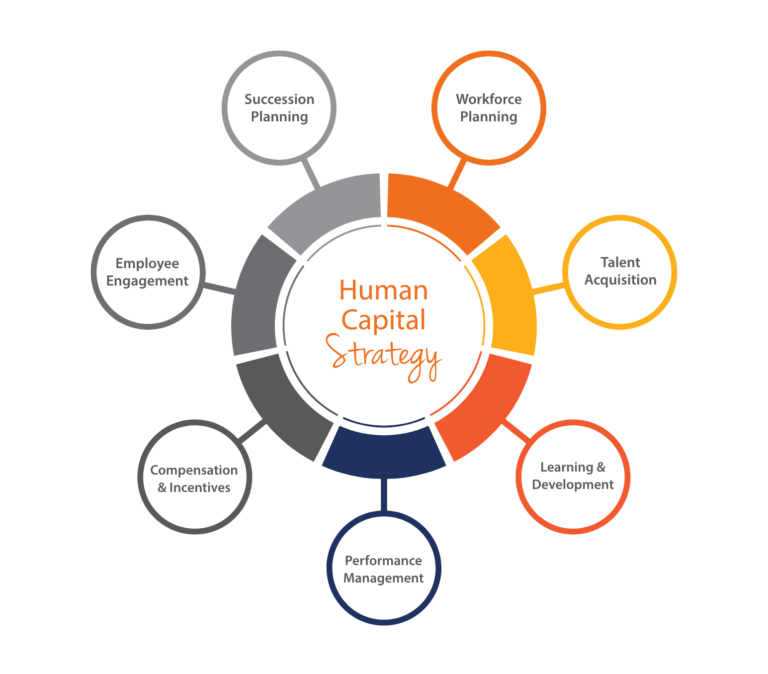
Key elements of strategic human capital management include the following:
Workforce Planning
Workforce planning translates business goals into workforce requirements. Instead of reacting to open roles, HR uses workforce planning to anticipate future talent needs, identify skills gaps, and plan for changes driven by growth, technology, or turnover.
When done well, it helps the organization avoid people-related barriers, such as understaffed teams or missing capabilities, that can slow or derail strategic initiatives.
Talent Acquisition
Talent acquisition is where human capital strategy moves from planning to action. While workforce planning defines the roles and capabilities the organization needs, talent acquisition determines how those needs are met through sourcing, hiring, and selection.
By developing a talent acquisition strategy, organizations can focuses on prioritizing roles hard-to-find skills, and future-critical capabilities.
Learning and Development
Investing in your team via learning and development opportunities can offer dual advantages:
- It improves employee retention by helping employees feel valued.
- It builds the skills of your team, thus increasing your human capital.
Note: Strategic learning and development target the skills that are important to company performance, innovation, and leadership continuity.
Performance Management
Performance management connects individual effort to organizational outcomes. Within a human capital strategy, performance systems reinforce employee priorities, clarify expectations, and create accountability for results.
When designed well, performance management drives execution, supports development, and ensures people are rewarded and recognized for contributing to strategic goals.
Compensation and Incentives
Strategic human capital management goes beyond paying employee competitive wages. For instance, organizations should design reward structures that reinforce the right behaviors, retain high performers, and align individual motivations with organizational goals.
As a whole, this includes base pay, bonuses, equity, and additional non-monetary incentives, such as schedule flexibility and employee recognition.
If compensation strategy is disconnected from human capital priorities, talent programs fail—even if they are well designed.
Employee Engagement
Employee engagement measures how connected and committed your people are to their work and to the organization.
When employees feel valued and see a future for themselves, they perform better and are far less likely to leave. Within a human capital strategy, employee engagement is not treated as a byproduct of good workplace culture. Instead, it’s an outcome that can be actively shaped through strong management, an HR practice that demonstrates genuine investment in employee growth.
Succession Planning
Succession planning ensures the human capital strategy extends beyond the present leadership team. By identifying and developing future leaders for roles, organizations protect continuity and reduce disruption during transitions.
A strong succession plan preserves institutional knowledge and sends a clear signal to employees that long-term growth is possible within the organization.
The Benefits of a Human Capital Strategy
Organizations that take a strategic approach to their employees operate better each day and build a durable foundation for long-term performance for the future. Here are some other benefits of a human capital strategy:
- Better business alignment: When people decisions are tied to organizational goals, teams are built around what the business needs to succeed.
- Reduced talent risk: Strategic workforce planning and succession planning makes the organization less vulnerable to turnover, skills gaps, and leadership transitions.
- Higher retention: Employees who see investment in their growth and a clear path forward are more likely to stay.
- Stronger performance: Clear expectations, meaningful employee development, and aligned incentives create the conditions for people to do their best work.
- Greater adaptability: Organizations with intentional talent strategies are better positioned to respond to market shifts, technological change, and competitive pressure.
How to Create a Human Capital Strategy
A human capital strategy is not built in a single planning cycle. It’s developed and refined over time, and anchored to where the business is heading. Here’s how to build one effectively:
Assess Your Current State
Before building a human capital strategy, you need a clear picture of where things stand. This means auditing your existing workforce for skills, capacity, and gaps, while also evaluating the effectiveness of your current talent programs. An honest assessment provides the foundation to build.
Define Business Goals
Human capital strategy starts with business strategy. Work with senior leadership to understand the organization’s priorities over the next three to five years. Growth plans, markets, competitors, technology, and operational changes all impact decisions. But the clearer you are on where the business is going, the more precisely you can define what your capital strategy needs to deliver.
Identify Required Capabilities
With business goals in hand, map out the roles, skills, and leadership capabilities that are required for the business to be successful. Then, look for gaps between what you have today and what you will need tomorrow, prioritizing decisions based on strategic impact.
Design Talent Programs
Once you know what capabilities you need and where the gaps are, you can design or refine the programs that will close them. This spans the full talent lifecycle, from how you attract and hire to how you develop, engage, and retain your people.
Align Leadership and Secure Resources
A human capital strategy without executive sponsorship rarely gains traction.
Present your strategy to senior leadership with clear rationale, measurable goals, and resource requirements. And when leaders understand the connection between talent investment and business outcomes, securing buy-in becomes much easier.
Measure and Iterate
Define the metrics that will tell you whether the HR strategy is working. These might include:
- Retention rates
- Internal mobility
- Time-to-fill for critical roles
- Engagement scores
- Leadership pipeline depth
Once you have these determined, review progress regularly, and be willing to make adjustments. The best human capital strategies are living documents.
7 Examples of Human Capital Strategies to Try
Here are some places to start building your human capital strategy.
1. Build Internal Talent Pipelines
Rather than defaulting to external hiring for every open role, identify and develop high-potential employees from within. Internal mobility reduces hiring costs, improves retention, and preserves institutional knowledge. Start by making career pathways visible and ensuring managers are actively developing their people, not just managing them.
2. Tie Learning and Development to Business Priorities
The most effective organizations align their learning investments directly to the capabilities the business needs most. Identify the skills critical to your strategy over the next two to three years and build development programs around closing those specific gaps.
3. Redesign Performance Management Around Growth
Annual reviews are increasingly being replaced by continuous feedback models that emphasize development over evaluation. Creating regular check-ins, adjusting goals, and having forward-looking conversations helps employees grow faster and gives managers better visibility into where support is needed.
4. Use Workforce Data to Drive Decisions
Organizations that treat people analytics as a core competency make faster, more confident talent decisions. Start by tracking the metrics that matter most to your strategy, whether that’s retention in critical roles, internal promotion rates, or time-to-productivity for new hires, and use that data to identify patterns before they become problems.
5. Invest in Manager Quality
You’ve likely heard the phrase: Employees don’t leave jobs. They leave bosses.
Managers possess more influence on engagement and retention than almost any other factor. Organizations that invest in manager development through coaching, training, and clear expectations see the benefits ripple across every other talent metric.
6. Plan for Skills Obsolescence
Technology is changing the nature of work faster than most organizations can hire. A proactive human capital strategy identifies the roles and skills most at risk of disruption and creates reskilling pathways before those gaps become urgent. This protects the organization and signals to employees that their long-term growth is taken seriously.
7. Build a Culture of Psychological Safety
Teams that feel safe to speak up, take risks, and admit mistakes are more innovative and more resilient. Psychological safety is not a soft metric. Research consistently links it to higher performance and better decision-making. Building it requires intentional leadership behavior, clear norms, and a willingness to model vulnerability from the top.
How Paycor Can Help You with Human Capital Strategy
A strong capital strategy requires aligning many moving parts, including talent acquisition, workforce management, learning and development, and employee engagement.
Fortunately, Paycor supports these business functions into one unified HCM software to ensure all efforts point in the same direction.
With real-time people data and integrated workflows, leaders can make fast, confident decisions at every stage of the talent lifecycle.
Use Paycor to Develop Your Human Capital Strategy
Paycor gives HR leaders and executives the visibility, automation, and insights needed to move from a human capital strategic plan to action, whether that means identifying skills gaps before they become urgent, developing managers at scale, or tracking the metrics that matter most to your business.
Ready to learn how Paycor turns human capital management into a competitive advantage? Take a guided product tour today.
Human Capital Strategy FAQs
Read on for answers to the most commonly asked human capital strategy questions.
What is a Human Capital Strategist?
A human capital strategist is an HR professional who focuses on aligning talent programs with business goals. Rather than managing day-to-day HR, they work at a strategic level to design and implement initiatives that drive long-term performance.
What is a Human Capital Strategy Framework?
A human capital strategy framework is the structure an organization uses to plan and manage its people strategy. It typically spans the following areas:
1. Workforce planning
2. Talent acquisition
3. Learning and development
4. Performance management
5. Compensation planning
6. Employee engagement
7. Succession planning.
What Are Examples of Human Capital Strategies?
Common examples include building internal talent pipelines, tying learning investments to business priorities, redesigning performance management around continuous feedback, and using workforce data to drive talent decisions.