








Your competitors are already planning how to staff their companies two years from now. Are you?
Most HR teams spend their days reacting to staffing crises: scrambling to fill unexpected vacancies, dealing with sudden skill shortages, or watching top talent walk out the door. This reactive approach is far too expensive…in terms of time, money, productivity, and even company culture.
Workforce planning flips the script. Instead of racing to fix problems, HR leaders anticipate them. They forecast future talent needs, identify skill gaps early, and build strategies to ensure the right people are ready when the business needs them.
What is Workforce Planning?
Workforce planning means analyzing your current staff, forecasting future needs, and developing strategies to close the gap. This process helps HR align the company’s talent strategy with overarching business objectives, streamlining every aspect of workforce management. This goal is to fill key roles with qualified employees at just the right time, so they (and your company) can take advantage of upcoming market shifts.
The process combines data analysis with strategic thinking. HR examines existing employee skills, projects future demands, spots talent shortages, and implements solutions. Depending on your company’s needs, that could include hiring, training, restructuring, or a combination of all three.
Workforce Planning Types
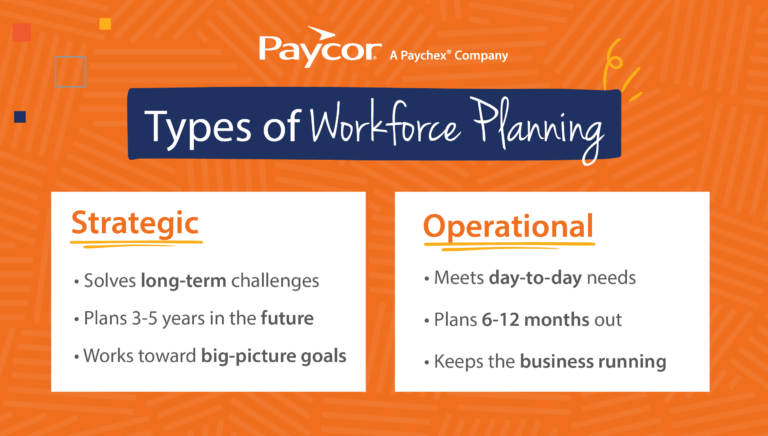
Workforce planning can look different depending on your organization’s needs and timeline. The two main approaches serve distinct purposes but work best when used together.
Strategic
Strategic workforce planning tackles long-term challenges. It aligns talent strategy with business objectives, looking three to five years in the future. HR examines big-picture questions: How will emerging technologies change the skill sets our company needs? What leadership gaps might we need to fill as executives retire? Will our company expand into new markets?
This approach helps companies prepare for major internal and external changes well in advance. Instead of reacting to talent shortages, HR builds pipelines, training programs, and succession plans to support future growth.
Operational
Operational workforce planning handles immediate staffing needs. This approach focuses on the next 6-12 months and addresses day-to-day challenges like scheduling, workload distribution, and short-term hiring. HR uses operational planning to keep projects on track and meet seasonal staffing needs.
While strategic planning prepares your team for the future, operational planning keeps the business running smoothly every day. For best results, HR should use both approaches to drive short- and long-term business growth.
Why Is Workforce Planning Important?
Workforce planning helps HR navigate change. Without it, companies may face expensive talent gaps and struggle to keep up with industry standards. Done right, the process empowers HR to anticipate the company’s future needs, align the talent strategy with company goals, and set the stage for sustainable growth.
Principles of Workforce Planning
An effective workforce plan follows certain core tenets. Use the following principles to design a strategy that can keep up with your business’s changing priorities:
- Align with business strategy. Every workforce decision should connect to company goals. HR should consider how staffing choices support short- and long-term objectives.
- Use data to drive decisions. Replace guesswork with analytics. Leaders can use HR software to collect key metrics (turnover rate, time-to-hire, etc.) and make informed choices about talent needs.
- Take a long-term view. Effective workforce planning balances your immediate staffing needs with future ones. This means planning for upcoming retirements, emerging technologies, and any market shifts that will impact your team.
- Stay flexible. The best plans adapt to change. Whatever issues you’re facing today, you can be sure that market conditions will shift over time. Your workforce plan should flex along with them.
- Prioritize high-impact roles. Some positions have a greater effect on your business than others. Focus on filling these roles first. Once those key workers are in place, they can help you close the remaining gaps.
- Collaborate across departments. Workforce planning also works best with input from finance, operations, and department heads. This gives HR more insight into each team’s staffing needs and secures emotional buy-in from managers.
Workforce Planning Process & Steps
Workforce planning is an ongoing process. If you’re just getting started, follow these steps to design your initial strategy.
1. Determine Goals
Start by describing what your company wants to achieve. Review strategic objectives, revenue targets, and expansion plans. What will success look like in three years? Which business priorities require additional talent or new skills? How will market conditions affect staffing needs? In the age of AI, these questions are more complex than ever.
2. Complete a Supply Analysis
Evaluate your workforce and establish a baseline. Assess your team’s skills, experience levels, and performance. HR should also review turnover rates, retirement eligibility, and internal mobility patterns. Do you have strong succession candidates on staff? If not, you might need to double down on recruiting.
3. Complete a Demand Analysis
Project future staffing requirements based on your company’s goals. Make sure to consider both internal and external factors, such as upcoming projects, technological advancements, new product launches, and economic pressures. Forecast how many employees you’ll need, which skills will be in demand, and when these needs will arise.
HR doesn’t have a crystal ball, and your predictions might not be perfect. Review the data and work closely with company leaders to plan for the most likely scenarios in your industry. At the end of this step, you should be able to answer the question: What will our workforce need to look like to achieve the company’s goals?
4. Conduct a Skill Gap Analysis
Compare your supply analysis to your demand analysis. Perform a skills gaps analysis between the team’s current capabilities and future requirements. Determine which skills are missing, which roles will need to be filled, and where shortages represent the greatest risks. HR will need to address every one of these gaps eventually, but some are higher priorities than others.
5. Develop Solutions
Design a specific, actionable strategy to close the gaps you identified in step four. You may need to hire new talent, train existing employees, restructure the team, or a combination of all three. Evaluate the cost, timeline, and business impact of each possible approach. Make sure to align your plan with the company’s immediate goals.
6. Create Implementation Plan
Now it’s time to put your strategy into practice. Build out specific timelines, assign responsibilities, and create workflows to measure your progress. Launch new initiatives, like recruiting campaigns and training programs. HR should work closely with managers to keep the entire team on track, offering resources and support as needed.
Note: This plan should also have steps dedicated to mobile workforce management.
7. Analyze Results
Carefully track any metrics you identified in steps five and six, comparing them to your baseline and goals. Make sure to include time-to-fill, retention rates, and productivity benchmarks. Compare actual outcomes to forecasts to see what’s working and what isn’t.
8. Reflect for the Future
Review the data you collected in step seven. What processes are going better than expected? Which parts of your plan need work? Use these insights to update your strategy for the next quarterly or annual planning cycle.
Workforce Planning Best Practices
Follow these best practices to strengthen your workforce planning strategy and get better results:
- Review and update the plan regularly. A workforce plan isn’t a set-it-and-forget-it process. Business conditions change, markets shift, and new opportunities emerge over time. Review your plan quarterly or annually to make sure it still aligns with the company’s priorities.
- Invest in workforce planning technology. Manual spreadsheets slow down the process and result in costly errors. Workforce management software gives you real-time data on turnover, productivity, and skill gaps. These insights empower leaders to make faster, smarter decisions and drive meaningful results.
- Look for internal talent first. Before you post an external job opening, check to see if current employees can fill the role. Internal promotions save time and money while boosting morale. They also retain institutional knowledge that new hires would take months or years to develop.
- Build cross-functional partnerships. A workforce management plan works best when HR collaborates with finance, operations, and department leaders. These partnerships give you a complete picture of staffing needs across the organization and help secure buy-in from key stakeholders.
- Plan for multiple scenarios. Don’t lock yourself into a single forecast. Prepare for several different possibilities: rapid growth, economic downturns, and technological disruptions. Scenario planning helps your team stay agile when conditions change.
- Focus on skills, not just headcount. It’s tempting to think about workforce planning in terms of numbers alone. But your employees’ skills matter more than raw headcount. Identify which capabilities your business needs most and plan accordingly.
- Track the right data. Monitor key workforce planning metrics like time-to-fill, turnover rates, and training completion. These metrics show whether your workforce plan is delivering results or needs adjustment.
- Communicate the plan clearly. Share your workforce strategy with managers and employees. Transparency builds trust and helps everyone understand how their work supports company goals.
Benefits of Workforce Planning
Workforce planning delivers measurable advantages that strengthen your entire company. Here’s how it impacts your bottom line and your team.
Goal Alignment
Your workforce plan should connect your talent strategy directly to business objectives. When HR forecasts staffing needs based on company goals, every step of the process fits together. Hiring decisions support your sales priorities. Your new training program drives innovation. Everyone on the team understands how their role contributes to company growth…and that boosts engagement and retention.
Lower Hiring Costs
Recruiting, hiring, and onboarding are expensive. Workforce planning helps HR reduce costs by anticipating needs before they become urgent. When you can forecast staffing requirements months in advance, you avoid the premium rates and rushed decisions that come with emergency hiring. Bonus: planning lets you fill more roles through internal promotions, training programs, and strategic hiring timelines.
Increased Retention
When companies invest in career development, workers want to stay. It’s really that simple. Workforce planning includes initiatives like succession planning, training, career pathing, and mentorship programs. These offerings show employees they have a future with your company.
Efficient Allocation
Workforce planning helps HR deploy talent where it creates the most value. You identify which roles drive business results and prioritize filling those positions first. You also spot overstaffed areas and take steps to optimize your team. This efficiency boosts productivity and optimizes labor costs.
Reduce Gaps in Talent
Skill gaps slow down projects and limit growth. Workforce planning identifies these gaps early, giving HR time to address them through targeted hiring or training. You build the capabilities your business needs before they become urgent. This proactive approach prevents bottlenecks and helps your company grow.
Workforce Planning Tips
Use these practical tips to make your workforce planning process more effective.
Start small and scale up.
If workforce planning feels overwhelming, start with just one department or role. Test your process, learn what works, and expand from there. You don’t need a perfect company-wide plan on day one.
Involve managers early.
Department heads understand their teams’ capabilities and upcoming projects better than anyone. Bring them into the planning process from the start to get accurate forecasts and secure emotional buy-in.
Use historical data wisely.
Past turnover patterns, hiring timelines, and productivity metrics can reveal important trends. But don’t rely on historical data alone. Market conditions change, and yesterday’s patterns won’t always predict tomorrow’s needs.
Build buffers into your timelines.
Hiring and training always take longer than expected. Cushion your projections so delays won’t derail your plans. If you think a process should take a week, for example, budget 10 days to be on the safe side.
Document your assumptions.
Write down the business conditions and market factors you’re using as the basis for your forecast. When conditions change, you’ll know exactly which parts of your plan need updates.
Make it a team effort.
Workforce planning shouldn’t be siloed in HR. Collaborate with finance on budget constraints, with operations on production needs, and with leadership on strategic priorities. When appropriate, share your plan with employees at all levels.
Check in regularly.
Don’t wait a full year to review your plan. Quarterly check-ins help you spot problems early and adjust course before small issues become big problems.
Celebrate quick wins.
When your plan helps you fill a top-priority role ahead of schedule or avoid a staffing crisis, share that success. This is an easy way to build momentum and demonstrate the value of workforce planning.
How Paycor Helps with Workforce Planning
Workforce management requires the right software to track data, identify gaps, and execute strategies effectively. Paycor is an HCM software that empowers HR leaders to build and manage a strategic workforce plan. Here’s how:
- HR Analytics and Reporting turn workforce data into actionable insights. Leaders can easily monitor metrics like turnover rates, time-to-fill, and productivity benchmarks. Use this data to forecast staffing needs, identify skill gaps, and make informed decisions about hiring and development.
- Career Management Software offers your employees clear paths for advancement within the company. When workers can see their growth opportunities, they’re more likely to stay. This tool helps HR build succession plans and gives employees ownership of their career development.
Build Your Workforce Plan with Paycor
Paycor’s integrated HCM software gives you everything you need to plan, execute, and track your workforce strategy over time.
Ready to get started? Take a quick tour to see how Paycor can help.
Workforce Planning FAQ
Get answers to HR’s top questions about workforce planning below:
Wht is meant by workforce planning?
Workforce planning is the process of analyzing your current staff, forecasting future talent needs, and developing strategies to close the gap. It aligns talent management with business objectives so HR can meet both short-term operational needs and long-term growth goals.
How is AI influencing workforce planning?
AI is transforming workforce planning by automating data analysis, identifying patterns in turnover and hiring, and generating more accurate forecasts. HR teams can use AI-powered tools to predict skill gaps, optimize recruiting timelines, and make faster decisions based on real-time workforce data.
What is HR’s role in workforce planning?
HR leads the workforce planning process by gathering data, forecasting future needs, and developing strategies to close talent gaps. HR also collaborates with department heads to understand staffing requirements, works with finance on budget constraints, and implements hiring, training, and development programs.
How does workforce planning impact employee experience?
Workforce planning improves the employee experience by creating clear career paths, providing training opportunities, and reducing understaffing that leads to burnout. When companies plan, employees benefit from better work-life balance, professional development, and the stability that comes from working for a well-organized company.
Does workforce planning impact employee retention?
Yes, workforce planning improves retention by showing employees they have a future with your business. When you invest in succession planning, training programs, and career management, workers feel valued and are more likely to stay. This proactive approach reduces turnover and builds a more stable workforce.
What skills are needed for workforce planning?
Creating a workforce plan requires data analysis skills to interpret metrics and trends, strategic thinking to align talent with business goals, and strong communication skills to collaborate across departments. HR professionals also need project management experience, financial literacy to work within budget constraints, and the flexibility to adapt plans as conditions change.
What is the difference between HR planning and workforce planning?
HR planning focuses on the administrative aspects of people management, such as compliance and day-to-day HR operations. Workforce planning takes a strategic approach, forecasting future talent needs and developing long-term strategies to ensure the organization has the right people to achieve business goals. Workforce planning is a component of broader HR planning.