








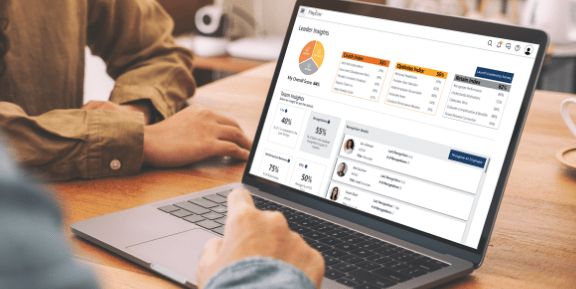

Workforce management has always been a data problem. The inputs — shift patterns, labor demand, employee availability, overtime thresholds, compliance requirements — exist in abundance. The gap has been processing all of that data accurately and quickly enough to matter. AI closes that gap. Not by replacing the judgment of HR and operations teams, but by doing the computational work those teams have been doing by hand for decades.
This article covers what AI workforce management is, where it delivers the most impact, and how organizations can put it to work.
What Is AI Workforce Management?
AI workforce management refers to the use of artificial intelligence technologies — machine learning, natural language processing, predictive analytics — to plan, schedule, monitor, and optimize a workforce. It sits within the broader category of workforce management software, but distinguishes itself by moving from reactive reporting to predictive decision support.
Traditional workforce management systems record what already happened: hours logged, shifts filled, overtime accrued. AI-powered systems anticipate what’s likely to happen next and recommend actions before problems materialize. That distinction — from record-keeping to forecasting — is where most of the operational value sits.
The core components of an AI workforce management system typically include demand forecasting models that predict staffing needs based on historical patterns and external variables; automated scheduling engines that generate compliant, cost-optimized schedules; real-time labor analytics dashboards; and exception alerts that flag anomalies before they become payroll errors.
What Is the Role of AI in Workforce Management?
AI’s role in workforce management is less about replacing HR decision-makers and more about giving them better inputs. The decisions — who to promote, how to structure teams, when to hire — still belong to people. What AI changes is the quality and speed of the information those people now have when making those important decisions.
In practice, AI functions across four dimensions of workforce management:
- Prediction: Forecasting labor demand, turnover risk, and scheduling gaps before they occur.
- Automation: Generating schedules, processing time-off requests, and flagging compliance exceptions without manual intervention.
- Optimization: Continuously improving scheduling and staffing decisions by learning from outcome data.
- Insight: Surfacing patterns in workforce data that wouldn’t be visible in standard reports — cost anomalies, productivity trends, attrition indicators.
The role expands as the system accumulates data. An AI tool in its first month is useful. The same tool in its second year, having processed thousands of scheduling cycles and outcome signals, is substantially more accurate.
The Impacts and Benefits of AI in Workforce Management
The clearest case for AI in workforce management isn’t theoretical, it shows up in the operational metrics that HR and finance teams already track. Here are the five benefits that produce the most consistent impact.
Benefit 1: Demand Forecasting That Accounts for Real-World Variables
Manual labor forecasting is essentially a structured guess. It relies on historical averages, manager intuition, and whatever data happens to be in the system. AI forecasting models ingest a broader variable set: seasonality, local market conditions, customer demand signals, even weather patterns for industries where they matter.
The result is staffing levels that are closer to actual need. Organizations that overstaff absorb unnecessary labor cost. Those that understaff pay for it in overtime, service quality, and employee burnout. A McKinsey analysis found that companies applying advanced workforce analytics reduced labor cost variance by 20 to 30 percent compared to peers using traditional planning methods. Tighter forecasts are the upstream fix for most downstream labor budget problems.
Benefit 2: Schedule Optimization Without the Manual Coordination
Building a compliant, cost-effective schedule for a workforce of any meaningful size is a combinatorial problem. The number of variables — employee availability, skill requirements, labor law constraints, shift differential rules, overtime thresholds — grows faster than any manual process can track.
AI scheduling engines solve the problem. They generate schedules that satisfy constraints across all those variables simultaneously, something a manager working in a spreadsheet cannot practically do. The downstream effect goes beyond labor cost: when employees receive schedules earlier and with fewer last-minute changes, turnover improves. According to the Bureau of Labor Statistics, unpredictable scheduling is consistently cited as a top driver of voluntary turnover in shift-based industries.
Benefit 3: Real-Time Compliance Monitoring
Labor compliance isn’t a one-time configuration task. Regulations change, collective bargaining agreements expire, state-level requirements diverge from federal standards, and employees change status in ways that affect their entitlements. The exposure from getting compliance wrong is real: wage and hour settlements and back-pay liability have increased steadily over the past decade.
AI workforce management tools monitor compliance in real time, flagging the specific conditions that create exposure — a shift assignment that would trigger a predictive scheduling violation, an overtime calculation that doesn’t account for a recent pay rate change, a break requirement that a proposed schedule doesn’t satisfy. The flag arrives before the schedule is published, not after the payroll run closes.
Benefit 4: Reduced Administrative Burden on HR Teams
A meaningful share of what HR teams do every week is transactional: processing time-off requests, reconciling time entries, responding to employee schedule questions, correcting errors from the previous pay period. AI handles most of these tasks without human involvement.
Automated workflows process requests against policy rules and employee eligibility without a manager’s inbox getting involved. Self-service tools give employees direct access to their schedules, balances, and requests. Error detection catches discrepancies before they reach payroll. The cumulative time savings across a mid-sized organization adds up to dozens of hours per week — hours that can go back into higher-value HR work.
Benefit 5: Turnover Prediction and Retention Intelligence
Turnover is expensive in ways that are consistently underestimated. SHRM estimates that replacing an employee costs between 50 and 200 percent of their annual salary when recruiting, onboarding, and productivity ramp are factored in. Most organizations identify flight risks after the resignation, which is too late.
AI workforce management tools can identify patterns that precede voluntary departures: declining shift acceptance rates, increased absenteeism, reduced overtime uptake from previously engaged employees. These signals, surfaced early, give managers a window to intervene. Not every resignation is preventable. But the ones driven by manageable conditions — schedule dissatisfaction, lack of advancement visibility, perceived inequity in assignments — often are.
How to Use AI for Workforce Management
AI adds value at every stage of the workforce management cycle. The use cases below represent the areas where adoption is most mature and where the operational return is most direct.
AI-Powered Scheduling
Automated scheduling is the most widely adopted AI application in workforce management. The system generates shift assignments based on availability, skill requirements, labor law constraints, and cost parameters — and it does so in seconds rather than hours. Managers review and approve rather than build from scratch. For organizations running multiple locations or complex shift structures, the time savings alone justify the investment.
Predictive Labor Demand Forecasting
Demand forecasting tools use historical data alongside external variables to project the staffing levels a business will need at specific times. The more data the model ingests, the more precise the forecast. Over time, these tools identify patterns that aren’t obvious to human planners such as correlations between weather events and call center volume, for instance, or between local event calendars and retail foot traffic. Getting staffing right before the week starts is materially cheaper than adjusting during it.
Time and Attendance Automation
Manual time tracking creates errors. AI-powered time and attendance systems automate clock-in validation, identify anomalies (buddy punching, unexplained gaps, systematic early clock-outs), and calculate complex pay scenarios — blended overtime rates, shift differentials, multiple pay rates within a single workweek — that can be error-prone in manual payroll processing. Integration with payroll systems means those calculations flow directly to the payrun without a second data entry step.
Compliance and Labor Law Monitoring
Compliance requirements vary by state, locality, industry, and workforce composition. Tracking all of them manually is how organizations accumulate liability. AI compliance monitoring layers current regulatory requirements against scheduling decisions and time entries in real time, flagging violations before they’re locked in. This oversight is particularly valuable for multi-state employers, where the rule sets are complex and diverge meaningfully.
Employee Self-Service and AI Assistants
AI-powered self-service tools give employees direct access to schedule information, time-off balances, swap requests, and policy questions without routing through HR. Conversational AI tools handle common questions — “What is my PTO balance?” or “Can I swap my Thursday shift?” — with the same accuracy as a trained HR generalist. The practical effect is faster resolution for employees and fewer interruptions for HR staff.
Workforce Analytics and Performance Insights
AI analytics tools don’t just report on what happened, they identify what’s driving outcomes and flag where patterns are changing. Absenteeism trending up in a specific department, overtime concentrating among a small subset of employees, productivity metrics diverging from schedule data: these are the signals that prompt the interventions. The difference between an AI analytics tool and a standard reporting dashboard is that the former tells you where to look. The latter waits for you to ask.
How to Integrate AI in Workforce Management
AI integration doesn’t require a clean-slate implementation. Most organizations layer AI capabilities into existing workforce management processes incrementally. A practical sequence:
- Audit your current data quality. AI tools are only as good as the data they’re trained on. Before selecting a platform, assess whether your time and attendance records, employee data, and historical scheduling information are accurate and complete enough to support modeling.
- Identify the highest-friction workflow. Start where manual processes are creating the most consistent downstream problems — missed compliance flags, scheduling errors, payroll corrections. A focused pilot produces measurable results faster and builds internal confidence in the technology.
- Select a platform with native integration capabilities. The value of AI workforce management compounds when scheduling, time and attendance, payroll, and HR data share a common system. Fragmented point solutions create the data silos that limit AI effectiveness. Paycor’s workforce management solutions integrate these functions in a unified platform.
- Train managers on the output, not just the interface. AI scheduling tools generate recommendations, but managers approve them. Training that focuses on how to evaluate and override AI recommendations — not just how to click through the workflow — produces better outcomes and more confident users.
- Establish review cadence for model accuracy. AI forecasting models should be reviewed periodically against actual outcomes. Where predictions consistently miss, the input data or model parameters need adjustment. Treating the system as a set-and-forget tool is how organizations undersell what it can do.
For mobile workforce management environments — field teams, distributed workforces, multi-site operations — mobile-first AI tools add particular value, enabling real-time schedule visibility and communication without requiring employees to be at a workstation.
Organizations managing contingent workforce programs should ensure that AI workforce management tools account for blended workforce models — tracking and scheduling both full-time employees and contractors within the same system, rather than maintaining separate processes that create data gaps.
How Paycor’s AI Workforce Management Helps
Paycor’s workforce management platform applies AI across the scheduling, time and attendance, compliance, and analytics functions that HR and operations teams manage daily. The scheduling engine generates compliant, cost-optimized schedules automatically, accounting for labor law requirements, employee availability, and budget parameters simultaneously. Predictive analytics surface turnover risk, demand forecasting deviations, and compliance exceptions before they require reactive intervention.
Because Paycor’s workforce management capabilities sit within an integrated HCM platform, the AI tools work from a unified data set — employee records, payroll configuration, scheduling history, and performance data in a single system. That integration is what allows Paycor’s AI to make scheduling recommendations that account for pay rate structures, not just availability, and compliance monitoring that reflects actual regulatory requirements for each employee’s location and classification.
Access Paycor’s AI Workforce Management Features
See how AI workforce management tools work in practice. Paycor’s demo walks through scheduling automation, real-time compliance monitoring, and workforce analytics. The fastest way to evaluate whether a platform fits your operations is to use it. Explore Paycor Workforce Management or take a guided tour.