









Ask ten HR professionals how many hours there are in a full-time workweek, and you’ll get ten different answers. The truth is, there’s no universal standard. That ambiguity can create real challenges for employers trying to stay compliant.
Here’s the good news: most businesses follow recognizable patterns. Use this resource to understand how full-time hours typically work.
How Many Hours Is Considered Full-Time?
The Fair Labor Standards Act (FLSA) doesn’t specify a minimum number of hours for full-time status. However, employers typically define full-time work as 40 hours per week, which breaks down to:
- Eight hours per day
- 40 hours per week
- 160-176 hours per month
- 2,080 hours per year
However, some organizations set their own thresholds. The Affordable Care Act considers employees working 30 hours per week as full-time for health insurance purposes (IRS). This distinction becomes important when it’s time to determine employees’ eligibility for benefits.
Benefits of Full-Time Hours
Full-time work is a big commitment for both the employee and employer. And full-time employees typically have access to more benefits than those who work part-time hours.
Employee Benefits of Full-Time Hours
Most full-time job candidates expect companies to offer the following benefits:
Paid Time Off (PTO)
Full-time employees usually earn PTO at higher rates than part-time workers. Many companies offer 10-20 days annually, though actual amounts vary by tenure and company policy. Knowing the difference between vacation and paid time off can help you design competitive packages.
Sick Leave
Paid sick leave laws vary by state, but full-time employees typically accrue more sick days than part-time workers. Some states mandate specific accrual rates based on hours worked.
Retirement
401(k) plans and other retirement benefits are standard for full-time employees. Employers often match contributions up to a percentage of salary, creating long-term incentives that drive retention.
Healthcare
Health insurance is one of the most valuable benefits for employees who work full-time hours. Under the ACA, employers with 50 or more full-time equivalent employees must offer coverage to those working 30+ hours per week.
Pension
Though less common than retirement plans, some organizations still offer pension benefits exclusively to full-time employees. These defined benefit plans provide guaranteed income after retirement.
Paid Parental Leave
States with paid family leave laws typically extend coverage to full-time workers first. Even where not legally required, many employers offer paid parental leave as a competitive differentiator.
Stipends
Full-time employees often receive stipends for professional development, wellness programs, or remote work equipment. These perks enhance total compensation without permanent salary increases.
Employer Benefits of Full-Time Hours
Full-time work can be hugely beneficial for employers. It’s easier to hold these employees accountable through consistent scheduling practices. They’ll also develop greater institutional knowledge.
Full-time workers have more time to get to know each other, making them more committed to building your company culture. They invest more time in collaboration and shared goals, helping each other (and your company) drive productivity.
Disadvantages of Hiring Employees for Full-Time Hours
Working full-time job hours does come with its cons. These are some of its disadvantages.
Employee Disadvantages of Full-Time Hours
Full-time hours can limit schedule flexibility, which can be a challenge for people with other ongoing commitments.
The standard 40-hour workweek gives parents, students, and caregivers on your team limited time and energy to manage their competing priorities. Without proper support, this pressure can easily lead to burnout.
Employer Disadvantages of Full-Time Hours
Between compensation, mandatory benefits, voluntary benefits, and the cost of HR administration, full-time employees are more expensive than part-time workers. On top of which, you’re obligated to pay their salaries year-round even when their workload doesn’t justify it. This financial commitment prevents companies from scaling the workforce up or down quickly.
Full-Time Hours and Overtime
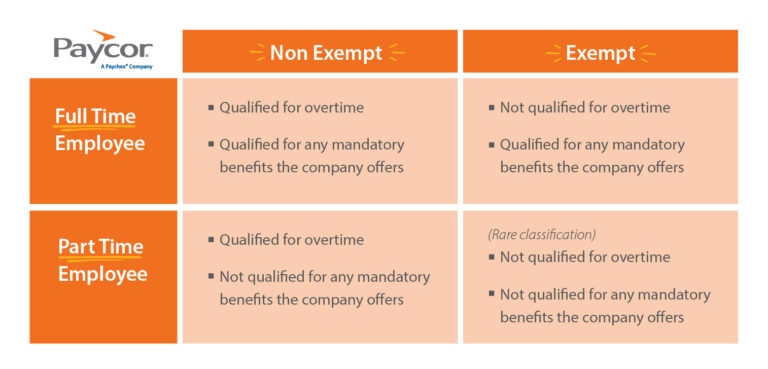
The Fair Labor Standards Act (FLSA) requires companies to pay non-exempt employees overtime at 1.5 times their regular rate for hours worked beyond 40 in a workweek. Full-time employees may be either non-exempt or exempt.
Non-exempt full-time employees qualify for overtime pay regardless of how many hours they typically work. Exempt employees don’t receive overtime pay, even when working more than 40 hours.
To qualify for overtime, employees must be classified as non-exempt under FLSA guidelines. Workers are classified based on three criteria: their job duties, salary level, and salary basis (whether their salary varies based on hours worked).
Full-Time Hours by State
Most states follow federal guidelines and don’t mandate specific full-time hour thresholds. However, some states have unique requirements that affect how employers classify workers. These are just a few examples. Check with your legal and compliance team to confirm which specific rules apply to your business.
California
California’s overtime laws are very employee-friendly. Non-exempt workers receive overtime after eight hours in a day or 40 hours in a week, and double-time after 12 hours in a day.
Hawaii
Hawaii requires employers to provide temporary disability insurance to employees working 20+ hours per week. While this doesn’t define full-time status, it creates benefit obligations at lower hour thresholds than many states.
Nevada
Nevada mandates overtime pay after eight hours in 24 hours for certain employees, regardless of weekly hours worked. This daily overtime rule affects how employers schedule full-time workers.
Requirements for Hiring Full-Time Workers
When you employ full-time workers, you’ll need to follow certain federal and state legal requirements. Understanding these laws helps you stay compliant and avoid costly penalties.
Pay Transparency Laws
State pay transparency laws require some employers to disclose salary ranges in job postings. These laws apply to full-time positions and help ensure equitable compensation practices.
PTO Laws
Paid time off laws vary significantly between states. Some areas mandate PTO accrual for full-time workers, while others leave it to the employer’s discretion. Understanding local requirements helps you avoid compliance issues.
Family and Medical Leave Act (FMLA)
FMLA provides eligible employees up to 12 weeks of unpaid, job-protected leave. To qualify, employees must work for covered employers and meet certain hour requirements (typically 1,250 hours in the preceding 12 months). State family leave laws may expand on federal protections.
Fair Labor Standards Act (FLSA)
The FLSA establishes minimum wage, overtime pay, and recordkeeping requirements. It doesn’t define full-time vs. part-time hours, but it governs how employers compensate all workers.
Americans with Disabilities Act (ADA)
The ADA requires employers to provide reasonable accommodations to qualified employees with disabilities. This applies to full-time workers and may include modified schedules or equipment so they can perform essential job duties.
When to Hire Full-Time Hour Workers
Hiring full-time workers can be a good idea when you need consistent coverage for core business functions. Think about any roles requiring specialized knowledge, regular client contact, or long-term projects. For example:
- Customer-facing roles, especially long-term roles like account managers or client success specialists
- Technical positions with steep learning curves, like software developers or data analysts
- Management roles responsible for team oversight and strategic planning
- Specialized jobs that require certifications or extensive training, like compliance officers or financial analysts
- Core operations staff who handle daily functions that keep your business running
Full-time employees make sense when training costs are high and you need people with specialized knowledge. Hire these team members with your succession plan in mind; play your cards right, and they could be your future leaders. With the right people in place, you can strengthen company culture and drive more sustainable financial growth.
How Paycor Helps You with Full-Time Hours
Managing full-time employees means tracking hours, administering benefits, and staying compliant. Larger companies may need to track changing laws across state lines, adding to the administrative burden. Paycor’s HCM software empowers HR to streamline these complexities.
Our Time and Attendance software tracks employee hours, flags overtime-eligible work, and integrates with payroll for accurate compensation. Benefits administration solutions streamline enrollment and eligibility tracking, and robust reporting features give you visibility into labor costs. Taken as a whole, our system connects HR to the data and expertise you need to level up your strategy.
Schedule and Manage Your Full-Time Hour Employees with Paycor
Paycor’s comprehensive platform connects time tracking, scheduling, payroll, and benefits on one unified platform. Automated workflows reduce manual errors while our powerful software scales with your growing workforce.
Ready to streamline compliance? Schedule a guided tour to learn how Paycor can help.
Full-Time Hours FAQs
Get quick answers to common questions about full-time hour classifications and requirements.
Is 40 hours a week full time?
Yes, 40 hours per week is the standard definition of full-time work across most industries. However, no federal law mandates this threshold.
Is 35 hours full time?
Some employers consider 35 hours full time, but this is less common than 40 hours. The Affordable Care Act (ACA) considers 30+ hours full time for health insurance purposes.
Is 30 hours considered full time?
Under the Affordable Care Act (ACA), 30 hours/week qualifies as full time for health insurance requirements. Most employers still use 40 hours as their internal standard.
How long is a full-time shift?
A typical full-time shift is eight hours per day. Some industries use 10- or 12-hour shifts with adjusted weekly schedules.
Can part-time employees work full-time hours?
Yes, but consistently working full-time hours may require employers to reclassify them to avoid benefit and compliance issues.
Are full-time employees guaranteed benefits?
Federal law does not guarantee benefits for all full-time employees. However, the ACA requires certain large employers to offer health insurance to employees working 30+ hours/week. Most mandatory benefits are determined by company size, so employees at smaller companies have fewer protections.
Is it better to be a full- or part-time employee?
Full-time employment typically offers better benefits and job security, while part-time work provides more flexibility. The answer depends on your unique needs and career goals.
How do full-time hours change for exempt employees?
Exempt employees don’t earn overtime after working more than a standard number of hours. Instead, they’re paid for completing job responsibilities and may sometimes have to work late as a result. Most employers expect full-time exempt employees to work ~40 hours/week.