








Most companies still run performance on an annual clock: one review, one rating, one conversation to cover an entire year of work. The problem is that people simply don’t perform on an annual clock. They hit blockers in March, drift off track in June, and need coaching the week it happens, not eight months later. Continuous performance management closes that gap by making feedback and goal setting part of the regular rhythm of work.
This guide explains what continuous performance management (CPM) is, why annual reviews fall short, the components of a working CPM process, and how to put one in place.
What Is Continuous Performance Management?
Continuous performance management is an ongoing cycle of goal setting, feedback, coaching, and development that replaces or supplements point-in-time annual reviews. Instead of one high-stakes conversation a year, managers and employees talk regularly, adjust goals as conditions change, and address performance while there’s still time to act on it.
CPM is a management philosophy and operating model, not a software feature you switch on. Tools support it, but the real change is in how managers spend their time and how the organization defines their job. Understanding that scope matters before you go deeper, because CPM asks managers to shift from grading past work to coaching current work. For a broader primer on the discipline itself, see our overview of performance management.
Why Annual Reviews Fail Employees and the Business
The annual review has a structural flaw: it’s too slow to do its job. Feedback delivered in December can’t change behavior that happened in February. Goals set in January are often irrelevant by the time the year closes, overtaken by shifting priorities. And because managers can’t recall eleven months of work in detail, ratings lean on recall bias and whatever happened most recently, which is neither fair nor useful.
That gap has produced a trust deficit that costs real money. In its 2025 Global Human Capital Trends survey, Deloitte found that 61% of managers and 72% of workers could not say they trust their organization’s performance management process. When most of the people on both sides of the table doubt the system, the review stops driving performance and starts draining it. So that makes status quo costly, not just inconvenient.
Continuous vs. Traditional Performance Management: Key Differences
The two models differ across four dimensions. On feedback frequency, traditional management delivers input once or twice a year, while CPM makes it a regular, ongoing exchange. On goal flexibility, traditional goals are locked in at the start of the year, while CPM uses adaptive goals that teams can reprioritize as the business changes. On the manager’s role, traditional management casts the manager as an evaluator handing down a rating, while CPM casts them as a coach helping the employee improve in real time. And on employee experience, the annual model often feels like a verdict, while a continuous model feels like ongoing support.
The biggest operational shift is that move from evaluator to coach. It changes what managers do week to week, from documenting judgments once a year to holding short, forward-looking conversations all year. Decision-makers should plan for that change management, because the model only works if managers adopt the new habit.
The Core Components of a Continuous Performance Management Process
Every working CPM process rests on four pillars: regular one-on-one check-ins, ongoing goal tracking, real-time feedback, and structured development conversations. None of them works alone. Check-ins surface the blockers standing in an employee’s way. Real-time feedback informs and adjusts the goals. Development conversations close the skill gaps the feedback reveals. Together they form a system that keeps performance moving, rather than a checklist you complete once and file away.
Ongoing Check-Ins and 1-on-1 Meetings
An effective check-in is short, regular, and owned by the employee. A biweekly or monthly cadence works for most teams. The employee drives the agenda, usually covering progress, blockers, and priorities for the next stretch, and the manager documents the key takeaways and any commitments made. That record is what turns a nice chat into a system with continuity. The same discipline applies to distributed teams, and our guide to remote performance reviews covers how to keep these conversations effective when the team is not in one place.
Protect that time. Canceling check-ins when things get busy is the fastest way to erode the whole system, because it signals that the conversation is optional. Managers should treat the check-in as a standing commitment and reschedule rather than skip it.
Real-Time Feedback and Continuous Recognition
There’s a difference between feedback that changes behavior and feedback that just records history. Feedback works when it’s specific, timely, and tied to a next step, delivered close enough to the event that the employee can still act on it. Feedback saved up for a year only documents what already happened.
Recognition is a core part of CPM, not an optional perk. Timely positive feedback reinforces the behaviors an organization wants repeated. When a manager names good work the week it happens, the employee learns exactly what to keep doing, and the standard spreads across the team.
Goal-Setting That Adapts Over Time
Static annual targets simply can’t keep pace with a year of change. OKRs or rolling quarterly goals replace them, giving teams the ability to reprioritize when business conditions shift. A goal set in Q1 that no longer matters in Q3 gets retired rather than dragged along.
Adaptive goals also connect the individual to the bigger picture. Within CPM, managers align each person’s goals to team and company objectives, so employees can see why their work matters and how it ladders up. That line of sight is a large part of what makes the model engaging.
The Business Benefits of Continuous Performance Management
CPM produces five measurable benefits:
- Engagement rises when employees get regular feedback and see their goals stay relevant.
- Performance problems get corrected faster because managers catch them in weeks, not quarters.
- Voluntary turnover drops as employees feel supported and heard before frustration turns into a resignation.
- Manager-employee trust strengthens through consistent, honest conversation, directly countering the trust deficit the annual model creates.
- And HR gains better talent data, since a steady stream of check-in notes and feedback gives leaders a clearer, current picture for decisions about promotion, development, and succession.
Together these outcomes make a business case built on retention and productivity, not theory.
How to Implement Continuous Performance Management
Rolling out CPM works best as a sequence, not a switch you flip. A practical six-step path looks like this:
- Audit your current practices to see what review and feedback habits already exist.
- Secure executive buy-in so the shift has visible backing and resources.
- Train managers on how to coach and give feedback, the skill the model depends on.
- Define a check-in cadence that teams can realistically sustain.
- Select a tool that fits how your organization already works.
- Set a review rhythm to evaluate the program itself and adjust it.
The most common reason CPM stalls is that managers lack the skills or the time to give high-quality feedback. Buying a new tool won’t fix that. Manager training and enablement will, by teaching the coaching habits the model needs and freeing up the time to practice them. Treat that enablement as the core of the rollout, not an afterthought.
Getting Manager Buy-In
Frame CPM to managers as something that makes their jobs easier, not a surveillance system. Documented check-ins mean no more scrambling to reconstruct a year’s worth of work the week before review time, and there should be no more awkward end-of-year surprises for anyone. When managers see that the model removes their biggest review-season headaches, resistance drops.
Middle managers make or break CPM adoption because they run the check-ins and deliver the feedback day to day. HR leaders should support them through the transition with training, ready-made agendas and templates, and protected time, rather than adding CPM to an already full plate and hoping it sticks.
Selecting Continuous Performance Management Software
When you evaluate tools, weigh five features: check-in templates, goal tracking, feedback capture, analytics dashboards, and integration with your existing HR and payroll systems. The right platform makes building good habits easy and helps ensure that the data is usable. Our roundup of the best performance management software is a useful starting point for a shortlist.
Be wary of standalone CPM tools that create data silos. When performance data lives apart from the rest of your HR stack, you lose the connection to compensation, succession, and workforce planning that makes the data worth collecting. Look for platforms that tie performance to the systems where those decisions get made.
Continuous Performance Management Best Practices
Five practices separate a true working program from nothing more than good intentions:
- Keep check-ins short and structured so they stay sustainable.
- Train managers to ask before they advise, so employees do the thinking.
- Separate development conversations from compensation discussions.
- Use data to spot patterns across teams, not just individuals.
- Review the CPM process itself each quarter and refine it.
The practice most organizations skip is decoupling performance conversations from pay reviews. When feedback and compensation live in the same meeting, employees hear only the number, and honesty on both sides shuts down. Keeping the two separate is what lets a development conversation stay a development conversation. Pairing a consistent cadence with a shared performance review template helps keep every manager aligned on what good looks like.
How Paycor Supports Continuous Performance Management
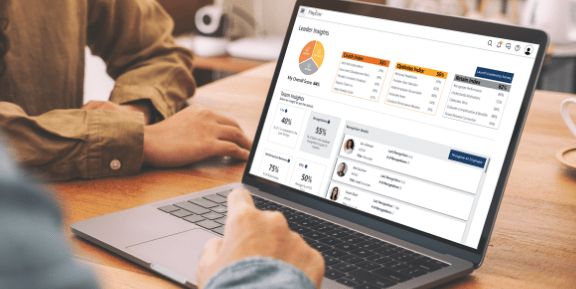
Paycor puts the pieces of CPM into the platform managers already use. Goal-setting tools, check-in scheduling, feedback capture, and performance analytics live inside the HCM system, so a continuous process becomes part of the daily workflow instead of a separate task competing for attention.
The advantage is connection. Paycor ties performance data to the broader HR ecosystem, including payroll, scheduling, and talent development, so managers and HR leaders work from one source of truth rather than a scatter of disconnected spreadsheets. That is what turns continuous feedback into decisions about pay, promotion, and growth. See how Paycor’s performance tools help your managers make performance a continuous conversation. Take a tour today.