








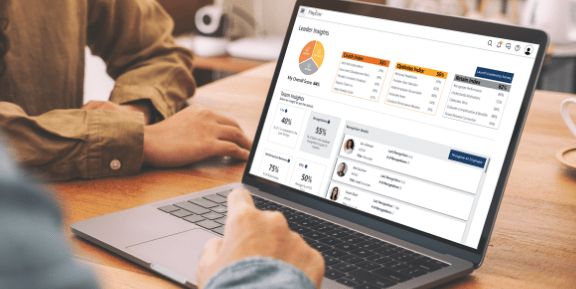

HR departments don’t fall behind because people aren’t working hard enough. They fall behind because too much of that work is manual. Time cards entered by hand. Benefits eligibility checked in spreadsheets. Onboarding documents emailed back and forth. Each task takes minutes. Cumulatively, that time could go toward workforce planning, manager development, or employee experience improvements that move the needle. HR technology exists to reclaim that time.
What Is HR Technology?
HR technology refers to any software, platform, or digital tool designed to manage, automate, or improve the processes that fall under the people management function. That umbrella covers a wide range: hiring and applicant tracking, payroll processing, benefits administration, time and attendance, performance reviews, compliance tracking, and employee engagement measurement, among others.
Some organizations use a single, integrated human capital management (HCM) platform that handles all these functions in one place. Others build a stack from best-of-breed point solutions that address specific needs. Most end up somewhere in between.
Around 80% of organizations now use some form of HR technology, according to HR.com’s State of Today’s HR Technology and Integrationssurvey.
Why Is HR Technology Important?
Without the right tools, HR teams spend the majority of their working hours on data entry, document management, and process coordination, work that adds no strategic value and is error-prone by nature.
There’s also the compliance dimension. Federal and state employment law changes regularly. Tracking leave eligibility, wage thresholds, overtime rules, and I-9 documentation without automated systems is a full-time job that most HR teams can’t staff. When something falls through the cracks, the cost isn’t just a fine, it’s potential litigation and reputational damage.
On the talent side, the stakes are equally real. Hiring processes that are slow or disorganized lose out on great candidates. Onboarding experiences that feel clunky signal to new hires what working at the company will be like. Performance management systems that live in email chains don’t surface patterns managers can act on. HR tech doesn’t solve all these problems, but it gives you the infrastructure to address them systematically rather than reactively.
Examples of How HR Technology Is Used
HR technology touches nearly every part of the employee lifecycle. The specific tools vary by organization size, industry, and budget, but the core functions they support are consistent.
Primary Functions of HR Technology
- Recruiting and applicant tracking: HR technology automates job posting across multiple boards, screens resumes, moves candidates through workflow stages, and keeps hiring managers and recruiters aligned in a single system.
- Onboarding: Digital onboarding tools collect new hire paperwork, assign training modules, provision system access, and track completion, reducing the administrative load on HR while giving new employees a consistent experience.
- Payroll processing: Payroll software calculates gross pay, deductions, and net pay; handles direct deposit and check printing; and generates the tax filings, W-2s, and compliance reports that come with paying people correctly and on time.
- Benefits administration: HR technology manages open enrollment, tracks employee elections, coordinates with carriers, and maintains records for ACA compliance and other reporting requirements.
- Time and attendance: Time-tracking tools record clock-ins and clock-outs, manage PTO requests and approvals, and feed hours into payroll to reduce manual entry and minimize wage calculation errors.
- Performance management: Performance platforms structure goal-setting, facilitate review cycles, collect 360-degree feedback, and give managers data to support compensation, promotion, and development decisions.
- Compliance management: HR systems maintain employee records, generate required government filings, track training completions, and flag issues before they become violations.
Types of HR Technology
HR tech gets categorized by what it’s primarily built to do. These categories aren’t mutually exclusive: many platforms combine several of these functions, and HCM suites often include most of them under one roof.
Talent Acquisition Solutions
Applicant tracking systems (ATS) and recruitment marketing platforms manage the hiring process from job posting through offer letter. They automate candidate communications, score applications against job requirements, and give recruiters a pipeline view of every open role. More advanced platforms include AI-powered sourcing tools, interview scheduling automation, and employer brand management.
Human Resource Information Systems
A human resource information system (HRIS) is the employee database at the center of most HR tech stacks. It stores demographic data, employment history, compensation, job titles, org structure, and other records that every other HR function draws from. An HRIS is the record-of-truth system that makes reporting, compliance, and cross-functional data sharing possible.
Payroll Solutions
Payroll software handles the calculation and distribution of employee compensation, including wages, salaries, bonuses, commissions, and deductions. It generates direct deposits and pay stubs, manages payroll tax withholding and filing, and produces the year-end tax documents employees and regulators require. Payroll errors are expensive and trust-damaging; the right technology reduces both risks considerably.
Benefits Administration Tools
Benefits administration platforms manage the employee-facing side of benefits: plan comparison, enrollment, life-event changes, and carrier data feeds. They centralize what is otherwise a fragmented, paper-intensive process and give HR teams visibility into utilization patterns, costs, and compliance requirements across benefits programs.
Performance Management Systems
Performance management platforms replace the annual review binder with a continuous, structured process. Goal-setting, check-ins, peer feedback, manager assessments, and calibration workflows live in one place. The best systems connect performance data to compensation decisions and development planning, rather than treating the review cycle as a disconnected annual event.
Time and Attendance Systems
Time and attendance tools track when employees work — via physical time clocks, mobile apps, biometric scanners, or web-based punch-ins — and manage the rules that govern those hours: overtime thresholds, break requirements, accrual policies, and approval workflows. Integration with payroll is the critical piece. Without it, you’re still manually transferring hours, and that’s where errors and compliance gaps appear.
Employee Engagement Solutions
Engagement platforms measure how employees feel about their work, their managers, and their organization through pulse surveys, anonymous feedback tools, and engagement indices. They give HR leaders data to identify disengagement early, segment by team or department, and track whether interventions are working over time.
Benefits of HR Technology
Increased Efficiency
Automating repetitive, rules-based tasks — running payroll, routing onboarding documents, updating time-off balances — frees HR teams from administrative work that doesn’t require human judgment. That time goes toward workforce planning, manager development, and the kinds of problems that require a person to solve them. The efficiency gain isn’t marginal; it’s structural.
High-Quality Data and Analytics
Manual HR processes produce records. HR technology produces data. The difference matters: when turnover rates, time-to-fill, engagement scores, and compensation benchmarks live in integrated systems, HR leaders can identify patterns, build forecasts, and make decisions based on evidence rather than instinct. People analytics has become one of the most requested capabilities in HR tech, not because it’s a trend, but because it changes the nature of the work.
Improved Employee Experience
Employees interact with HR technology more than most realize: applying for jobs, completing onboarding, requesting time off, enrolling in benefits, submitting expenses, viewing pay stubs. When those interactions are friction-free and self-service, the experience signals a well-run organization. When they require chasing down forms or waiting days for a response, the signal runs the other way. Good HR technology makes the administrative parts of employment feel like smooth sailing, not a recurring frustration.
Increased Compliance
Employment law is not static. Minimum wage rates, salary thresholds, overtime rules, leave requirements, and reporting obligations change at the federal, state, and local level — sometimes several times a year. HR technology that’s built with compliance in mind keeps rules updated, flags issues before they become violations, and maintains the documentation trail that audits and litigation require. Manual compliance management at scale is a risk most organizations can’t afford.
Effective Talent Management
HR technology creates a connected view of the workforce across the talent lifecycle. Recruiting data feeds into onboarding records, which connect to performance history, which informs succession planning and compensation decisions. When these systems talk to each other, managers have context and HR has the data to act strategically. When they don’t, each decision is made with partial information.
How to Choose HR Technology for Your Organization
The wrong way to approach this process: start with a vendor demo, get excited about features, and sign a contract. The right way: start with the problems your team actually has.
Before evaluating any platform, audit your current state. Where are your highest-volume manual processes? Where do errors cluster? Which compliance areas keep your legal team nervous? What data do you wish you had but can’t get to? The answers point toward which HR tech categories to prioritize.
A few questions worth working through before you start vendor conversations:
- What’s the current HR-to-employee ratio, and is it sustainable without automation?
- Which systems do you already have, and what integration requirements will any new tool need to meet?
- What does implementation realistically look like, including data migration, training, and change management?
- How does the vendor handle compliance updates? Is it automatic, or does it require manual action on your end?
- What does pricing look like as headcount scales?
Integration matters more than most buyers realize going in. A best-of-breed point solution that doesn’t connect cleanly with your payroll system creates new manual work. An all-in-one platform that does payroll, HRIS, and time-tracking in one place may cost more upfront but cost less in time and errors over three years. There’s no universal right answer, but the question deserves a real answer before you sign anything.
How to Implement HR Technology
Buying HR technology and successfully deploying it are two different projects. The gap between them is where a lot of implementations stall. A reasonable implementation sequence for most organizations:
- Establish a project team. Assign an internal project lead, a vendor implementation contact, and stakeholders from payroll, IT, and any department heavily affected by the change.
- Map and clean your data. Whatever lives in spreadsheets, legacy systems, or paper files needs to be audited before migration. Bad data in means bad data out. This step takes longer than anyone expects.
- Configure the system before training. Set up rules, workflows, approval chains, and pay codes before anyone touches the system. Training people on an unconfigured platform creates confusion that’s hard to undo.
- Run a parallel period for payroll. Before fully cutting over to a new payroll system, run both systems simultaneously for at least one pay period to catch discrepancies while the stakes are still low.
- Train in role-specific cohorts. HR admins need different training than managers, who need different training than employees. Group by role and focus each session on exactly what that group will use.
- Set a go-live date and hold to it. Indefinite soft launches create confusion about which system is authoritative. Pick a date, communicate it clearly, and cut over cleanly.
- Establish a post-launch support plan. The first 60–90 days after go-live generate the most questions and edge cases. Have a clear escalation path before you need it.
How Paycor Helps You with HR Technology
Paycor is a human capital management (HCM) platform built for organizations that need more than a basic HR system but don’t want the complexity of enterprise-grade software that requires an IT team to manage. It’s designed for HR leaders who need the technology to work the day they deploy it and keep working as their organization grows.
Paycor’s platform covers the core HR technology functions in one integrated system:
- Payroll processing with automated tax filing and compliance updates
- HRIS with employee records, org charts, and self-service tools
- Time and attendance with flexible tracking options and payroll integration
- Talent acquisition with recruiting workflows and applicant tracking
- Onboarding with digital document collection and task management
- Benefits administration with enrollment, carrier feeds, and ACA compliance support
- Performance management with goal-setting, reviews, and feedback tools
- Employee engagement surveys and recognition tools
Because these modules share a single data model, information entered in one place flows to the others without manual transfer. A new hire’s onboarding record becomes their HR file. Their time entries feed payroll. Their performance data connects to compensation planning. That integration is what separates an HCM platform from a collection of disconnected tools.
Use Paycor’s HR Technology Solutions
Ready to see what integrated HR technology looks like in practice? Schedule a demo with Paycor and talk through which solutions fit your organization’s current challenges.
HR Technology FAQs
What is meant by HR technology?
HR technology refers to the software tools and platforms that automate, manage, and support human resources functions, including payroll, recruiting, onboarding, benefits, time tracking, performance management, and compliance. It can be a single integrated platform or a stack of specialized tools, depending on organizational needs.
What is an example of HR technology?
An applicant tracking system (ATS) is one of the most common examples. It manages the hiring process from job posting through offer letter, automating candidate communications, moving applicants through workflow stages, and giving recruiters a single view of every open role. Payroll software and HRIS platforms are other widely used examples.
Are there different types of HR technology?
Yes. HR technology breaks into several categories: talent acquisition solutions, human resource information systems (HRIS), payroll platforms, benefits administration tools, performance management systems, time and attendance systems, and employee engagement tools. Many modern HCM platforms combine several of these categories in one integrated product.