








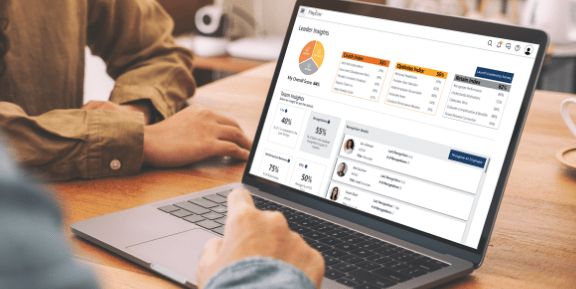

Employee scheduling software reduces scheduling errors by automating schedule creation and giving both managers and employees a mobile-first experience to view, swap, and manage shifts.
But the best platforms go further, integrating scheduling directly with time and attendance systems and payroll software so that scheduled hours, worked hours, and paid hours stay in sync without manual intervention.
In this guide, we’ll review eight of the top employee scheduling software companies for 2026 and explain what to look for when evaluating your options.
Importance of Selecting the Best Software for Employee Scheduling
Scheduling is one of the most operationally impactful decisions a manager makes every week. It directly affects labor costs, employee satisfaction, customer service levels, and compliance exposure. Yet many organizations still treat it as a manual, last-minute process.
The consequences of poor scheduling are measurable. Overstaffing inflates costs, and understaffing leads to burnout and turnover. Scheduling employees without considering overtime thresholds, meal break requirements, or predictive scheduling laws creates compliance risk. And when employees feel their availability and preferences are ignored, engagement and retention suffer.
The best employee scheduling software helps your organization:
- Reduce costs by aligning staffing levels with actual demand, using historical data and forecasting tools to avoid overstaffing and unnecessary overtime.
- Improve employee satisfaction by giving workers visibility into their schedules, the ability to set availability preferences, and self-service tools for shift swaps and open shift claims.
- Enforce compliance with federal, state, and local labor laws, including overtime pay laws, predictive scheduling requirements, and required meal and rest break periods.
- Save managers hours every week by automating schedule creation based on templates, roles, availability, and labor rules rather than building schedules from scratch.
For a deeper dive into scheduling best practices, explore our guide on making a schedule for employees.
How to Find the Best Employee Shift Scheduling Software
The right scheduling software depends on your workforce structure. Before evaluating vendors, consider the following factors.
Schedule Creation and Automation
Look for platforms that offer drag-and-drop schedule builders, work schedule templates, auto-scheduling based on employee roles and availability, and the ability to copy and modify previous schedules. The best tools let managers build a full week’s schedule in minutes rather than hours.
Shift Management and Employee Self-Service
Modern staff scheduling software should empower employees and managers, and the platforms should allow employees to view schedules on mobile, set availability, request time off, claim open shifts, and swap shifts with coworkers directly — with manager approval built into the workflow.
Integration with Time Tracking and Payroll
Scheduling that doesn’t connect to time tracking and payroll creates manual work and data discrepancies. The best employee scheduling software integrates directly with your time and attendance system so scheduled hours and worked hours align automatically.
Labor Law and Overtime Compliance
Scheduling software should also help you enforce the rules your organization is required to follow, especially when it comes to labor laws and overtime. Some software will flag overtime risks before shifts are assigned, enforce required rest periods between shifts, and track minors’ work-hour restrictions.
Pro Tip: Some of the best employee scheduling software systems have built-in features that help you stay compliant with predictive scheduling. Be on the look out for these as well.
Mobile Access and Real-Time Notifications
Employees need to see their schedules wherever they are, which means having a native mobile app that pushes schedule updates, shift changes, and open shift opportunities in real time keep your team informed. They also help you ensure scheduling gaps get filled quickly.
Pro Tip: Look for platforms that send automated notifications when schedules are published, shifts are changed, or open shifts become available.
Reporting and Labor Cost Visibility
The best scheduling tools surface labor cost data alongside the schedule itself, so managers can see the financial impact of their staffing decisions before they publish. To find the best scheduling software for employees, find a solution that has HR dashboards that show projected labor costs, schedule-vs-actual variance, and overtime exposure by location or department.
Top Staff & Employee Scheduling Software Companies
Based on scheduling capabilities, shift management depth, payroll integration, mobile experience, and user satisfaction, these are some of the most recognized employee scheduling software companies in 2026:
- Paycor
- Paychex Flex
- ADP Workforce Now
- UKG Pro
- Dayforce
- Rippling
- Deputy
- Connecteam
8 Best Employee Scheduling Software Companies and Tools
Each company below brings different scheduling strengths depending on your workforce size, shift complexity, industry, and how tightly you need scheduling connected to payroll and HR.
Paycor
Paycor offers an employee scheduling software as part of its unified HCM system , which connects schedules directly to time tracking, payroll, and labor analytics without manual handoffs.
According to Capterra, users say the platform is “organized, easy to view and simple to understand” for managing “schedules and time off.”
Industry Focus: Paycor serves small and mid-sized organizations across healthcare, manufacturing, restaurants, retail, nonprofits, and professional services. The platform is particularly strong for organizations that need scheduling tightly integrated with payroll processing, compliance, and workforce analytics.
What the Software Does: Paycor’s employee scheduling software automates shift creation, enforces labor rules, and flows scheduled hours directly into time and attendance tracking.
Managers can build schedules using drag-and-drop tools, assign shifts based on employee roles and availability, and publish schedules with automatic mobile notifications.
Capterra reviewers describe using the platform for “Payroll, Scheduling, Recruiting and Employee Management” and note it has “corrected many of the time clock and scheduling issues we have had in the past.”
With Intelligent HCM, Paycor’s AI-powered insights help leaders optimize staffing decisions based on workforce data.
Key Features: Drag-and-drop schedule builder, shift templates and recurring schedules, employee self-service for availability and shift swaps, open shift management, overtime alerts and labor law enforcement, mobile schedule viewing and notifications, direct integration with time tracking and payroll, labor cost visibility by department or job code, configurable scheduling rules, and PTO management.
Paychex Flex
Paychex Flex includes scheduling capabilities within its cloud-based HCM platform, connecting employee schedules to time tracking, payroll, and compliance tools.
According to Capterra, users describe the platform as having “an easy to view dashboard with customizable tiles” that lets managers “tailor your experience based on your company” for scheduling and workforce management.
Industry Focus: Paychex Flex serves businesses of all sizes across every industry. The platform is valued by organizations that want scheduling bundled with payroll and benefits, with the flexibility to add optional PEO or HR outsourcing services.
What the Software Does: Paychex Flex handles schedule creation, shift management, and labor cost tracking with direct payroll integration.
The platform supports schedule distribution via mobile app and offers managers tools to track attendance, monitor overtime, and manage PTO alongside scheduling.
Capterra users report the personalized setup process was smooth, noting “they made it SO easy to set up AND automate” and that “payroll processing is tedious and time-consuming, but Paychex simplifies things significantly.”
Key Features: Schedule creation and shift management, mobile schedule access, time and attendance integration, overtime tracking and alerts, PTO management, payroll integration, employee self-service portal, reporting dashboards, 24/7/365 U.S.-based support, and nearly 300 third-party integrations.
ADP Workforce Now
ADP Workforce Now provides enterprise-grade scheduling as part of its comprehensive HCM suite, backed by ADP’s decades of workforce management expertise.
According to G2, users note the platform “streamlines the whole process of tracking employee hours and scheduling,” praising its ability to manage multi-location operations from a single system.
Industry Focus: ADP Workforce Now serves mid-sized to large businesses across all industries, with particular strength for organizations with complex labor rules, union contracts, multi-location operations, or significant overtime management needs.
What the Software Does: ADP Workforce Now offers scheduling with configurable rules engines, shift assignment based on employee qualifications and availability, labor demand forecasting, and direct integration with time tracking and payroll.
The platform’s ADP DataCloud provides labor benchmarking data to help organizations optimize staffing levels against industry norms.
Key Features: Configurable scheduling rules engine, shift assignment and rotation management, labor demand forecasting, automated overtime and premium pay calculations, mobile schedule access, absence and leave integration, labor analytics with ADP DataCloud benchmarking, compliance alerts, and 700+ pre-built integrations.
UKG Pro
UKG Pro (Ultimate Kronos Group) is built on the legacy of Kronos—the company that pioneered automated workforce scheduling decades ago. The platform delivers some of the deepest scheduling and workforce management capabilities in the market.
According to Gartner Peer Insights, users highlight “powerful workforce management tools” and credit the platform with “optimizing labor allocation” across complex multi-location operations.
Industry Focus: UKG Pro serves large enterprises with complex workforce management requirements, particularly in healthcare, manufacturing, retail, and hospitality where shift scheduling, union rules, and labor compliance are paramount.
What the Software Does: UKG Pro provides AI-powered scheduling that forecasts labor demand, optimizes staffing levels, and distributes shifts based on employee skills, certifications, and preferences.
The platform’s SMS-based open shift offers allow managers to fill gaps instantly, and advanced compliance tools enforce union rules, shift differentials, and rest-period requirements.
Key Features: AI-powered demand-driven scheduling, predictive staffing optimization, SMS-based open shift offers, union rule and shift differential management, configurable compliance controls, biometric and mobile clock-in, absence and leave management, labor analytics with benchmarking, and enterprise-grade scalability.
Dayforce
Dayforce (formerly Ceridian) provides a single-application HCM platform with particularly strong workforce management and scheduling capabilities.
According to G2, users praise the platform for being “easy to create custom fields and track changes” and note the software is “continually improving” with regular feature enhancements to scheduling and workforce tools.
Industry Focus: Dayforce serves mid-sized to enterprise organizations with complex workforce scheduling needs, particularly in retail, hospitality, manufacturing, and healthcare where shift optimization and labor forecasting are critical.
What the Software Does: Dayforce’s scheduling engine uses labor demand forecasting to generate optimized schedules, factors in employee skills and availability, and processes schedule changes in real time alongside its continuous payroll calculation engine. The platform’s Career Explorer feature supports employee development by matching skills to available shifts and growth opportunities.
Key Features: Demand-driven labor scheduling, continuous payroll integration, real-time schedule optimization, skills-based shift assignment, employee self-service with shift swap and open shift bidding, compliance management for labor laws and union rules, mobile scheduling app, labor analytics, and advanced reporting.
Rippling
Rippling embeds scheduling within its unified HR, payroll, IT, and finance platform, so schedule data automatically connects to time tracking, payroll processing, and compliance workflows.
According to G2, users rate the platform’s time and attendance capabilities at 9.3 out of 10, praising the “intuitive interface” and seamless payroll connection.
Industry Focus: Rippling serves fast-growing and tech-forward companies, especially those with distributed or hybrid workforces that need scheduling integrated with HR, payroll, and IT provisioning.
What the Software Does: Rippling’s scheduling tools enable managers to create, assign, and distribute shifts with direct ties to payroll and compliance rules. The platform’s Workflow Studio allows custom scheduling automations—such as automatically notifying backup employees when shifts go unclaimed or escalating overtime risks to managers.
Key Features: Schedule creation and shift assignment, Workflow Studio for custom scheduling automations, mobile schedule access with GPS enforcement, overtime and compliance alerts, direct payroll syncing, PTO and absence integration, 650+ third-party integrations, and API access.
Deputy
Deputy is an AI-powered scheduling and workforce management platform designed for organizations with complex shift-based operations. The platform uses machine learning to forecast labor demand and auto-generate optimized schedules.
According to G2, users describe Deputy as “an excellent scheduling tool” that “simplifies the process of managing employee shifts and attendance.”
Industry Focus: Deputy serves businesses of all sizes across hospitality, healthcare, retail, security, and manufacturing. The platform is particularly strong for organizations that need demand-driven scheduling and labor compliance across multiple locations.
What the Software Does: Deputy’s AI-powered scheduling engine forecasts labor demand using sales data, foot traffic, and historical patterns, then generates optimized schedules that balance labor costs with coverage requirements. The platform also supports multi-location scheduling, break compliance tracking, and integration with 300+ payroll and POS systems.
Key Features: AI-powered demand forecasting and auto-scheduling, multi-location schedule management, shift swapping and open shift bidding, break compliance and meal period tracking, mobile clock-in with GPS, labor cost budgeting, payroll and POS integrations (300+), news feed for team communication, and task management.
Connecteam
Connecteam is an all-in-one employee management app built specifically for deskless and frontline workforces. The platform combines scheduling, time tracking, communication, and training in a mobile-first experience designed for teams that don’t sit at desks.
G2 users describe it as “an incredible tool for managing a mobile workforce” with “an amazing set of features for communication, scheduling, and task management.”
Industry Focus: Connecteam serves small to mid-sized businesses with deskless or field-based employees, including construction, cleaning, security, healthcare, logistics, and food service. The platform is particularly valued by organizations whose workforce primarily uses mobile devices.
What the Software Does: Connecteam provides drag-and-drop scheduling, GPS-validated time tracking, in-app communication, digital forms and checklists, and employee training—all accessible through a branded mobile app.
The scheduling module supports recurring shifts, availability management, shift swapping, and auto-scheduling based on qualifications.
Key Features: Drag-and-drop scheduling with recurring shifts, auto-scheduling by qualification, GPS time clock with geofencing, in-app team chat and announcements, digital forms and checklists, training and onboarding modules, shift notes and task assignments, availability and time-off management, payroll integrations, and a free plan for small businesses.
Scheduling Software Comparison: What Is the Best Scheduling Software Provider?
The best employee scheduling software depends entirely on your organization’s specific needs.
Standalone scheduling tools are excellent for businesses whose primary need is shift and employee scheduling, but enterprise companies need systems that support with complex labor rules, demand forecasting, and union requirements need.
But for the growing majority of organizations that need scheduling connected directly to time tracking, payroll, compliance, and broader HR operations—without cobbling together disconnected tools—an integrated HCM software delivers the most long-term value.
What Makes Paycor One of the Best Staff Scheduling Software Options?
Paycor’s scheduling strength comes from integration. Unlike standalone employee scheduling tools that require manual exports or third-party connectors to share data with payroll and HR, Paycor’s scheduling software is built directly into the same platform where you track time, process payroll, manage benefits, and develop your people. That means:
- Overtime and labor law compliance rules are enforced in real time as managers build schedules, not discovered after the fact when payroll reveals costly surprises.
- Employees can view schedules, set availability, request time off, and swap shifts from the same mobile app they use for pay stubs, benefits, and HR documents.
- Labor cost dashboards surface the financial impact of scheduling decisions before they’re published, giving managers the visibility to optimize staffing levels proactively.
- Scheduling data feeds into Paycor’s Intelligent HCM analytics, connecting workforce patterns to broader business insights on turnover, labor costs, and productivity.
Paycor delivers the scheduling capabilities that growing businesses need without the complexity or cost of enterprise-only workforce management systems.
Scheduling Employees with Paycor’s Best Scheduling Software & Features
Ready to see how Paycor’s scheduling software can automate shift creation, enforce compliance, and connect schedules directly to payroll?
Take a Guided Tour of our platform and discover what modern employee scheduling looks like.
The information in this article is based on research of the third-party review websites cited. Information is accurate as of March 2026 and is subject to change.
Paycor
Paycor G2 user review data from March 2026
Paycor Capterra user review data from March 2026
Paycor TrustRadius user review data from March 2026
Paychex Flex
Paychex Flex G2 user review data from March 2026
Paychex Flex Capterra user review data from March 2026
Paychex Flex TrustRadius user review data from March 2026
ADP Workforce Now
ADP Workforce Now G2 user review data from March 2026
ADP Workforce Now Capterra user review data from March 2026
UKG Pro G2 user review data from March 2026
UKG Pro Capterra user review data from March 2026
UKG Pro Gartner Peer Insights user review data from March 2026
Dayforce
Dayforce G2 user review data from March 2026
Dayforce Capterra user review data from March 2026
Rippling
Rippling G2 user review data from March 2026
Rippling Capterra user review data from March 2026
Deputy
Deputy G2 user review data from March 2026
Deputy Capterra user review data from March 2026
Connecteam
Connecteam G2 user review data from March 2026
Connecteam Capterra user review data from March 2026