









HR teams are drowning in admin. Scheduling, onboarding, compliance tracking, payroll, benefits enrollment…if you’re still managing these manually, there’s no time left for the work that drives business results.
HR automation tools change that. The right platform can handle your repetitive tasks in the background, freeing up your team to focus on strategy. This guide helps HR understand what to look for, which companies lead the market, and how to find the right fit for your organization.
What Are HR Automation Tools?
HR automation tools are software platforms that handle routine HR processes without manual input from your team. They replace spreadsheets, paper forms, email chains, and one-off workarounds with automated workflows that run consistently in the background.
These tools can automate a broad scope of HR processes. Recruitment automation handles job postings, applicant tracking, and candidate communications. Onboarding automation walks new hires through paperwork, training, and equipment setup without HR needing to chase them down. Payroll automation calculates wages, deductions, and taxes — and files them on time. Benefits administration, time tracking, performance management, and compliance monitoring can all run with far less hands-on effort when you have the right system in place.
The best platforms consolidate these functions into a single interface, so your data flows between modules without re-entry or reconciliation.
Why Is It Important to Use The Best HR Automation Software Tools
Not all HR automation tools have the same capabilities. Choosing the wrong platform costs time and money, and it takes a toll on company culture. When daily workflows create friction, the employee experience suffers and business leaders lose confidence in HR data.
A well-matched system pays for itself. Your HR team spends less time on administrative tasks and more time supporting real people. Managers get accurate data when they need it. Employees can handle their own requests, like updating direct deposit, checking PTO balances, and completing onboarding tasks, without needing to go through HR. And your organization stays compliant with federal and state requirements without building manual reminders into your calendar.
The best HR automation software also scales with your business. What works for 50 employees should still work at 500. Look for a solution that offers the reporting depth, workflow customization, and integration capability your organization will need as it grows.
What To Consider While Researching HR Automation Tools
Weigh these factors before choosing which platform to use for your organization.
Company Size and Scalability
Some platforms are built for small businesses and get clunky at scale. Others are designed for enterprise organizations and could be unwieldy for a team of 10. Before evaluating any tool, know your current headcount and where you expect to be in two to three years. The best HR automation software grows alongside your organization without requiring a full platform migration when your needs shift.
Integration With Your Existing Systems
Your HR platform doesn’t exist in a vacuum. It needs to connect directly with your payroll processor, accounting software, time and attendance system, and benefits administration software. Before committing to a vendor, map out your current tech stack and ask specifically how the platform integrates with each piece. A tool that requires manual exports to bridge gaps creates new admin work, and that defeats the purpose of automation.
Compliance Support
Workflow automation is only valuable if it keeps you on the right side of the law. Look for a platform that monitors federal and state regulatory changes, updates tax tables automatically, and flags compliance risks before they lead to penalties. This matters most for organizations operating across multiple states or managing employees with variable pay structures.
Employee Self-Service Capabilities
One of the highest-value features in any HR automation tool is a self-service portal that lets employees manage their own information. When employees can update their addresses, access pay stubs, submit PTO requests, and complete onboarding tasks independently, HR gets hours back each week. Look for a mobile-friendly interface that works for frontline workers as well as office staff.
Reporting and Analytics
You can’t manage what you can’t measure. The right platform gives HR and company leaders clear visibility into headcount, turnover, labor costs, and workforce trends. Prioritize tools with customizable reporting and real-time dashboards.
The Best HR Automation Tools and Software Companies
Here’s a look at some of the leading HR automation platforms on the market today, from large enterprise solutions to tools built for smaller, growing teams.
1. Paycor
Best for: Mid-market and enterprise organizations looking for a unified HCM platform with deep automation across the full employee lifecycle.
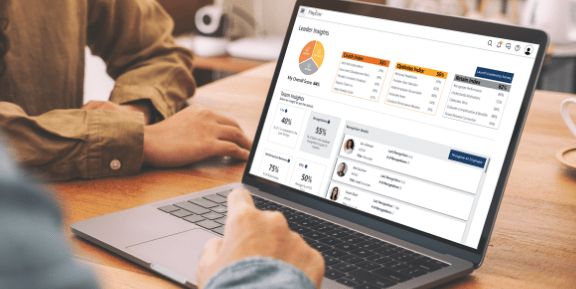
Paycor’s HR software handles payroll, talent acquisition, onboarding, benefits administration, time and attendance, and performance management in a single platform. Automation runs throughout. For example, the platform includes recruiting workflows that move candidates through stages automatically, onboarding checklists that trigger when a new hire is added, and payroll that calculates, deducts, and files without manual intervention each cycle.
Key Features:
- Automated payroll processing with built-in tax compliance across federal and state jurisdictions
- Recruitment automation, including job posting distribution and applicant tracking
- Digital onboarding with automated task assignment and e-signature collection
- Benefits enrollment with direct carrier connections and automatic payroll deductions
- Time and attendance with automated overtime calculations and scheduling tools
- Real-time reporting and HR analytics across the full employee lifecycle
2. Paychex
Best for: Small to mid-sized businesses that need a flexible platform with dedicated HR support options.
Paychex serves approximately 800,000 clients through its Paychex Flex platform, which combines payroll, HR, time tracking, and benefits in one system. The platform includes AI-assisted recruiting, workforce analytics, and compliance monitoring tools, with options to add dedicated HR professional support for organizations that need more hands-on guidance alongside their software.
Key Features:
- Automated payroll and tax filing across federal, state, and local jurisdictions
- Paychex Recruiting CoPilot for AI-assisted candidate sourcing and engagement
- Workforce analytics across payroll, benefits, and HR data
- Time tracking that integrates directly with payroll to reduce manual reconciliation
- Flexible retirement plan administration with integrated payroll updates
- Compliance monitoring with regulatory update alerts
3. ADP
Best for: Organizations of all sizes.
ADP offers several products scaled to different business sizes. ADP Workforce Now serves mid-sized to enterprise organizations, and RUN Powered by ADP supports small businesses. Each one centralizes payroll, HR, benefits, and time tracking in one system.
Key Features:
- Automated payroll processing with AI-enabled error flagging before each pay run
- Multi-state and multi-jurisdiction tax compliance with automatic updates
- Digital onboarding and new hire document collection
- Benefits administration with open enrollment automation
- Time and attendance are integrated directly with payroll
- Reporting across workforce data, pay trends, and HR metrics
4. Gusto
Best for: Small to mid-sized businesses that want payroll, onboarding, and benefits automation in one platform.
Gusto combines full-service payroll, benefits administration, and onboarding in a single system. The platform automates tax filings, handles onboarding from offer letter through direct deposit setup, and connects with third-party accounting tools.
Key Features:
- Full-service payroll with automated tax calculations and filings
- Automated onboarding, including offer letters, tax form collection, and direct deposit setup
- Employee self-service portal for pay stubs, benefits, and PTO management
- Benefits administration with health insurance and retirement plan integration
5. BambooHR
Best for: Small to mid-sized organizations looking for an HRIS that automates core HR workflows.
BambooHR centralizes employee data, onboarding, time tracking, performance management, and reporting in one platform. It includes an applicant tracking system and automates workflows from new hire setup through offboarding.
Key Features:
- Automated onboarding workflows with e-signature collection and task checklists
- Centralized employee records with self-service access for updates and document retrieval
- PTO tracking with automated approval flows
- Performance management with configurable review cycles
- Reporting and HR analytics for headcount, turnover, and compliance data
- Applicant tracking with automated candidate pipeline management
So, What’s the Best HR Automation Software?
The short answer is, it depends on your organization.
A small business running payroll for 20 people has different needs than a 2,000-person company managing benefits across a dozen states. The best HR automation tool for you is the one that can handle your specific workflows, integrate with your existing systems, and scale at a pace that matches your growth.
HR Automation Tool Comparison
| Software | Best For | Standout Features | Key Strength |
| Paycor | Mid-market to enterprise | Full HCM suite, talent management, analytics | Unified platform across the full employee lifecycle |
| Paychex | Small to mid-sized businesses | AI recruiting, workforce analytics, HR support options | Flexibility to add human support alongside software |
| ADP | All company sizes | Error-flagging AI, multi-state compliance, scalable products | Breadth of products scaled to company size |
| Gusto | Small to mid-sized businesses | Automated onboarding, full-service payroll, clean UX | Ease of use for teams without dedicated HR staff |
| BambooHR | Small to mid-sized organizations | Onboarding/offboarding automation, HRIS, ATS | People-focused platform with minimal learning curve |
Why Many Consider Paycor a Leading HR Automation Tool
Paycor’s platform is purpose-built for the way today’s HR teams perform work. Instead of stitching together separate tools for payroll, recruiting, onboarding, and performance management, Paycor puts all of it in one place, with automation at every level. When leaders can step away from manual, tedious administrative tasks, they gain more time to focus on strategy and people management.
Access a Top HR Automation Tool and Software with Paycor
Paycor’s HR automation tools handle HR’s most time-consuming processes, so your team can focus on what matters most. Ready to see it in action? Schedule a guided tour and find out what Paycor can do for your organization.
Legal Disclaimer: The information in this article is based on research of the third-party review websites cited below and publicly available data. Information is accurate as of July 24th, 2026 and is subject to change.