










Is your business ready for the predictive scheduling revolution? Across the United States, predictive work schedule laws are transforming workforce management, requiring employers to give employees advance notice of their schedules—typically 14 days—while providing protections that promote work-life balance.
As this trend accelerates and more states start to implement predictive scheduling laws, these regulations will be important for staying compliant and remaining competitive.
What are Predictive Scheduling Laws?
Predictive scheduling laws—also known as ‘Fair workweek’ laws—promote fairer scheduling practices, require that companies give employees sufficient notice of work schedules, and enforce penalties for late schedule changes. These labor laws on schedule changes require employers to give advance notice, reduce last-minute shift changes, and provide extra pay when changes happen with little warning.
Fair workweek laws typically require employers to:
- Give good faith estimations of likely hours on hiring
- Provide minimum break times between shifts
- Avoid “clopening” shifts (where employees work closing and then opening shifts)
- Offer right of first refusal for new shifts to current employees before new hires
- Avoid late schedule changes (or pay extra) except due to “acts of god” (e.g., a hurricane)
- Pay higher rates (or “Predictability pay”) for last-minute schedule changes
- Keep more detailed scheduling records
What Industries Do Predictive Scheduling Laws Impact?
Predictive scheduling laws primarily target industries with hourly workforces and variable scheduling practices, such as:
- Retail
- Food
- Hospitality
- Construction
- Manufacturing
These industries often employ part-time workers whose hours change week-to-week based on foot traffic, seasonality, sales projections, and consumer demand, which tends to impact work-life balance.
Which Employees are Impacted by Predictive Scheduling Laws?
The employees impacted by predictive scheduling laws are those who typically have the least control over their schedules and are most vulnerable to last-minute changes. These include:
- Retail Associates
- Cashiers
- Servers
- Cooks
- Baristas
- Hotel staff
- Housekeeping staff
- Warehouse workers
The Rise of ‘Fair Workweek’ Regulations
On-call and just-in-time scheduling means that many Americans’ work schedules are unpredictable from month to month, week to week or even day to day. Nationwide, more than 8 million retail and food service workers have unpredictable schedules, and a whopping 42% have no say in scheduling at all (CNBC). For workers, this is a financial problem. For HR, it’s a retention problem.
While Oregon is the only state to enforce state-wide work schedule laws, several other states have local ordinances, applying to major cities like New York City, Los Angeles, and Chicago. Nationwide, cities continue to strengthen their fair workweek laws. While a few states have banned these laws, others may soon expand them. No matter where you do business, it’s a good idea to prepare for predictive scheduling laws well in advance. Getting caught off-guard could be a compliance nightmare, especially for businesses that operate in multiple jurisdictions.
States with Predictive Work Schedule Laws
Currently, there is only one state the only state to implement a statewide predictive scheduling law, known as the Fair Workweek Act. And that state is Oregon.
Oregon Predictive Scheduling Law
Oregon’s law applies to employers in retail, hospitality, and food industries with 500 or more employees worldwide. The law requires employers to provide written work schedules at least 14 calendar days in advance, pay employees additional compensation for schedule changes after posting, and ensure rest period protections between shifts.
Employees also receive predictability pay for changes or cancellations, and employers must provide “good faith” estimates of work hours to new hires. The law has been fully implemented with graduated penalties since 2018, with the advance notice period increasing to 14 days in 2020.
Where Do Predictive Schedule Laws Apply?
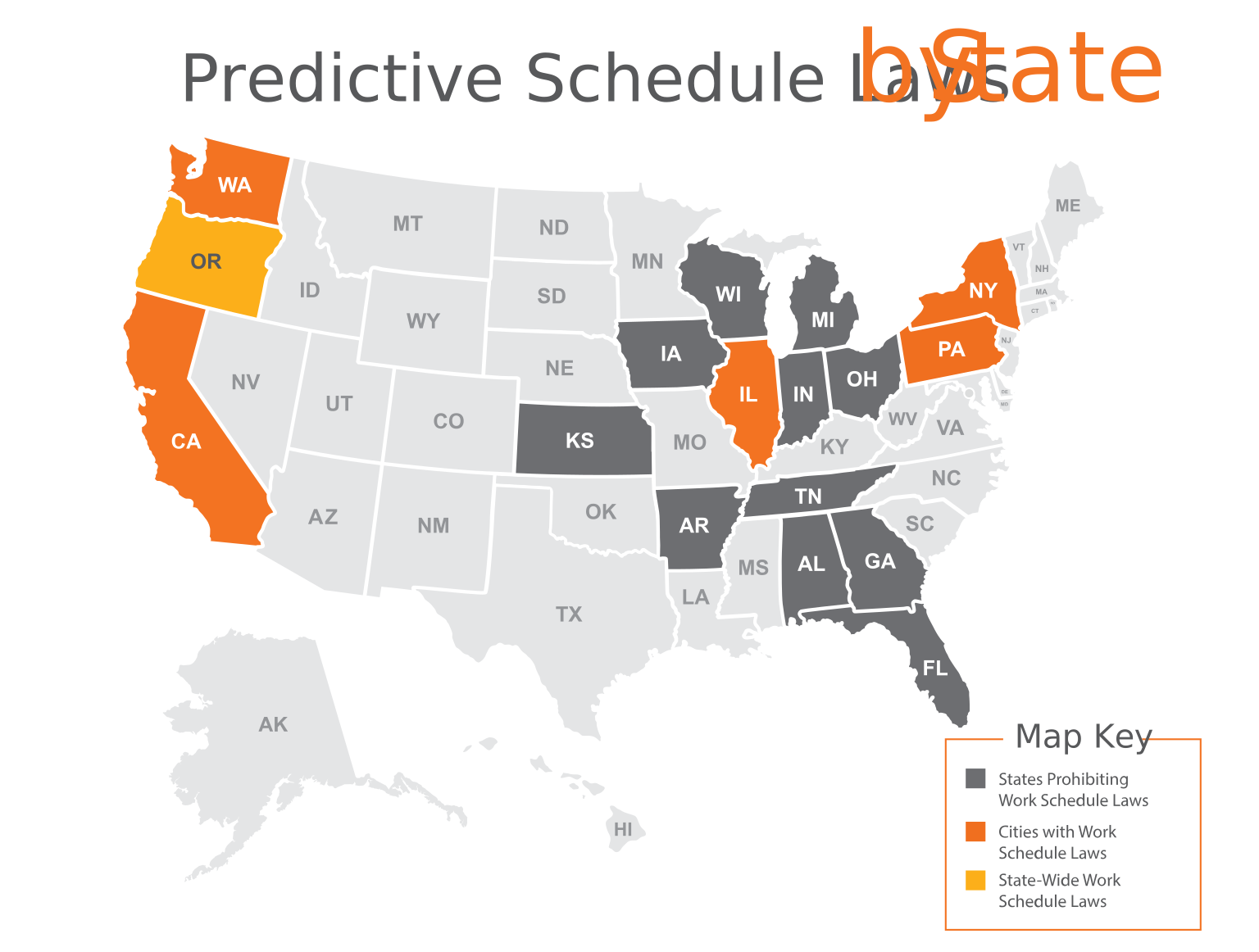
The following places have passed predictive work schedule laws:
California
| Where? | Who Does it Apply To? | Employees are guaranteed…* |
|---|---|---|
| Berkeley, CA | – The city government – Employers in healthcare, hotel, manufacturing, retail, warehouse, or building services with 56 or more employees globally – Restaurant industry employers with 10+ employees in the city and 100+ employees globally – Retail or restaurant franchisees with 10+ employees in the city and associated with franchises that employ 100+ employees globally – Non-profit corporations with 100+ employees globally | – A written “good faith estimate” of their schedule at time of hire – Two weeks’ advance notice of work schedule – Written notice of changes within 24 hours – The right to decline “clopening” work hours – Predictability pay at 1.5x their regular rate |
| Emeryville, CA | – Retail employers with 56+ employees globally – Fast food companies with 20+ local employees or 56+ global employees | – A “good faith estimate” of their schedule at least 14 days in advance, or predictability pay -Pay at 1.5x their regular rate for “clopening” shifts |
| San Francisco, CA | – Chain stores with 40+ stores worldwide, and 20 or more employees in San Francisco, including restaurants, bars, liquor stores, banks, and other sales providers | – A written “good faith schedule estimate” of their schedule at time of hire -Two weeks’ advance notice of work schedule or Predictability Pay – Other rights regulated by Formula Retail Employees Rights Ordinances (FRERO) |
| Los Angeles, CA | – Retail businesses with 300+ employees globally, including franchises These laws cover employees who perform at least 2 hours of work in the County of Los Angeles in a workweek. | – Electronic, printed, or posted schedules, 14 calendar days in advance – A good-faith estimate of the worker’s ongoing schedule upon hiring and within 10 days of an employee’s request – 10 hours of rest between shifts, unless the employee gives written consent to a shorter rest period – 1.5x their regular pay rate for shifts that fall within the 10-hour window |
| San Jose, CA | Employers of 36 or more employees. | – An employer must offer additional work hours to existing employees before hiring new employees or subcontractors (including temporary workers). – An employer is not required to offer additional hours to existing employees if the employer would be required to pay the employee at a premium rate. – There is a possible exemption when complying with this requirement if it would create a hardship for the employer. – 1 additional hour of pay when the employer changes the schedule within 14 days of the shift – 0.5x their regular rate of pay for scheduling changes that result in lost work time |
Other Cities and States
| Where? | Who Does it Apply To? | Employees are guaranteed…* |
|---|---|---|
| Chicago, IL | – Businesses with 100+ employees – Not-for-profit organizations with over 250 employees – Restaurants with 30+ locations and 250+ global employees These laws only cover employees who earn ≤$32.60/hr, or ≤$62,561 annually. |
– 14-day notice of their schedule – Right to decline work with less than a 10 hour break between shifts – Predictability pay late schedule changes |
| Evanston, IL | – Hospitality, retail, manufacturing, warehouse and building services that employ or exercise
control over 100+ employees – Restaurants with at least 30 locations and 200+ employees globally – Franchisees under one of the above industries with <100 employees that are associated with a franchisor that has >30 global locations |
– A good faith estimate of regular hours within the first 90 days of work, including weekly hours
and on-call shifts – Written notice of work hours at least 14 days before the first day of a new schedule – An extra hour of pay when the schedule changes within that 14-day window, but with at least 24 hours of notice – Up to 4 hours of extra pay if the schedule changes within 24 hours of their shift – The right to decline scheduled “clopening” hours – 1.5x their regular rate of pay if they consent to “clopening” shift hours |
| Oregon (statewide) | Retail, hospitality and food service companies with 500+ employees worldwide | – Good faith estimate of median scheduled hours on hiring – 14 day notice of schedules – Right to 10 hours of rest between shifts – 1.5x their regular rate of pay if they consent to work a “clopening” shift |
| New York, NY | Fast food companies with 30+ U.S. locations and retail companies with 20+ sellers | Fast food – Regular schedules (unchanging from week to week) –14-day notice of schedules – Immediate notification of cancelled shifts – Predictability pay for late changes or “clopening” shifts – The right to refuse “clopening” shifts – “Just Cause” protection against reductions in hours of <15% – The right of first refusal when more shifts become available, before new employees are hired Retail – 72 hour notice of schedules – Right to decline last minute shifts – No on-call shifts – No last-minute cancellations |
| Philadelphia, PA | Retail, hospitality and food service companies with 250+ employees and 30+ locations worldwide | – Right of first refusal on new shifts – Good faith schedule estimate on hiring – Right to request changes – Right to decline extra shifts – 14-day notice of schedules – “Predictability pay” for late changes and “clopening” shifts they agree to work |
| Seattle, WA | Retail and quick service restaurants with 500+ employees worldwide and full-service restaurant with 40+ locations and 40+ employees worldwide | – Good faith schedule estimates on hiring – Right of first refusal on new shifts – Right to state schedules preferences –14-day notice of schedules – Right of refusal and extra pay for “clopening” shifts – “Predictability pay” for late schedule changes |
Which States Prohibit Workplace Scheduling Laws?
The following states have prohibited local governments passing predictive work schedule laws:
- Alabama
- Arkansas
- Florida
- Georgia
- Indiana
- Iowa
- Kansas
- Michigan
- Ohio
- Tennessee
- Wisconsin
Which States Are Considering Predictive Work Schedule Laws?
While predictive scheduling laws remain relatively limited in scope today, momentum is building across the country, and more states are recognizing the benefits of stable work schedules for employees.
The states considering predictive scheduling laws are: Connecticut, Hawaii, Illinois, Massachusetts, Minnesota, New Jersey, North Carolina, Rhode Island, and West Virginia.
Penalties of Work Schedule Law Non-compliance
Employers who fail to comply with predictive scheduling laws face significant financial and legal consequences:
Monetary Fines
Violations can result in steep penalties that vary by jurisdiction but typically include fines per affected employee—per violation. Non-compliant employers can also face civil lawsuits from employees who are seeking back pay for missed predictability pay, compensation for improperly canceled shifts, and damages for schedule-related violations.
Regulatory Investigation
Employers found in violation may be subject to government audits, mandatory compliance training, and increased regulatory oversight. In jurisdictions like New York City and Chicago, enforcement agencies actively investigate complaints and can assess penalties that accumulate quickly when multiple employees are affected—or violations occur repeatedly.
Predictive Work Schedule Laws: How to Stay Compliant
Even if you aren’t affected by existing Fair Workweek laws, you might be soon. There’s an ongoing campaign for more predictive work schedule laws at a federal level. Businesses of all sizes should be ready to inform employees of schedules in advance, and avoid schedules with minimal breaks between shifts. In light of these changes, it’s worth considering whether a compressed work schedule is right for you.
Implementing these practices might be hard at first – especially if you’re not facing compliance issues yet. But in the long run, it’s better to be prepared. You can protect your business from future compliance issues by creating more efficient schedules all around. Or at a bare minimum, digitize your records as soon as possible.

Better Scheduling Helps Everyone
Compliance isn’t the only issue here. Scheduling instability also increases employees’ psychological distress (American Sociological Review). Better scheduling helps: the predictive work schedule law in Emeryville, in effect since 2017, has been shown to improve sleep quality and reduce stress levels for covered employees with young children (Duke University).
And that’s not all: stable scheduling can also improve sales and productivity (University of Chicago). These practices promote work/life balance, increase job satisfaction, and drive employee retention.
Use Paycor to Stay Compliant with Predictive Scheduling Laws
Paycor’s scheduling software empowers HR leaders to track, update, and communicate employee schedules. Our compliance tools help businesses stay up to date on the latest regulations, avoiding fines and legal issues.
Paycor’s Predictive Work Scheduling functionality helps you:
- Build compliant, employee-friendly schedules.
- Configure customizable warnings and notifications.
- Set advance notice requirements and Fair Workweek rules, and
get notified when that rule is in violation. - Automatically process penalties through payroll
Paycor Scheduling helps businesses increase productivity and track labor costs while staying compliant.
Predictive Scheduling FAQs
Have more questions about predictive schedule laws? Read the following FAQs
How does predictive scheduling benefit employees?
Predictive scheduling laws provide employees with greater work-life balance and financial stability by ensuring advance notice of work schedules. This allows workers to plan childcare, arrange transportation, pursue education, and schedule second jobs without last-minute disruptions. It gives employees a better understanding of how much they will earn during pay periods.When employers make late schedule changes, employees receive predictability pay as compensation.
How do predictive scheduling laws benefit employers?
While compliance requires initial adjustments, predictive scheduling can improve employee retention, reduce turnover, and boost workplace morale. Stable schedules lead to more engaged, productive employees who are less likely to call out unexpectedly.
Who is covered by predictive scheduling legislation/laws?
Predictive Scheduling laws typically cover hourly employees in retail, food, hospitality, and other similar industries where variable schedules are common. Most laws set minimum thresholds for employer size (ranging from 10 to 500+ employees) and may include specific location requirements.
Note: Salaried workers, managers, and employees covered by collective bargaining agreements are often exempt.
How do employees make schedule changes under a predictive scheduling law?
Employees can typically request schedule changes, including shift swaps, additional hours, or time off, following their employer’s established procedures.
Under most fair workweek laws, employees have the right to decline shifts not included in their posted schedule without penalty. Employers must respond to requests within a specified timeframe and maintain documentation of all schedule-related communications.
Are there any federal predictive scheduling laws?
Currently, there are no federal predictive scheduling laws in effect. All existing predictive scheduling regulations are enacted at the state or local level.
However, federal legislation, such as the Schedules That Work Act, has been proposed and could establish nationwide scheduling requirements in the future.
How far in advance do employers have to post a schedule?
Most predictive scheduling laws require employers to post work schedules 10 to 14 days in advance.
For example, San Francisco, New York City, Philadelphia, and Seattle all require 14 days’ advance notice, while Chicago initially required 10 days before increasing to 14 days in 2022.
How long can an employer not schedule an employee?
There is no maximum time period under predictive scheduling laws that limits how long an employer can go without scheduling an employee.
However, many fair workweek ordinances include “access to hours” provisions that require employers to offer additional shifts to existing part-time employees before hiring new workers.
Do employers have to notify employees of schedule changes?
Yes, employers must provide advance notice of any schedule changes, with the required timeframe varying by jurisdiction. Most laws require immediate notification when changes occur, typically within 24 hours or as soon as possible.
Note: When changes are made after the posted schedule deadline, employers must also pay predictability pay as compensation and maintain records of all notifications.