









Recent Society for Human Resource Management (SHRM) research shows 39% of organizations have implemented AI in their HR functions, with another 7% planning to do so this year. Performance management is one of the top five AI in HR use cases listed.
While AI improves parts of the performance review process, from data aggregation to bias detection, it doesn’t replace a manager’s judgment. Learn where AI supports the performance review process, where it falls short, and how to use it well.
Traditional Performance Review Flaws
Some of the most common flaws with the traditional performance review include:
- Recency bias: The last quarter or the last bad week often carries outsized weight in a review meant to cover a full year.
- Inconsistent manager feedback: Two employees doing comparable work can land different ratings depending on which manager writes the review.
- Time pressure: Managers often scramble to put together a performance review on deadline, using templates and examples that come to mind fastest versus the best ones.
The result is a review that reflects circumstances, timing, and manager style more than performance.
In addition, managers often use subjective language to describe qualities such as attitude, leadership, collaboration, or communication. Research suggests these assessments can sometimes be influenced by factors beyond an employee’s output, including gender, race, tenure, or the relationship between an employee and their manager.
For example, Textio data shows women are most likely to receive low-quality feedback based on their personality. 56% of women surveyed said they have been described as unlikable in their performance reviews, and 78% have been called emotional, compared to 16% and 11% of men, respectively. The report also found White and Asian people are two times more likely to be positively stereotyped as intelligent compared to Hispanic/Latino and Black people
AI Functions in the Performance Review Process
AI can perform the following functions in the performance review process:
- Aggregating performance data, such as goals, project outcomes, peer feedback, and 1:1 notes
- Surfacing patterns like a team-wide skill gap or a manager who over-rates one department
- Flagging biased or vague language in a draft before it’s finalized
- Drafting structured feedback from notes or data
Those functions depend on the type of AI tool used. A generative AI tool mines notes to produce polished feedback copy. Its output depends on the input and is blind to the employee’s full record. An AI-powered performance management platform built into an HR system can pull real data to inform ratings.
Aggregating Data Across the Review Period
If a manager’s only record lives in scattered messages and half-remembered updates, recency bias is nearly guaranteed. AI addresses this by analyzing goals, project outcomes, peer feedback, and 1:1 notes from the entire year.
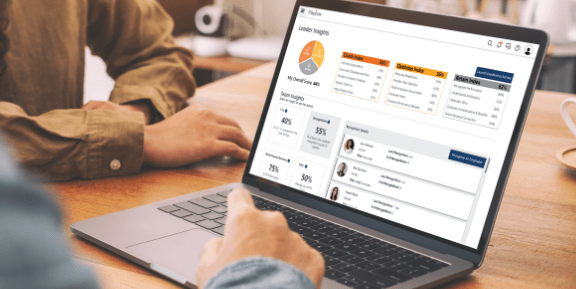
Paycor Talent Development software helps managers conduct reviews based on historical performance data saved in the platform. Its sentiment analysis, powered by AI, monitors the tone for positive, negative, or neutral sentiment as managers share feedback.
Reducing Biased and Inconsistent Language
AI tools can scan review drafts for gendered language, vague praise, and unsupported criticism, then suggest specific, evidence-backed alternatives. For example, “great team player” could be flagged and replaced with specifics, such as “mentored two new hires and dropped team onboarding time by two weeks.” Instead of “needs to improve communication,” you could report “missed the Project X leader update twice this quarter.”
Where AI Makes Reviews More Objective
When using AI for writing performance reviews, every review draws from the same rubric no matter who writes it and their relationship with the reviewee. You have the ability to map claims back to goals, outcomes, and comments from throughout the year. With standardized rating prompts, managers answer the same structured questions in the same order, reducing manager-to-manager variation. This results in a consistent review process with better specificity.
Where AI Falls Short
While AI helps standardize and speed up the review process, it’s not a perfect solution. For example, if a manager never logs 1:1 notes or tracks goals, AI has nothing to aggregate. If learning from past reviews that used vague or biased terms, the model will pick up on those same patterns and repeat them.
AI doesn’t see collaboration, leadership potential, and context that never makes it into the system. For example, a reorg or personal circumstance could affect someone’s output temporarily. That’s why manager judgment still matters.
Privacy and Data Governance Risks
AI performance tools process sensitive data. To keep data safe and compliant with AI regulations, organizations need clear policies on employee data retention, consent, and third-party access.
Regulatory compliance and AI governance is moving fast, with cities and states implementing their own AI laws. For example, New York City’s Local Law 144 requires bias audits for automated hiring and promotion tools. Illinois bars AI-driven employment discrimination, and California‘s automated decision-making rules are phasing in through 2027.
This is where Paycor’s AI tool, WISE (Workforce Intelligence, Strengthened by Expertise), helps. Grounded in expert-reviewed, up-to-date legal guidance, WISE provides automated jurisdiction-aware insights tailored to your workforce.
How to Use AI for Performance Reviews: A Practical Framework
The steps for implementing AI into your performance review process include:
Define Evaluation Criteria
Establish clear criteria for evaluating performance. Define what success looks like for each role, including relevant goals, competencies, job responsibilities and performance expectations. Consistent criteria give AI better inputs and help managers evaluate employees against the same standards.
Input Structured Performance Data
Once you have the evaluation criteria, feed it into your AI platform. Depending on the tools your organization uses, inputs might include performance goals, progress against targets, project outcomes, peer feedback, self-assessments, and previous review information.
Keep the data focused on job performance and relevant to the evaluation period. Avoid including personal information or unsupported assumptions about an employee.
Use AI Output as a First Draft
While AI helps managers organize accomplishments and turn notes into clear, professional language, managers should review the output for accuracy, fairness, and relevance.
Managers should also add context and specific examples that AI may not have. They can explain why a result mattered, describe how an employee handled a challenge, or provide details about contributions that aren’t captured in structured performance data. The manager remains responsible for the final assessment and should make any rating or promotion decisions based on the organization’s established criteria.
Sample AI Prompts for Managers
The quality of an AI-generated performance review depends largely on the information you provide.
When writing a prompt, include:
- Role context: Identify the employee’s role and the responsibilities or goals relevant to the review.
- Concrete examples: Provide measurable results, completed projects, feedback, or other specific evidence of performance.
- Time frame: Specify the period being evaluated.
Use the following sample prompts as a starting point:
High performer up for promotion: I manage a [role/level] who exceeded [specific goals] this year, including [example]. Draft a one-page promotion case connecting these results to the next level’s expectations, in a confident, evidence-based tone.
Struggling employee: I need a review for a [role] whose performance slipped this quarter. Specific issues: [examples]. Draft feedback that’s direct but constructive, names the gap, and ends with two concrete next steps to revisit in 30 days.
Mid-year check-in: Draft a mid-year check-in for a [role] on track against [goals] with one area needing attention: [issue]. Use an encouraging tone framed around one or two priorities for the second half of the year.
What to Look for in an AI-Powered Performance Management Platform
When evaluating AI-powered performance management platforms, look for the following:
- Goal alignment tracking that connects objectives to reviews
- Continuous feedback tools to reduce reliance on year-end memory
- Bias detection
- Integration with HRIS and payroll to eliminate silos
An end-to-end HCM platform like Paycor connects performance data to compensation, succession planning, and workforce analytics to power reviews that drive confident talent decisions.
AI as a Tool, Not a Judge
Organizations implementing AI into their review process must first evaluate whether their current review process gives managers the data and structure AI needs to deliver an accurate, fair output. Then, train managers to use AI as a tool for consistency and evidence, but not a substitute for judgment. While AI can tell you what the record shows, it can’t decide what your organization values or make the final call on someone’s career.
Need help modernizing your performance review process? Start with our free, downloadable performance review checklist.