








Ask an HR professional whether AI is coming for their job, and the answer depends on the day. Some weeks it feels like every new tool promises to replace a piece of what HR does, from payroll processing and resume screening to drafting performance reviews. Other times, AI performs more as a copilot that still needs someone watching the controls.
The honest answer sits somewhere in the middle, and the research backs that up. While AI is absorbing a large share of HR’s transactional workload, it isn’t absorbing HR itself.
What the Research Says about AI and HR Jobs
The Bureau of Labor Statistics projects 6% growth for HR specialists and HR managers over the next decade, which is faster growth than the average occupation. The Society for Human Resource Management’s State of AI in HR 2026 report points the same direction. Nearly a quarter of organizations say AI has created new HR roles, and almost 40% say it has shifted existing job responsibilities. Only 7% report job displacement.
In EY’s recent AI Pulse Survey, 96% of AI-investing companies report productivity gains, but only 17% used those gains to cut headcount.
None of this means every HR task survives untouched. SHRM’s data shows AI concentrated in a few areas: recruiting (27% of organizations), HR technology management (21%), and learning and development (17%). Those are the tasks getting automated first.
As routine tasks get automated, what’s growing is the HR leader’s ability to strategize and bring value to the company, as well as demand for the skills AI can’t replicate, like judgment calls and relationship-building.
How AI Supports HR
Recent Census data shows about 55% of workers say they use AI on the job, with about one-third of those reporting that AI allows them to finish an assignment one to two hours faster.
For the HR professional, AI automates routine administrative tasks that are rule-based, like payroll processing and benefits administration. It assists with daily job functions like recruiting, workforce planning, and performance management.
For example, HR professionals can use AI to:
- Source and rank applicants for an open role
- Flag payroll anomalies
- Draft a job posting or offer letter
- Map an employee’s skills gaps against an open role or promotion path
In these cases, human oversight is still required.
Common Myths about AI in HR
A lot of the anxiety around AI and HR comes from a handful of claims that don’t hold up well against the data. Common myths include:
AI Will Replace Human Resources
While AI excels at completing time-consuming administrative work, the department is called human resources for a reason. It requires a keen eye to tell the difference between an employee who is disengaged or just quietly burning out. To mediate employee conflicts, you must be an empathetic listener.
AI also needs human oversight when its outputs could affect an employee’s livelihood or the organization’s legal and compliance obligations. Whether AI is helping make decisions about pay, performance, hiring, termination, or workplace policies, HR professionals must review its recommendations, check for potential bias or errors, and apply human judgment before taking action.
AI Tools Are Better at Hiring than Humans
AI can sort through large volumes of resumes against a set of criteria, but it doesn’t understand context. It has no way of knowing that a candidate’s six-month employment gap was parental leave, or that an unconventional career path might be exactly what a growing team needs.
And because AI models learn from historical hiring data, they can just as easily repeat the bias baked into that history as remove it.
Hiring still needs a human in the loop. Judgment, emotional intelligence, and knowing when to trust a hunch over a score aren’t things a model can replicate.
AI Makes the Workplace Less Human
By taking payroll processing, benefits enrollment, and interview scheduling off an HR team’s plate, it gives HR pros more room to focus on the people behind the processes. Instead of spending hours processing paperwork or answering the same routine questions, HR can spend that time coaching managers, gathering employee feedback, and strengthening workplace culture.
HR and AI Work Best Together
AI is likely to become a more integrated part of how HR teams work, but that doesn’t mean handing decisions over to a machine. The most useful applications combine AI’s ability to analyze large amounts of data and identify patterns with the context and judgment of HR professionals.
For example, HR teams can use AI for:
- Predictive analytics: AI can identify patterns that may signal early signs of disengagement, turnover, or absenteeism, giving HR an opportunity to investigate and address potential issues proactively.
- Personalized learning and development: AI analyzes skills gaps, performance data, and career goals to recommend learning opportunities and help employees build skills for potential career paths.
- Data-driven diversity and inclusion: AI can analyze hiring, promotion, retention, and compensation data at scale, helping HR identify patterns and areas that may warrant a closer look.
- Workforce planning: AI supports HR in analyzing workforce trends, skills inventories, and business needs to inform decisions about hiring, development, and future staffing.
The technology can help HR see patterns faster and work with more data, but people still decide what those patterns mean and when to act.
How Paycor Helps HR Teams Work Smarter with AI
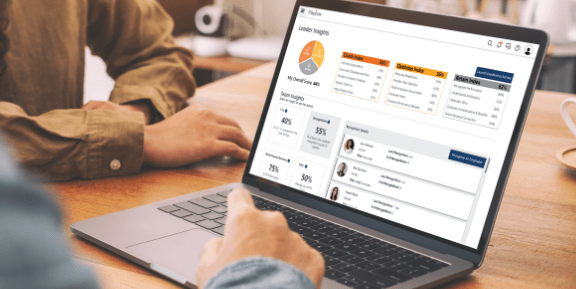
Paycor’s Intelligent HCM weaves AI into every part of the employee lifecycle, enabling HR leaders to focus on what only people can do. Built exclusively on more than 50 years of workforce data, Paycor WISE is purpose built to automate routine tasks, surface recommendations, and flag issues that need attention all while keeping HR pros in the driver’s seat.
Want to see what AI could take off your team’s plate? Take a guided tour of Paycor’s HCM software.